|
AUTHORS : A to K |
|
A |
Adams, Mark with Cocks, Chris |
|
|
|
| |
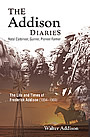
Addison, Walter |
|
|
|
| |
Alberts, Carl |
|
We have published 1 book by Carl Alberts:
Chopper Down!
Carl Alberts
was born in Mufulira in Northern Rhodesia (now Zambia) in 1955. At age seven he moved with his parents to Kilembe in Uganda from whence, due to increasing instability in that country, the family immigrated to South Africa. After matriculating at Beachwood Boys’ High in Durban, he was conscripted into the South African Defence Force (SADF) in 1973.
Completing initial training at 1 South African Infantry Battalion on 81mm mortars, he was transferred to Ondangwa in northern South West Africa (now Namibia) to serve in the escalating Border War. He enrolled at the University of Witwatersrand in 1974 to study law but student life did not appeal to him, so, in 1977, he joined the South African Air Force, becoming a helicopter gunship pilot and serving extensively in South West Africa and southern Angola.
In 1984 he was awarded the Honoris Crux, South Africa’s highest decoration for bravery, for his actions at Cuvelai in southern Angola. After the de-escalation of hostilities in 1989, he qualified as a flying instructor, achieving overall first place on his course. He ended his instructional stint as a flight commander and was rated as an A1 category flying instructor.
After a posting to 15 Squadron in Durban as a flight commander and instructor on Puma and Alouette helicopters, he resigned in 1993 to join Executive Outcomes.
Carl and his wife Mel live on the tranquil Breede River in the Western Cape of South Africa.
|
|
| |
Albyn, Gary with Bone, Craig |

|
We have published 1 book by Gary Albyn, with Craig Bone:
Manzovo
Gary Albyn
Was born in the old Rhodesia in 1960 and grew up in Umtali on the eastern border with Mozambique. An avid outdoorsman, he quickly developed a keen appreciation for the beauty and allure of the African bush - a passion that endures to this day.
Upon leaving school he managed to satisfy one of his other passions-aviation-by gaining admission onto one of the Air Force's exacting trainee pilot programmes. With the advent of Zimbabwe, and bigger prospects beckoning, he adopted South Africa as his new home in the early 1980s. Soon after graduating in civil engineering he moved into the corporate sphere and so began a successful career in the industrial sector. With a personal philosophy that values life balance - and an adventurous spirit in constant need of assuagement - Gary shares his time between family, career, staying fit, private flying, travelling, responsible 4x4 off-roading, research, sketching and writing. The International Library of Poets® has honoured some of Gary's previous poems, one of which was recently featured in a published anthology, Forever Spoken. He lives in Johannesburg with his wife Paula and two children, Adam and Paige.
Contact Gary at albyn@global.co.za
Quo Vadis, mother earth?
Philosophical anthropology - the study of the nature and essence of humankind - reveals that our most basic social needs are met when we find ourselves affiliated in some way to a group.
As Homo sapiens evolved, desirable consequences arose from these dynamic communal forces; safety, succour and kinship. Whilst some atavistic urges remain, others have either been suppressed by social mores or have disappeared along with mutations. However, our need for association, and the interaction it provides, has not changed.
Unravelling the very complex sociological forces that unite people in groups, whatever their ilk, is no easy task. Yet history provides ample evidence of individuals, groups and nations that have surrendered themselves to assemblies whose intentions or purpose has been anything but communally beneficial.
As our species evolved through phases of hunter, gatherer, pastoralist, tool maker and industrialist, our survival, development and very existence has been inextricably intertwined with the multitude of species with which we share the planet. We proclaim our species represents the pinnacle of advancement, as suggested by our cognitive identification of self, yet we are still guilty of perpetrating the most mindless acts of destruction against the very species (and habitats) which have sustained us over the millennia. Does this mean that we should cease ALL interactions and dependencies on every other species that we have so mindlessly exploited? Animal Rightists will tell you "yes!"
Whilst they nobly advocate the protection of whales, seals, pandas or other marketable species, their little-known raison de etre is the complete removal of humankinds' dependency on every other living species. This is not limited to the eradication of humans' use of animals as a source of protein - it includes the elimination of dependency on all animal by-products, as well as the complete forfeiture of all animal-related pastimes and entertainment; from pigeon racing to koi ponds, from falconry to sericulture.
Sociological forces may, in some way or form, propel us towards affiliating ourselves with certain groups, yet we should consider very carefully the aims and intentions of those groups before we blindly commit to their ethos.
Being an Animal Rightist, as a pet owner for example, is evidently self-contradictory. Yet many of the blindly faithful acolytes who vociferously protest for animal rights have largely been duped by the group's real aim. At their core, and through a very cleverly created facade, Animal Rightists prey on the emotions of unwitting benefactors and unburden them of millions of donor dollars every year.
Broadly speaking, animal anti-cruelty societies would consider themselves Animal Welfarists. They devote their time and effort to protecting animals, ensuring their welfare and, where authorized to do so, bringing to book those senseless individuals caught willfully maltreating animals. Should we subscribe to the philosophy of Welfarists? Most certainly! Whether for bush meat or traditional medicine, a committed Conservationist will be as appalled by the profligate destruction of a family of Mountain gorillas as a Rightist or Welfarist. Yet despite their shared sense of injustice, Rightists are openly hostile towards the more pragmatic ideals held by Conservationists. Conservationists argue that the careful management of an enclosed ecosystem requires the prioritisation of soil management over vegetation management, and only then the fauna that occupies that system. Left unchecked, the uncontrolled population growth of a potentially destructive animal like an elephant (unnaturally contained within a confined area), will lead to the decimation of the vegetation, and thereafter the rapid degradation of the soil structures bound by the roots. This effect is rampant in many parts of Botswana already, and long-term or even irreversible effects are already evident.
Many Rightists claim that an ecosystem, left to its own devices, will tend towards its own equilibrium, and that the population numbers of all the species contained within it will self-regulate. Fallacious! The human pressure on once-open savannahs, woodlands and forests has compressed animals into ever-decreasing "island" sanctuaries, conservation areas or National Parks. The natural migratory patterns displayed by larger herbivores is being impeded and so, confined to fenced-in Parks, they place an unnatural burden on both the vegetation and water resources. This, ultimately, depletes the soils and denudes the environment. Desertification has now taken hold.
Parks authorities MUST therefore intercede in order to counter the effects of their (historically well-intentioned) creations, namely the erection of fences around the Reserves and Parks. Even in the early 20th century such sanctuaries, it was felt, would preserve, for future generations, those wild-lands that had been so blatantly despoiled by reckless hunters and farmers. As a nascent science in South Africa, the early Park wardens and their dedicated staff learnt by trial-and-error. (Park management philosophies successfully applied on other continents, or even in other regions, are seldom pertinent or applicable elsewhere). Interventions in a 'closed' environment can, and do, take many forms. Scarce water, for example, would trigger a migratory instinct in most species and they would vacate an arid area. In a 'closed' environment however, with nowhere to go, they would either perish from dehydration, or continue deriving their needs from the remaining moisture available in the vegetation. Along with their own demise, they eventually strip the vegetation and compromise the floral balance as well. The remedy? Sink boreholes and provide water for the animals. Rightists denounce this and insist that the Parks be left to self-regulate. To destruction?
Park officials study, observe and debate the practical and ethical considerations associated with the decisions and interventions deemed necessary to regulate and balance a fragile environment. It is no easy last and we should applaud both their actions and intentions, for the issues and challenges they face are extremely complex. One of the most contentious and troubling consequences of the fenced-in wilderness area was, and still is, the question of elephant population control. In a limited habitat, an elephant has the capacity to wreak havoc on the vegetation, the concentrated effect of which can also then impact on the overall biomass. If allowed to disperse and roam freely, as they did for centuries on a sparsely-populated continent, elephants would still strip or uproot trees as they do now within the confines of a National Park. The only difference being that their propensity to uproot or strip trees was spread over a far wider area, and therefore perceived as being less destructive.
It is important to remember though that this very act, whilst appearing to some as wanton, is in fact part of the process of not only bringing inaccessible leaves and fruits to the smaller mammals and insects, but also of aerating and turning the soil. Thus it is important to note that elephants, in and of themselves, are NOT destructive. They are, through their interconnectedness with all other systems and species, therefore regarded as a "keystone species." When confined and concentrated however, their normal behaviours start impacting negatively on all the other species around them. The custodians of the Parks are now perched on the horns of a dilemma, as they have to consider the very difficult option of thinning the population.
It is worth noting that such control interventions are not limited to elephants alone. Their known faculties and social behaviours make them easily identifiable to us 'sentient' human beings, thus elevating the morality question (of culling) to a higher plane. (The author avers that we might yet discover proof of the 'sentience' of far more species than we currently expect, along with it a new ethical dimension to the question of our ascendancy). Such clear parallels between man and elephant add to the complexity and emotion of the culling question. As long as there remains an economic consequence to all our actions, we will continue dealing with elephants (and other so-called wild animals) as nothing more than a commodity.
Outside of the scope of this essay are the valid arguments of "if it pays, it stays!" (The Conservationists' approach). Not even the Rightists would subscribe to the other options of translocation or birth control. Why? Because no animal - according to their particular perspective - should be exploited or interfered with in any manner or form.
But what of the need to affiliate to a group, as postulated in the author's opening statement?
Let us, for one moment, trust in the individual's ability to carefully weigh up the facts presented, before associating him or herself witz a cause. Assuming that there are valid and principled reasons for aligning oneself with the Rightists' cause or, for that matter, even the Conservationists' cause, the schism that exists is, unfortunately, only likely to widen.
But what if neither of the two extreme positions is correct? Whilst the two camps hold diametrically opposed views regarding the use and treatment of animals, their very demise - which both, apparently, want to avoid - is actually being precipitated by humankind, and not the opposing views debated by humans! Simply put - there are just too many of us on this planet. Our insatiable hunger for fossil fuel (a demand created by a growing mass of humanity), manifests itself in the carbon footprint and greenhouse gas scenario.
Our natural heritage WILL disappear if rampant population growth continues. It is almost a specious argument debating the merits or demerits of Rightists vs. Conservationists, since the very existence of the species we wish to protect are doomed by our obscene consumptionist behaviours and casual disregard for the carrying capacity of our fragile blue island.
Gary Albyn, published in African Safaris
Issue 17
Craig Bone
Was born in Salisbury, Rhodesia in 1955, where he grew up. He joined the Rhodesian Light Infantry in 1977. He was critically wounded in Frelimo mortar attack while on operations in Mozambique and it was only because of some desperate flying from the casualty-evacuation helicopter pilot that saved his life. While recuperating he started painting, initially military-themed works, and in a short time he was to be recognized as an artist of some repute. With his passion for wildlife, and the Zambezi Valley, he was to become an internationally acclaimed artist with his paintings being sold worldwide. A painting of his was recently auctioned on behalf of the Vietnam Veterans' Association and fetched $106,000-it now hangs in the Pentagon. He lives in Florida, USA but still manages to spend several months of the year in the Zambezi Valley. www.craigbone.com
Email Craig at info@craigbone.com
Giant footsteps
Artistic minds combine to celebrate the majesty of elephants
As a man of many journeys, it isn't surprising that Gary Albyn chose an elephant herd's journey to express his love for wild spaces, elephants and his growing concern for our environment and heritage.
An engineer by trade, Albyn also has the ability to "leverage the beauty of the language", which led him to experimenting with poetry.
His poem Manzovo began five years ago, with Albyn spending a lot of time constructing lines that were layered in meaning and nuance. But his love for the pachyderms began when he was younger.
"I went camping in Mana Pools with my dad, and it was an adventure of a lifetime. In the middle of the night, I woke up to see this massive grey, bouldering beast at the end of my stretcher, just eating," he says a little reflectively." It was the most awesome and private experience."
An elephant's journey, but also an appeal to preserve Africa's heritage, soil and animals, Manzovo reflects Albyn's desire to bring about positive environmental changes." The ideal situation would be for this poem to create a collective awareness and, to that end, positive action," he says.
Albyn also wishes to create a properly controlled sanctuary where elephants in use by humans can eventually retire to.
Having internationally acclaimed wildlife artist Craig Bone join him in illustrating his words was something Albyn only imagined. But when he approached the publishers with a poem and no illustrations, they were quick to suggest Bone and before he knew it, Albyn was receiving e-mails from the artist with the cover images for "our" book.
Meet the artist
What was it about Gary Albyn's poem Manzovo that inspired you to become involved in the project?
Craig Bone (CB): Having painted hundreds of pictures of elephants, it was refreshing to see the love and respect for the animal through the eyes of a poet.
Your images are incredibly vivid. What goes into creating them?
CB: As an artist I work better if I have a set target. Time was the main issue. Subject matter was no problem. Over the years I have collected thousands of images. From the elephant to the house fly, I had everything.
I decided to avoid the same old recipe for book illustrations. I would compose a juxtaposition of flora and fauna set in imaginative backgrounds. This project enabled me to spread my creative wings more than usual.
I placed life and death in the same picture - the reality of the struggle in the African bush. Like a dragonfly bobbing past an elephant, or impala horns slowly breaking down in a muddy pan. It's all real - just the not-so-obvious details. But you know what I want to do next time? I'll reverse the plot. I'll do the paintings then ask my poet friend to find words to fit my images. I think he'll enjoy the task as much as I have.
What is the artist's role when it comes to preserving Africa's wildlife heritage?
CB: I think that Manzovo will talk to a lot of people. Not only will people find a new respect for our pachyderm friends, but they might take a closer look at the dung beetle at its feet, or the egret waiting in ambush for a disturbed insect. One should look closer at the bigger picture.
The "Big Five" is like a wedding dress but unseen is the network of tiny stitches that hold everything together - the threads of life.
Annette Bayne, The Citizen
20 October 2009
|
|
| |
Allwell, Frank |
|
| |
| |
Ash, Chris |
|
|
|
|
B |
| |
Barlow , Eeben |
|
We have published 4 books by Eeben Barlow :
Composite Warfare
Executive Outcomes
Human Intelligence
The War for Africa
Eeben Barlowserved as a commandant (lieutenant colonel) and later temporary colonel in several conventional, unconventional and covert South African Defence Force (SADF) units. Commissioned in the SADF’s Corps of Engineers, he served as the sapper commander with 101 Task Force as well as for the 53rd and 54th Infantry Battalions. He went on to become the second-in-command of 32 Battalion’s Reconnaissance Wing.
He was the first commander of P Troop, 44 Parachute Brigade while attached to 2 Field Regiment and later to the SA Army Headquarters (Directorate Engineers). During this period, he was also an active member of the SADF’s EOD/IED (bomb disposal) teams.
He subsequently served as an agent handler for South Africa’s Military Intelligence Division (MID), and thereafter, as a covert operative and commander of the SA Special Forces’ covert Civil Cooperation Bureau’s (CCB’s) Region 5 (Europe & Middle East) until he was unceremoniously fired from the CCB, resultant from the political changes in South Africa.
He developed the SADF Special Forces training programmes in agent handling and covert operations and trained and mentored these members. He was the founder and chairman of Executive Outcomes, arguably the most successful yet maligned Private Military Company in modern times. Upon leaving Executive Outcomes in late 1996, he served as a political and defence/security advisor to numerous African governments.
\He chaired STTEP International Ltd from 2009 to mid-2020. Barlow has partaken in numerous conflicts and wars across the continent where he has been described by many as one of Africa’s true warrior-sons: a soldier, a scholar and a diplomat, yet unafraid to speak truth to power.
He has served as a major general in several African armed forces and as a political and military advisor, military campaign strategist, and commander of several newly created, highly successful combat units. He has also overseen the training of specialist combat forces and accompanied them in battle.
Additionally, he has assisted several under-siege African governments with the development and implementation of sustainable military and intelligence strategies, and doctrines and policies to assist, guide and reduce uncertainties while gaining national and military advantages. Admired and respected by numerous African governments, he has also gained a grudging admiration and respect by the adversaries of those governments.
He served as the Honorary Consul of São Tomé and Príncipe to South Africa from 2019 to 2022. He has contributed to numerous academic papers and book chapters and is a regular speaker at foreign conferences and seminars. Additionally, he frequently lectures at military colleges and universities across Africa and abroad and remains a trusted advisor to several African governments and military and political leaders.
He is the author of four highly acclaimed books: Executive Outcomes: Against All Odds; Composite Warfare: The Conduct of Successful Ground Force Operations in Africa; The War for Africa: Conflict, Crime, Corruption and Foreign Interests and Human Intelligence: Supporting Composite Warfare Operations in Africa.
He is a Research Fellow with the Faculty of Military Science of Stellenbosch University and works with the Security Institute for Governance and Leadership in Africa (SIGLA) of Stellenbosch University on landward security governance.Barlow is currently the chairman and CEO of the rebirthed Executive Outcomes.
The company was reactivated in 2020 on request of several African governments.
|
|
| |
Baxter, Peter |
|
|
|
| |
Bean, Christopher |
|
We have published 1 book by Christopher Bean:
Bwana wa Polisi
Christopher Bean
Was born into a police family in 1936 and educated at Doncaster Grammar School. Always been a keen sportsman, he swam for Yorkshire in his early years. He joined the West Riding Constabulary in 1952. After three years in the Royal Corps of Military Police, which he represented in the British Modern Pentathlon, he re-joined the police in 1956 as a constable. In 1957 he moved to Nyasaland as Inspector of Police, eventually achieving the rank of superintendent, before serving with the Bechuanaland Protectorate Police from 1964 to 1967 when he retired from police service. He then worked in the life insurance industry in Rhodesia and South Africa for thirty years, returning to England in 2003 “to take up a life of fly-fishing and snooker”. He is a committee member for the local branch of the National Association of Retired Police Officers (NARPO).
|
|
| |
Binckes, Robin |
|
We have published 3 books by Robin Binckes :
It’s Our Land You Want
Canvas Under the Sky
The Great Trek
Die Groot Trek
Tucker's Deadline
What a Boykie
Robin Binckes was born in the Eastern Cape and educated in Umtata in the Transkei. After a diverse and varied career which included owning his own Public Relations and Promotions company, Managing Director of a JSE listed company, owning a fishing company and a speciality food store he founded Spear of the Nation Tours which specialized in historical tours for international visitors.
During the turbulent 90’s he served as a Peace Monitor in the townships helping to stem the violence which threatened to engulf the country. As a result, he founded “Friends of Alexandra” which operates today focusing on underprivileged children and their upliftment.
He began writing books in 2010 and has seven books published including Great Trek Uncut which became a South African best seller. He lives in Johannesburg with his wife Margie, Brod.ie a Scottie Dog and Mollie and English Roan Cocker Spaniel. Family scattered around the world and South Africa include three sons, a daughter, three grandsons and two granddaughters.
|
|
| |
Binda, Alex |
|
We have published 2 books by Alex Binda
The Saints
Masodja
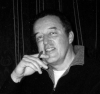
Alexandre Binda
Was born in Beira, Mozambique in 1945. He joined the Rhodesian Army in 1965. Although he had attested into the Pay Corps, he was to get more operational and combat experience than any of his colleagues. Between 1968 and 1972 he took part in a dozen or so deployments with 1RLI and SAS combat-tracker teams in support of the Portuguese Army in the Tete Province of Mozambique, countering Frelimo and ZANLA guerrilla incursions from the north. He was awarded a Military Forces Commendation. During his 15 years in the Rhodesian Army, he did a four-year tour of duty of with the Selous Scouts and was commissioned in 1979. Alex is a keen student of African military history and has written several articles for Lion & Tusk, the magazine of the Rhodesian Army Association. He is also author of Masodja - A History of the Rhodesian African Rifles published in 2007.
Email Alex at abinda@tiscali.co.uk
|
|
| |
Bomford,Hugh |
|
|
|
| |
Bourhill, J. F. |
|
|
|
| |
Bourquin, S.B. |
|
We have published 1 book by S.B. Bourquin :
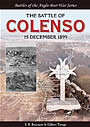
The Battle Of Colenso 15 December 1899
S.B. Bourquin
Studied the military history of KwaZulu-Natal for most of his life. In the process he built up an extensive collection of photographs and an intimate knowledge of the terrain where the events took place. He passed away in 2004 and his extensive collections were donated to the Killie Campbell Library and kwaMuhle Museum.
|
|
| |
Briggs, Philip |
|
|
|
|
Britten, Sarah |

|
We have published 2 books by Sarah Britten
More South African Insults
McBride of Frankenmanto
Dr. Sarah Britten
Has been described by Barry Ronge as "Hitler with tits". Her first piece of comic reportage, on the wonders of kugels and buying a Matric dance dress in Sandton City, appeared in Style magazine in 1991 when she was 17. She has won Sanlam Prizes for Youth Literature for The Worst Year of My Life-So Far (2000) and The Martin Tudhope Show (2002). She wrote her Master's research report on South African humour (with a focus on Madam & Eve) and has a doctorate in Applied English Language Studies, the title of her thesis being 'One nation, one beer: the mythology of the new South Africa in advertising'. The good citizens of Mooinooi once tried to send her death threats after she quoted a man who described them as being like ropes-thick, hairy and twisted-but they couldn't find her number in the phone book. She has several online stalkers and is well on her way to collecting more. Sarah enjoys birdwatching, wildlife and painting with lipstick. Seriously. She plays the piano and her favourite composer is Bach. She can do accents for anyone who asks; her current favourites are Russian and Scottish.
Email Sarah at SouthAfricanInsults@hotmail.com
One evening, after a long day at work, I arrived home to a house filled with candlelight. Alas, my husband had not surprised me with a romantic dinner- Instead it was load-shedding time - again.
I had already spent much of the day fuming about power cuts. There had been two at my office, between 8 and 10:30 a.m., and 2 and 4:30 p.m. To ease the stress, I went to march, purposefully, on the treadmill at gym - only to have the lights flicker and die at 6 p.m., on the dot. I was not happy, so I flopped down on the couch and reflected on how irritating this was. There was nothing to do. No television to look at, radio to listen to, lights to read by, humming of the pool pump or the fridge, no boiling of the kettle. Just strangely ... quiet. It was bliss just to sit in the moment without distraction. And when the power came back on an hour later, I was a little disappointed. The silence, that cocoon of "newness," had evaporated in the light and noise of our electrically powered lifestyles. Not everyone would have responded in the same way. In fact, many South Africans have indulged in an orgy of despair of a magnitude not seen since the great stockpiling frenzy of April 1994.
Here was irrefutable evidence that our country was circling the plughole. Incensed letters to editors clogged our newspapers; enquiries at emigration consultancies rocketed. The Sunday Times reported that Eskom employees were too embarrassed to face family and friends at social functions.An Eskom receptionist in Cape Town told the paper, "People march in here and start swearing at us. They demand we switch on their electricity immediately. We can't swear back or behave like they do. We have to remain calm. But we are definitely taking strain."
Soon enough, the jokes started.
"As I've said before," the columnist James Clarke wrote, "you always know when a nation is facing a real emergency: The public starts joking about it."
E-mails and SMSs informed us that the prince of darkness works for Eskom, while the Eskom Unplugged CD featured tracks like Dancing in the Dark and Candle in the Wind.
The worst part of load-shedding for many was the traffic, rendered far worse by traffic light outages. Not even the Outsurance pointsmen could help everywhere, and commuters spent hours in seemingly endless gridlock.
But the impact of our country's electricity shortages has gone beyond mere inconvenience. Thousands of mineworkers have been laid off as a result of reduced productivity. Economic growth in 2008 will be stunted by at least a percentage point, and investor confidence has been dented. So what do we do? Given that the situation is not going to be resolved any time soon, do we fling up our hands, don sackcloth and declare that the end of the world, is nigh? Or do we adjust to our current difficulties and get on with it?
Crises are traumatic for obvious reasons. Nobody changes unless they absolutely have to. But a crisis forces us to find new ways of doing things, and nothing fuels innovation like being in a predicament. As Carl-Henric Svanberg, CEO of Ericsson, once said, "When you have a crisis, it becomes one of your biggest assets, if that crisis is bad enough. Everyone gets very modest and humble, and listens."
And people are listening now. South Africa is one of the world's worst carbon emissions offenders, which we must change. According to CARMA (Carbon Monitoring for Action), Eskom produces more CO2 than any other energy company in the world, besides China's Huaneng Power International. This isn't surprising, because we have always been lax when it comes to energy efficiency Years of the world's cheapest electricity, almost all of it powered by coal, insulated us to the looming reality that things can't continue like this. We assumed that whenever we flicked the switch, there would be more where that came from - and we were wrong.
Could this be the best thing that ever happened? Until recently, energy efficiency was something that trust fund hippies in Ngordhoek cared about, not the average Joe Soap. But now this issue is very real to everybody Emmett Green, of energy efficiency experts Electro Sense, notes, "The knee-jerk reaction to this problem has been, 'How can I continue doing what I have been?' - so people have been buying generators and merrily continuing as they always have."
The electricity crisis is a pain, but it's also an opportunity for us to change our lives, and our use of energy for the better. I admit, my attitude to load-shedding is now different from what it was early January At first, I was livid. But gradually I realised that the truth - and an awkward reality for someone like me, addicted as I am to e-mail, blogging, online news and Facebook - is that, sometimes, technology gets in the way of productivity. Internet access and a laptop might help with research, but they do not promote good-quality thinking. During one morning blackout, it took me 15 minutes to sketch out a strategy on a piece of paper. The same thing in Powerpoint, with all of its attendant distractions and drawing of boxes and labels, might have taken me two hours.
During the morning load-shedding outages, my colleagues and I held brain-storming sessions to discuss clients, and came up with a wealth of ideas.
At home, it has been the same thing: Blackouts are an opportunity to hold conversations. To listen. To pay attention, for once.
Even traffic can bring unexpected benefits. Being stuck in gridlock doesn't have to be a bad thing. Think of your car as the ultimate form of "me-space" and suddenly the prospect of being cooped up in it for hours isn't so daunting. After all, where else can you listen to loud - and for some, embarrassing - music you daren't play at home? (I can listen to Radiohead and The Killers, secure in the knowledge that my husband, who doesn't believe decent rock has been produced since 1986, won't complain.)
Invest in a hands-free kit and use the time to catch up on phone calls to friends and relatives. Buy a language CD and learn French, Spanish or Zulu. Buy a digital voice recorder and note all of those brilliant ideas and quirky thoughts you never have time to express. Compose an essay or a novel.
Smile at your fellow motorists. Make a connection.If you choose to see it, you will discover that there really is light at the end of the tunnel. It's just that now it's a low-watt, fluorescent bulb powered by a solar panel
Sarah Britten published in O magazine
May 2008
|
|
| |
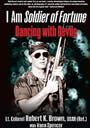
Brown, Lt Col Robert K. with Spencer, Vann |
|
|
|
| |
Burnett, Cora and Youth Development through Football (YDF) |

|
We have published 1 Book by Prof. Cora Burnett and YDF (Youth Development through Football)
Stories from the Field
Prof. Cora Burnett
Was born in Cape Town, South Africa. Through her extensive research throughout sub-Saharan Africa, and prolific publications on sport as a catalyst for social change, she is regarded as a prominent luminary in this field.
She is currently the research professor in the Department of Sport and Movement Studies, University of Johannesburg.
Her research interests include sport, gender, development, violence prevention, and research methodologies.
Stories from the Field is a result of her research on the YDF project.
Youth Development through Football (YDF), started in 2007, is a project implemented by the Deutsche Gesellschaft für Internationale Zusammenarbeit (GIZ) GmbH in partnership with the Department of Sport and Recreations South Africa (SRSA), on behalf of the German Government and co-funded by the European Union.
The project uses football to change the lives of disadvantaged youth through life-skills education and supporting local sport for development organizations with advice, funding and training.
|
|
| |
C |
Cann, John P. |
|
We have published 1 book by John P. Cann:
The Flechas
John P. Cann
Is an Adjunct Research Staff Member at the Institute for Defense Analyses, a former Scholar-in-Residence at the University of Virginia, and the retired Professor of National Security Studies at Marine Corps University. He earned his doctorate in the Department of War Studies at King's College London in 1996 and subsequently published Counterinsurgency in Africa: The Portuguese Way of War, 1961-1974 and Brown Waters of Africa: Portuguese Riverine Warfare, 1961-1974.
He is likewise the author of some thirty articles on conflict in Africa. He is a retired naval captain and flight officer specializing in open-ocean-reconnaissance aviation with a variety of aviation assignments, including command. He also served on the staffs of the Chief of Naval Operations and the Secretary of Defense and was awarded the Portuguese Medal of Dom Afonso Henriques and the Portuguese Navy Cross Medal. He is an Associate Member of the Academia de Marinha.
|
|
| |
Camp, Steve |
|
We have published 1 book by Steve Camp:
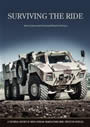
Surviving the Ride
Steve Camp
describes himself as a social sportsman who loves adventure. He has reached the summits of four of the world’s highest seven continental peaks: Mts Aconcagua, Kilimanjaro, McKinley and Kosciusko.
He is one of only a handful of people who has competed in all of South Africa’s ‘Big Five’ events:
ten Comrades,
13 Dusi Canoe Marathons,
ten Cape Town Cycle Tours,
16 Midmar Mile swims
one Cape to Rio Yacht Race.
He is also part of an elite group of international runners to have run a marathon on all seven continents, namely, the Great Wall of China, London, Inca Trail, New York, Sydney and the Antarctica marathons.
Steve was a member of the South African teams that competed in expedition adventure races in the Raid Gauloises in Ecuador and Vietnam and the Eco Challenge in Patagonia. He led the sixweek Powered Paragliding expedition flying a motorised paraglider from Kilimanjaro to Victoria Falls. He has also successfully completed the Roof of Africa Rally in Lesotho on a motorbike.
While living in New Zealand, Steve set a Guinness World record for the longest distance travelled in a Zorb. During his military training he was an officer in the South African army and qualified for his South African paratrooper wings. He has since trained with and been awarded the military airborne wings of Israel, Burma, Estonia, Cuba and America.
Steve is the author of 17 books, holds a Bachelor of Education and lives in Hillcrest with Sally and their two children, Sarah and Stuart.
|
|
| |
Callander, Ron |
|
We have published 1 book by Ronald Norcott Callander :
One Beat of a Butterfly's Heart
Ronald Norcott Callander
Was born in Victoria, Australia in 1933, and served as a lieutenant in the Australian army during the Korean War, before joining the Tanganyika Police. He lives in Queensland with his wife Joan, whom he met and married in Africa.
|
|
| |
Chervenyashka, Valya and Yordanov, Nikolay |
|
We have published 1 book by Valya Chervenyashka and Nikolay Yordanov:
Notes from Hell
Valya Chervenyashka
Was born in poverty-stricken Vratsa, Bulgaria. She is married and has two daughters. Her whole life has been dedicated to nursing, most of it caring for children in Bulgarian hospitals. In the 1980s she was posted to Tarhuna, Libya where she received awards for her work with children. In 1998, she was arrested in Benghazi, Libya, transferred to a Tripoli jail, charged with conspiring to deliberately infect over 400 children with HIV and sentenced to death. Notes from Hell is her story, covering a decade of torture, cruelty and absolute despair.
Nikolay Yordanov was born in Varna, Bulgaria. He is television, documentary and film screenwriter and editor and has worked on such shows as Fear Factor, Star Academy, Psychic Challenge and Extreme Makeover. He has also worked on a variety of advertisements and music videos. Notes from Hell is his first book.
|
|
| |
Cocks, Chris |
|
|
|
| |
Cocks, Kerrin |
|
|
|
| |
Coey, John |
|
We have published 1 book by John Coey :
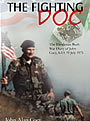
The Fighting Doc
John Coey
was born on 12 November 1950 in Colombus, Ohio, USA. He attended the Ohio State University where he studied forestry, at the same time enlisting in the US Marine Corps' officer training programme. A devout Christian, the ongoing inconclusive war in Vietnam was the catalyst that saw John leaving the USA to join the Rhodesian C Squadron, Special Air Service. The following year he was selected for officer training, but his outspokenly zealous anti-communist and conspiracy views made him transfer to the Rhodesian Army Medical Corps in late 1974. After training at Llewellin Barracks in Bulawayo, he was seconded to the Rhodesian Light Infantry as a medic, with the rank of corporal. Here he found comfort in the brotherhood of several other Americans serving in the battalion, dubbed the 'Crippled Eagles'.
He went on more than 60 Fire Force missions as a combat medic and was affectionately known as 'The Fighting Doc' by the RLI troops. John was killed in action near Mt Darwin on 19 July 1975, the first American to die in the Rhodesian Bush War. He was buried with full military honours in Que Que on 28 July. In 1979 his remains were exhumed and reinterred in the Lutheran Church Cemetery, Hide Away Hills, West Liberty, Ohio, USA.
|
|
| |
Cole, Barbara |
|
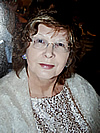
We have published 1 book by Barbara Cole : The Elite
Barbara Cole has worked as a journalist on newspapers in England, Rhodesia (Zimbabwe) and South Africa.
She was a High Court reporter on the Rhodesia Herald at the start of the bush war and saw many an insurgent, albeit from the safety of the Press bench.
Later, when she worked for the publications department of the Ministry of Information, her job involved distributing dreaded wartime communiqués from Combined Operations Headquarters telling of the latest incidents. Then, having relocated to South Africa at the end of the war, she spent several years researching and compiling the story of the Rhodesian SAS, one of the most fascinating stories to come out of the war. She tracked down countless SAS men, getting them to recall their many and varied experiences. The fact that secrecy is a way of life with SAS operators, makes this all the more remarkable.
|
|
| |
Cooper, Tom |

|
We have published 3 books by Tom Cooper:
The Great Lakes Holocaust
The Great Lakes Conflagration
Libyan Air Wars
Tom Cooper
From Austria, is a military-aviation journalist and historian. Following a career in a worldwide transportation business - where, during his extensive travels in Europe and the Middle East, he established excellent contacts with many first-hand sources - he moved into writing.
An earlier fascination with post-World War II military-aviation has narrowed to focus on smaller air forces and conflicts, about which he has collected extensive archives of material.
Concentrating primarily on air warfare, which has previously received scant attention, he specializes in investigative research on little-known African and Arab air forces, as well as the Iranian air force.
Cooper has published 14 books - including the unique 'African MiGs' series which examines the deployment and service history of MiG and Sukhoi jet fighters in 23 sub-Saharan African air forces - as well as over 200 articles on related topics, providing a window into a number of previously unexamined yet fascinating conflicts and relevant developments. First Congo War, 1996-1997 and Second Congo War, 1998-2003 are his first offerings to the Africa@War series.
|
|
|
Cranswick, Mason |
|
We have published 1 book by Mason Cranswick :
Blood Lily
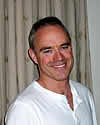
Mason Cranswick
Was born and raised in Zimbabwe. He received an MBA from Cambridge University (Magdalene College) in 1995. Prior to that he qualified as a Chartered Accountant in the UK, after obtaining a degree in commerce from Rhodes University, South Africa. A career in investment banking has taken him around the world - from London, Tokyo and New York to Singapore during the Asian currency crisis of the late '90s. A keen sportsman, he played international rugby for Zimbabwe Schools in 1984 and, as an amateur boxer, was a Cambridge University Blue and captain in 1994/95. He now lives in Cape Town
www.bloodlily.co.za/
Author Mason Cranswick talks about his new novel, Blood Lily, a tale which examines friendship, genocide and regeneration in war-time Rhodesia
The story of Mugabe's rise to power and the history of Zimbabwe prior to his rule are little-known tales, but it is this aspect of the country's past that Zimbabwean-born Mason Cranswick has chosen to focus on in his recently-released novel, Blood Lily. Set in Rhodesia, the novel follows the journey of Scott, from his childhood on a farm in rural Zimbabwe to his days fighting in the Rhodesian army against Mugabe's Fifth Brigade, a revolutionary army fighting for the country's independence. By his side, throughout this journey, is his friend Simba, but the war between the Rhodesian government and the local revolutionaries means that the two friends must choose sides. The result is a tale of "treachery, war and genocide, love and friendship, and ultimately of hope and regeneration."
The 1970s in Zimbabwe were a "fascinating time"
For Cranswick, Zimbabwe's pre-independence history presented an exciting setting for his first novel. "The whole Rhodesian war and everything that evolved around it was a fascinating time in the country's history and made up a big part of the country's history," says Cranswick. "The book was partly inspired by a trip back to Zimbabwe and to two of the farms I'd grown up on, in the area where the book is set. One of the farms was in complete ruin - litter everywhere, the house was burnt down - and then we went over to the other farm and it had been empty since the 1980s and the bush had just completely taken over. The bush was going through the house - it was completely wild and untouched - so that gave me the idea that whatever happens, the land will always come through and prevail." It's a theme that runs through the novel - that of the transitory nature of war and decay and the permanence of the land. The theme is evident through Cranswick's beautifully detailed descriptions of the Zimbabwean countryside, which underscore his obvious love for the country and its wildlife. "The Zimbabwean bush is very beautiful and unique, as are the Zimbabwean people, so I felt a lot of nostalgia in writing it." And, says Cranswick, that connection between Zimbabwe's people and its landscape is partly why the story resonates with those who have left the country: "It is authentic; people can identify with the bush and how they felt and thought in those days."
Authenticity says Cranswick, was important as he crafted the book - the places and events needed to withstand the scrutiny of those who read the book and have first-hand knowledge of them. "Many of the military scenes were taken from actual raids that took place and I made a point of making it very accurate so that if anyone reading it was involved in those incidents, they would identify completely with it," says Cranswick. Besides its authenticity, a notable aspect of the book is that Cranswick makes sure to present a balanced account from both camps in the war. "That was critical because for me it really needed to show the perspective from both sides," says Cranswick. "I think it's very important for people, in looking at that era in history, to see a balanced view so that they can appreciate both sides and get a better and stronger insight into the era by doing so."
"First and foremost, it's an exciting read"
While the novel is factually inspired, historically inclined and well-balanced, it is first and foremost an exciting tale of war and friendship, drawing heavily on Cranswick's life and interests, particularly that of boxing, which features heavily in the storyline. The excitement level maintained throughout the book means it is an equally good read for those who have no connection to Zimbabwe. "It's a very exciting, riveting story. The feel from the feedback that I've received from people abroad, people in the UK, is that they have enjoyed it first and foremost because it's an exciting read."
"The story itself is fictional but it's set in terms of real events. For example, one of the climaxes in the book is the fight scene where one the main characters collapses at the end of the fight and it turns out that he fell after the bell. I've taken that from a personal experience - I've had the exact same thing happen. A lot of things like that were taken from personal experience." Despite the fact that the novel deals with the atrocities of a war-time era, Cranswick maintains a note of hope throughout the book and the promise of regeneration for Zimbabwe. "There's an underlying optimism that in all ways it will get better," he says, and that optimism also played a part in the naming of the book.
"The blood lily was really important because it represented new life and, at the end, hope. The blood lily blooms three months of the year, and they're beautiful. They represent a real optimism and hope, and they were symbolic throughout the book."
The fundamentally positive message of the book has led Cranswick to donate part of its proceeds to Zimbabwean charities. For all South African online sales and sales to readers made directly from the publisher's or author's office a contribution of R15 per book sold will be made to Zimbabwean pensioners through the M'dala Trust.
A contribution of £1 will be made to the Trust for every e-book sold anywhere in the world. Says Cranswick: "The book was about Rhodesia and Zimbabwe and it represented hope for the country. I wanted it to fulfill a positive purpose."
Lindy Timm, the South African newspaper
|
|
| |
D |
Delalande, Arnaud |
|
We have published 1 book by Arnaud Delalande :
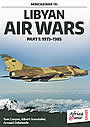
Libyan Air Wars
Arnaud Delalande
Is a researcher and author from Tours, in France. Military history and the history of military aviation in particular, especially deployment of air power in Africa and in former French colonies, have long been his passion. He is the editor of Puisance Aérienne (airpower.over-blog.com) and contributes to Alliance Geostrategique (alliancegeostrategique.org). He has become one of few foreigners with a deep interest in the recent Chadian wars, as well as French military operations in that country. He has published several related articles in specialized French magazines.
|
|
| |
Davie, Allen |
|
|
|
| |
De Klerk, Andrew |
|
We have published 1 book by Andrew De Klerk :
International Rugby Encyclopedia
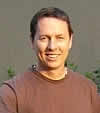
Andrew de Klerk
With his almost pathological passion for rugby football, was born in 1979, and grew up in the small educational town of Grahamstown in the Eastern Cape Province of South Africa where Saturday-morning rugby matches were strongly attended and vociferously supported by the locals.
He was educated at St Andrew's, Graeme College and Rhodes University in Grahamstown. He has a BSc (Hons) in Geology from Rhodes and a Diploma in Environmental Engineering from WITS in Johannesburg. His job as an environmental geologist takes him all over the world, which has provided him with some unique opportunities between flights to visit and research international rugby matches, stadiums, museums, players and administrators, in his never-ending quest for the tiniest detail of a perhaps long-forgotten test match.
Andrew is an avid bird-watcher and loves the bush (he once spent a year as a game ranger at Mala Mala near the Kruger National Park). He takes a great interest in most ball sports and regularly plays tennis and squash and is a member of the Geological Society of South Africa. He currently lives in Johannesburg with his wife Elizabeth and son William.
Email Andrew at andrew@resources.co.za
|
|
|
Dutton,Paul |
|
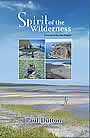
We have published 1 book by Paul Dutton :Spirit of the Wilderness
A remarkable man by any measure, Paul Dutton was born in Johannesburg in 1933, and began working in the family’s plastics engineering firm before moving into conservation in 1958. He took possession of his Piper Super Cub in 1964, paying the princely sum of R3000. After a few flying lessons, he took to the air to carry out much of his work.
At the age of 55 he acquired a Master’s degree in Coastal Management from the University of Newcastle-upon-Tyne in England.
His two stints in Mozambique were some of the most rewarding years of his life.
These memoirs were compiled over a period of more than twenty years and he is still active as an ecological consultant.
|
|
| |
E |
Edmond, John |
|
We have published 1 book by John Edmond:
Bushcat
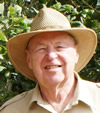
John Edmond
Was born in Luanshya Northern Rhodesia (Now Zambia} and was educated in Luanshya, Edinburgh and Pretoria. He initially trained as a computer analyst/programmer at Moor Hall, Cookham, England and following service in the Rhodesian Army (Congo Border, Rhodesia and Nyasaland) immigrated to South Africa.
Music was his first love and after many years of performing in his spare time turned professional. During his recording career was the only South African artist to secure seven consecutive hits on the national top twenty and became a household name on Radio and TV. Went farming for 25 years and specialized in game.
Hobbies include rugby, the great outdoors, aviation and martial arts. He attained third Dan level in karate and eventually became an instructor and provincial referee.
Earned his pilot wings and flew for the army commando air wing. His writing reflected his life and wrote and performed many CD's covering the military, wild life, aviation, children's songs, history and African folklore. Internationally John has performed in Las Vegas, UK, Australasia, Japan and Holland and throughout Southern Africa. He is married and has four children who followed in his footsteps as pilots, writers and artists. Now lives in the Limpopo bushveld and continues writing and performing.
Email Andrew at andrew@resources.co.za
|
|
| |
Efiong, Philip Asuquo |
|
We have published 1 book by Philip Asuquo Efiong :
The Caged Bird Sang No More
Philip Asuquo Efiong
was born in 1925 in Aba, present Abia State, Nigeria. He joined the army in 1945 and in 1956 was commissioned second lieutenant after receiving his officer training in the UK. He served in peacekeeping roles in Cameroon and the Congo before his appointment as first Nigerian Director of Ordnance Services of the Nigerian Army in 1963. After the first coup d’état of January 1966, he was posted to Supreme Headquarters as Principal Staff Officer and in May of the same year served as Acting Chief of Staff. In July he was posted to Kaduna as Acting Brigade Commander of the First Brigade but narrowly escaped back to Lagos following the countercoup of 29 Jul. In compliance with orders that officers return to their regions of origin, he returned to the East where, in 1967, the civil war broke out. As a Biafran officer, Major General Efiong served in various capacities as Chief of Logistics, Chief of Staff, Commandant of the Militia and Chief of General Staff. In January 1970 he called for an end to hostilities and voluntarily led a delegation of surrender to Lagos. He died on 6 November 2003. |
|
| |
Emerson, Stephen |

|
We have published 1 book by Stephen Emerson:
The Battle for Mozambique
Stylin the early 1980s, where he provided political and military analysis to senior American policymakers in Washington.
Stephen Emerson
Has spent more than 30 years of his life studying, researching and working on African political and security issues for the U.S. government and as an academic.
He cut his teeth as a southern African regional specialist for the U.S. Department of Defense
Dr Emerson is the author of numerous classified and unclassified publications on African politics, terrorism, counter-insurgency, transnational security challenges and the future of American security and foreign policy engagement in Africa.
He has held numerous government and academic positions, including Security Studies Chair at National Defense University's Africa Center for Strategic Studies in Washington and more recently headed the Africa regional studies program at the U.S. Naval War College in Newport, Rhode Island.
Among his degrees is a doctorate in International Relations/Comparative Politics from the University of Florida.
He is married to a U.S. Foreign Service Officer and has accompanied her on multiple tours of duty with the Department of State in Africa and Latin America.
They currently reside in Orlando, Florida, USA where Emerson still continues to write, consult and lecture on African political and security issues.
|
|
| |
F |
Fulton, Russell & Telfer , Andy |
|
We have published 1 book by Andy Telfer & Russell Fulton :
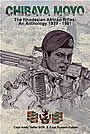
Chibaya Moyo
Russell Fulton
was educated in Fort Victoria, Rhodesia. He joined the Rhodesian Light Infantry (RLI) in 1977, serving as a machine gunner in that elite regiment. Commissioned in 1979, he returned to the bush war as a platoon commander with 1RAR. Posted to 3RAR as adjutant and then B Company 3RAR as 2IC, he was promoted to captain aged only 21, the youngest captain in the Rhodesian Army at the time. Sent on a six-month attachment to the British Army, he returned to the School of Infantry to instruct command courses in the new Zimbabwe National Army. Russell then pursued a career in sales and marketing before settling in Australia.
Andy Telfer
served in the Rhodesian Army from 1975 to 1981. As a platoon commander with 2nd Battalion Rhodesian African Rifles (2RAR), he was decorated twice, with the Military Forces Commendation (Operational) and the Silver Cross of Rhodesia. During the late 1980s, he served in the Arabian Desert as a major, commanding a squadron of Arab Special Forces soldiers for the Sultan of Oman. In 1994 he founded the Spirit of Adventure in South Africa, an outdoor centre training young people in leadership. In 1999 he captained the South African team that completed the Discovery Channel Eco-Challenge, a 12-day expedition race in the Andes of Patagonia. In 2012 Andy and his wife Janette walked over 1,600 km and canoed 400 km through Spain and France. They now live in New Zealand.
|
|
| |
Fleminger, David |
|
We have published 7 books by David Fleminger :
The Cradle of Humankind
Robben Island
Mapungubwe Cultural Landscape
Vredefort Dome
Swaziland<
The Richtersveld Cultural and Botanical Landscape-incl. Namaqualand
David Fleminger
Is a writer and director, working in the media industry for the last 12 years. His passion for travel began as a child, when his family would pile into a motorhome and drive around South Africa for their holidays. He has also done extensive road trips through America, Europe, Canada and Australia.
His interest in travel writing grew out of an insatiable curiosity about people and history, and his love of the open road. David likes nothing better than to explore obscure byways and has been known to turn a short, 2-hour drive turn into a 12 hour epic - much to the annoyance of his passengers. Nevertheless, he believes that travellers should stop more often and experience the small towns en route.
He has published several travel books that mix history, science and practical travel information in a humorous and accessible package. All his books feature his own photographs. David's books include:
. Back Roads of the Cape (Jacana Media): the ultimate road trip companion for the region from Cape Town to PE, incorporating the Garden Route, the Klein Karoo and the Agulhas coastline. The book explores the small towns and alternative routes of this beautiful part of the country, including the Cape's mountain passes. Available at Exclusive Books and other booksellers.
. Southbound Pocket Guides (30 Degrees South Publishing): this is a series of seven individual books about each of South Africa's World Heritage Sites. David wrote four of these books, which will be released in October 2006:
o The Cradle of Humankind (Sterkfontein Caves)
o Mapungubwe Cultural Landscape
o Robben Island
o The Vredefort Dome
o The Richtersveld Cultural and Botanical Landscape (including Namaqualand)
. Fair Game - the hidden history of the Kruger National Park (Jacana Media): an upcoming book about the history and culture of the Kruger Park. To be released in late 2008.
. Swaziland (30 Degrees South Publishing): a travel guide for the beautiful kingdom of Swaziland. To be released in late 2008.
. Lesotho (30 Degrees South Publishing): a travel guide for the mountainous kingdom of Lesotho. To be released in late 2008.
David got his BA Honours from Wits in 1994 and began working in the entertainment industry. Since then, he has written and directed theatre shows (Marilyn Live, nominated for 4 Vita Awards), TV programmes, educational videos and corporate scripts. David is currently studying for his Masters Degree in 'Tourism and Heritage Studies' at Wits University. He also trains tourist guides at an accredited tourism-training institution (his speciality is an intensive two-day course on the History of South Africa).
David Fleminger is a born and bred Joburg native but, despite his enduring love for his hometown, David acknowledges that Joburg is an excellent place from which to take a holiday. He lives in the Northern Suburbs with 2 dogs, a cat and several housemates. David is also a long-standing film buff, and would like to develop his own screenplays and sitcoms. His hobbies are watching movies, walking his dogs and going on holiday. David loves South Africa and is glad he was born an African.
For a full CV or additional information, contact David Fleminger:
083 455 7311
011 786 7110
011 786 1319 - fax
E-mail: dogdog@icon.co.za
Websites:
www.backroads.co.za
www.jacana.co.za
www.30degreessouth.co.za
Five minutes with David:
What do you love about travel writing?
I'm genuinely excited about the places I write about, and I enjoy sharing that enthusiasm with readers.
If you had to recommend one thing to do in Swaziland, what would it be?
I'd have to say that a visit to either the Malolotja or Phophonyane Nature Reserves is top of my list. At night, check out a live gig at House on Fire.
What can we expect next from you?
My travel guide to Lesotho will be out soon and that will be followed by a book on the hidden history of the Kruger Park, provisionally called Fair Game.
How do you stay healthy on the road?
To be honest, it's hard to eat well when you're travelling. But I do try to avoid sugary drinks and I snack on healthy padkos such as nuts, dried fruit and chicken biltong. Also, I take every opportunity to hike or horse ride.
Your top travel tip?
Go with the right attitude. Travel is meant to be relaxing, informative and eye-opening. Take day trips and meet the people. And don't freak out when things don't go according to plan.
Longevity
June 2009
|
|
| |
Ford , Keith |
|
|
|
| |
Forssman, Tim and Gutteridge, Lee |
|
We have published 1 Book by Tim Forssman and Lee Gutteridge
Bushman Rock Art
Tim Forssman
Was born in Johannesburg in 1986. He began cultivating a passion for prehistory and nature at school.
Having completed an archaeology degree at the University of the Witwatersrand, he is now studying his PhD at the University of Oxford in England.
He is currently researching ancient Bushmen who once lived in the remote parts of eastern Botswana.
His research interests include the Iron Age, experimental archaeology, the Stone Age and rock art.
Lee Gutteridge
Was born in Sheffield, England in 1973. Passionate about African wildlife, he is now a professional field guide with 18 years' bush experience. He is currently the chairman of the Waterberg region of the Field Guides' Association of Southern Africa (FGASA) and also the principal trainer of the Entabeni Nature Guide Training School.
He books include the best-selling
The Bushveld: A South African Field Guide, including the Kruger Lowveld (2008, 2nd edition 2012),
Okavango Field Guide (co-authored, 2011) and
Bushman Rock Art: An Interpretive Guide (co-authored, 2012).
|
|
| |
Fyn, Rob |
|
We have published 1 Book by Rob Fyn
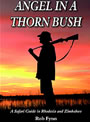
Angel in a Thorn Bush
Rob Fynn
was educated at Peterhouse in former Rhodesia, joined the Royal Navy, read engineering at Bristol University, and finally drove home across Africa in a Land Rover. This adventure on the beloved African soil inspired his subsequent career in the eco-safari world, which he has lived for the last 40 years. His home today is in Harare, Zimbabwe, where he freelances as a veteran guide.
|
|
| |
G |
Gibbs, Peter ; Phillips, Hugh and Russell, Nick |
|
|
|
|
|
| |
Gillings, Ken |
|
We have published 2 book by Ken Gillings:
Discovering the Battlefields of the Anglo-Zulu War
Road to Ulundi Revisited
Ken Gillings
began taking an interest in South African military history as a schoolboy and since then has undertaken extensive research into South African battlefields, especially those in KwaZulu-Natal. He has written numerous articles on the subject, many of which have appeared in the South African Military History Journal. He co-edited The War Memoirs of Commandant Ludwig Krause (van Riebeeck Society) and is author of Battles of KwaZulu-Natal, which is in its fifth edition. The Relief of Ladysmith: Breakthrough at Thukela Heights, 13–28 February 1900 is an acclaimed South African battle_ eld guide and has been affiliated with the South African Military History Society, the South African National Society, the Ladysmith Historical Society (of which he is a founder life member), the KwaZulu-Natal Heritage Foundation and the National Monuments Commission’s War Graves & Graves of Conflict Committee. He chaired the KwaZulu-Natal Regional Committee for the Commemoration of the Centenary of the Anglo-Boer War. He lives in Durban, South Africa.
|
|
| |
Gillmore, Graham |
|
We have published 1 book by Graham Gillmore :
Pathfinder Company
Graham Gillmore
Enjoys country life in the natural beauty of East Anglia and the Fens but was born a Londoner in 1952. An innate fascination with history and all things military inevitably led him to joining the Grenadier Guards, and for six months the Guards Depot drilled into him soldiering skills of the highest standard.
Graham left the British Army in 1977 to join the Rhodesian Light Infantry in their war to prevent communist guerrillas overthrowing the country. After two years as the signals rep to Support Commando, 1RLI, Graham was promoted to Signals Troop Sergeant, but with the fall of Rhodesia to the Marxists in 1980, he moved to South Africa to continue the anti-terrorist fight with the Pathfinder Company, 44 Parachute Brigade. He returned to England still on crutches after being wounded in Angola and joined the Territorial Army.
After a career in VIP security Graham is now a leading member of the Victorian Military Society for whom he runs The Diehard Company, an internationally renowned re-enactment group. He advises and writes articles on the British Army on Home Service and on campaign during Queen Victoria's reign.
|
|
| |
Goldswain, Ralph |
|
We have published 1 book by Ralph Goldswain :
The Chronicle of Jeremiah Goldswain
Ralph Goldswain
The great-great-grandson of Jeremiah Goldswain. He grew up in East London, Eastern Cape, and attended Rhodes University. He immigrated to the United Kingdom in 1971 where he has lived since. He taught English, mainly in comprehensive schools, for several years, but is now happily retired and spends his time relaxing, travelling and writing short stories, many of which have been published in anthologies and journals in the UK and USA.
|
|
| |
Grandolini, Albert |
|
We have published 1 book by Albert Grandolini :
Libyan Air Wars
Albert Grandolini
Was born in South Vietnam and has an MA in history from the Sorbonne. He specializes in Asian military history as well as contemporary conflicts in general. He is author of Fall of the Flying Dragon, South Vietnamese Air Force (1973-1975) and Armor of the Vietnam War: the Asian Forces. He is a regular contributor to numerous British, French and German magazines, such as Air Enthusiast, Flieger Revue Extra, Fana de l'Aviation, Tank Zone and Batailles et Blindés, as well as to the Air Combat Information Group (ACIG) website and Au Delà de la Colline, a French website devoted to the lesser-known themes in military history, and the Khmer Air Force website devoted to the history of the former Cambodian Air Force (1954-1975).
|
|
| |
Grobler , Jackie |
|
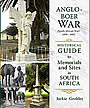
Jackie Grobler
Jackie Grobler is a senior lecturer in the Department of Historical and Heritage Studies, University of Pretoria. He holds a D.Phil degree in History. He has written twelve books on historical topics ranging from resistance politics in South Africa to socio-economic and military history.
His best-known publication is The War Reporter: The Anglo-Boer War through the eyes of the burghers (2004), which has been reprinted nine times. In addition he has co-authored or contributed chapters to a further seven books and has written numerous articles on historical topics which have been published in either academic journals or in newspapers and magazines.
Grobler is a director of the Voortrekker Monument Company and a member of the South African Geographic Names Council. He regularly presents talks on historical subjects. His fields of specialization are the Great Trek and the Anglo-Boer War and he is an expert on monuments and memorials. He lives in Pretoria with his wife Elize.
|
|
| |
Gutteridge, Lee |
|
Lee Gutteridge
Lee is one of only 7 FGASA Scout guides in South Africa, currently the highest level of qualification a guide can achieve in the sub-region. He has extremely diverse interests, and holds Diplomas and certificates in Game Ranch Management, Paleoanthropological Guiding, Wild Flower Guiding and is also a Senior Tracker and international Tracking instructor and assessor.
Lee has guided, trained guides and managed camps and reserves in the Kruger Park, the Sabi Sands, and the Waterberg of northern South Africa, Zambia, Zimbabwe, Rwanda, Kenya, Ethiopia and Botswana and has a wealth of experience and stories to share. He is an avid wildlife photographer and has a great passion for the smaller and more overlooked aspects of the bush and wildlife, and has authored five books to date on various regions, historical subjects, tracking and wildlife. These books include :
Bushveld - a field guide from the Waterberg
Bushman rock art
Okavango field guide
Bushveld including the Kruger lowveld and Mammals of Southern Africa and their tracks and signs.
Lee currently lives in Hoedspruit in Eastern South Africa.
|
|
| |
Gutteridge, Lee and Reumerman, Tony |
|
|
|
| |
H |
Haggett, Adrian, van Tonder, Gerry & Wood, Richard |
|
We have published 1 book by Adrian Haggett, Gerry van Tonder & Richard Wood :
Rhodesian Combined Forces
Adrian Haggett
Was born in Glastonbury, Somerset, in 1953. He immigrated with his parents and two sisters to Southern Rhodesia in 1958, where his father pioneered the Montgomery Heights institution, near Umvukwes, for handicapped adolescent men. Adrian was educated at Plumtree and graduated from the Bulawayo Teachers' College in 1974. He joined 1 Psychological Operations Unit (1POU) and saw service in Mtoko, Nkai and JOC Grapple. He taught at various schools in South Africa before settling in Botswana. He graduated again in 1996 with a Masters degree in Advanced Professional Studies. Currently he works as a Human Resources manager in Gaborone. He has two daughters and a grandchild.
Gerry van Tonder
Was born in Bulawayo, Rhodesia, in 1955. He joined Internal Affairs in January 1975 and was stationed at Karoi, as a Cadet District Officer. A year later, he reported to Chikurubi in Salisbury as a member of Internal Affairs National Service 4 call-up, to undergo military training. In November 1976 he was transferred to Mount Darwin where he served in the Intelligence Section. After reading for a Bachelor of Administration (Hons) Degree at the University of Rhodesia, he was posted to Mount Darwin as a District Officer, being the Returning Officer for Rushinga during the Zimbabwe election, and working through the period of transition from the ceasefire and return of the ZANLA insurgents to assembly points. Gerry, his wife Tracey and two children have settled in Derby, England. He is an active member of several international networked Rhodesian associations, including the Rhodesian Army Association, the Rhodesian Services Association and the Rhodesian Light Infantry Regimental Association, the latter as a result of all three of his brothers having served in that battalion.
Richard Wood
BA (Hons) (Rhodes), PhD (Edinburgh), FRHistS was born in Rhodesia (Zimbabwe). He was educated at St George's College, Rhodes University in Grahamstown, South Africa, and Edinburgh University, Scotland. He was a commonwealth scholar and a Fellow of the Royal Historical Society. He was the Ernest Oppenheimer Memorial Research Fellow at the University of Rhodesia and a Professor of History at the University of Durban-Westville. He is undoubtedly the foremost historian and researcher on the history of Rhodesia in the decades following the Second World War. He is a renowned military historian, having served as a territorial soldier in the Rhodesia Regiment, and the Mapping & Research Unit of the Rhodesian Intelligence Corps. His published works include, among others, The War Diaries of André Dennison (1989), Counter-Strike from the Sky: The Rhodesian All-Arms Fireforce in the War in the Bush 1974-1980 (2009), Operation Dingo: Rhodesian Raid on Chimoio and Tembué, 1977 (2011) and numerous articles, conference papers and chapters in books. He lives in Durban, South Africa, with his wife Carol.
|
|
| |
Heaton Collin D |
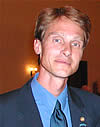
|
We have published 1 book by Colin Heaton:
Four War Boer
Colin Heaton
Served in the U.S. Army and later in the Marine Corps as a scout sniper. He is the author of several titles and has taught history at the American Military University. He currently lives in Southport, North Carolina.
|
|
| |
Heitman, Helmoed Römer |
|
We have published 1 book by Helmoed Römer Heitman:
Surviving the Ride
Helmoed Römer Heitman
Has written and lectured on defence since 1978, consults to the Defence Ministry, Defence Force, parliamentarians and defence companies, and edits the SA Army Journal. His military career includes service in the SA Army reserve, worked with the nonstatutory forces and political parties from 1991 in the run up to the 1996 Defence White Paper, served on a working group of the 1998 Defence Review, and with the SA Army's Vision 2020 team, worked with the Navy on fleet design concepts and the potential of multi-role vessels as well as the Air Force on force design and operational employment doctrine for the Rooivalk attack helicopter. He has written six books and four minor titles on defence matters, drawn up more than 120 papers and studies, presented papers at more than sixty defence conferences and published more than 500 articles on defence matters in South Africa and other countries.
|
|
| |
Henry, Stephen J |

|
We have published 1 book by Stephen J Henry:
Ratel One Two
Stephen John Henry
is a first-time writer. He was born in 1967 in the sleepy little city of East London on the East Coast of South Africa, the youngest in a family of five children and brought up in a home filled with love and laughter. He writes from experience as a teenager in the late 1980s called up to do his national service in the South African Defence Force and whose experiences left a deep impression on his life. Father to a 20-year-old daughter, he works in Logistics, and lives in Durbanville, Cape Town. He enjoys being outdoors as much as possible, whether hiking the mountain with family and friends or being on a beach … any beach.
|
|
| |
Hewitt, Peter |
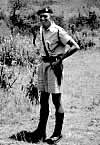
|
We have published 1 book by Peter Hewitt :
Kenya Cowboy
Peter Hewitt
Was born in Windsor with the Great Depression looming, his adolescent years were passed in Reading, also on the Thames. At age 18, following an MoD engineering apprenticeship, he was conscripted and served for eight years in the Fleet Air Arm. Upon release he entered Colonial Police Service, a career change that took him first to Kenya, followed by tours in Cyprus and Nyasaland. His police career concluded with a nine-year spell in the Royal Papua New Guinea Constabulary. Retuning to England in 1972 he took up an appointment with the Foreign and Commonwealth Office, where a succession of postings took him to diplomatic missions in Sierra Leone, East Berlin (GDR), Guyana and Lisbon-until a surfeit of 'foreign parts' prompted him and his wife to settle in the north London suburb. There was to be, however, one final call of the wild that he felt unable to resist and so took off again for Sierra Leone where he was engaged by a large diamond-mining company in a senior security role. This post-colonial swansong persuaded him that retirement might be the preferred option. Since then he has alternated between Cockfosters and a 'bolthole' in north Cyprus.
The Kenyan "Emergency" of the 1950s was one of a number of nasty insurgencies and counterinsurgencies the British faced in the wake of World War Two.
Britain faced a number of insurgencies at the time, principally in Malaya, Cyprus; in addition to the last phase of the Korean War and the Suez intervention of 1956: Quite a handful for a bankrupt United Kingdom. The principal consequence was that the colonial authorities in Kenya were largely left to their own devices. At peak, five British battalions were deployed in theatre along with six of the King's African Rifles. They were augmented by the whites-only Kenya Regiment and a plethora of reserve and auxiliary for-I mations, including the Kikuyu Home Guard (KHG), who suffered the bulk of the government casualties.
As behoves a properly constituted counterinsurgency, the ultimately successful struggle against the Mau Mau relied heavily on the KHG and the Kenya Police Force and particularly the latter's paramilitary formations, largely staffed by "supernumerary" short-service sub-inspectors, effectively hired from anywhere in the Empire for the duration of hostilities. These young officers, who were given six weeks of police and paramilitary training were quickly nicknamed the Kenya Cowboys. Among their number was a former Fleet Air Arm rating Peter Hewitt, the Kenya Cowboy of the title.
Hewitt arrived in Kenya in the autumn of 1953 and was posted to a police training establishment at Gilgil on the edge of the Rift Valley. The facility was most rough-and-ready but did provide the training the young counterinsurgents needed.
We next meet Hewitt at Hermann's Post, a tiny police "fort" on the property of one Alec Hermann, a farmer on the so-called "White Highlands" that were opened to European settlement after WW2 and which was a major theatre of insurgent activity. Hewitt tells us that the locating of actual Mau Mau gangs was "a game of chance with the odds stacked against [the police at forest posts such as his]." This being the case, the primary task of a police officer such as himself, his sergeant and fifteen reserve constables (commonly called Askaris) was to prevent Mau Mau gangs from "becoming too comfortably ensconced." The gangs -whose bushcraft were impeccable -had to be continually harried and denied food, access to farm labourers, farm stores and the like. Aggressive patrolling also had as an aim discovering and destroying "their cunningly situated hideouts." The primary task, says Hewitt, "was to purge one's area and maintain it so. The young inspector had to ensure that his farmers and their staff could go about their normal and lawful activity ... in peace, that their losses through Mau Mau were kept to a minimum, and any inconvenience they were caused was not caused with impunity."
In early 1955 Hewitt was assigned to command a tracker combat team (TCT) and take a more active role in combating the insurgents. His TCT quickly started scoring successes, often assisted by recently captured or surrendered insurgents. Hewitt would take the man back into the field and "systematically and hopefully take him over all the ground covered by him and his gang during the immediately preceding weeks. ... At every stage of his singular association with the team I displayed a keen interest in the way he lived and the raids he participated in." Often such insurgents would lead a TCT onto a gang, or at least onto a hot trail.
The TCTs must, of course not be confused with the equally successful pseudo-gangster teams set up by Special Branch to emulate and destroy insurgent gangs, a tactic later perfected in the Rhodesian Bush War by the Selous Scouts. From Hewitt's telling the TCT concept worked very well and may well be worth further study. The use of pseudo gangs also had a telling effect, making gangs suitably wary of each other and also upping the level of paranoia within gangs. Soon, leaders were decimating their numbers by executing followers on the slightest of suspicions, which increased the rate of desertion, which reinforced the paranoia and led to another round of deaths. As a consequence, by the end of 1956, the Mau Mau had been comprehensively defeated.
It should be noted that two factors that certainly assisted the counterinsurgents, was that the Mau Mau infestation was somewhat geographically contained, allowing the authorities to mass their forces to telling effect. The second was that the Mau Mau had no external base. Ultimately they had no foreign sponsor, little access to adequate finances and armament and no strategic rear area safe from attack. The Mau Mau were probably doomed from the start.
That said, the conflict and Hewitt's account is food for thought and shows how an insurgency can be beaten.
Peter Hewitt, African Armed Forces Journal
July 2008
|
|
|
Hewlett, John |
|
|
|
| |
Hilton-Barber, David |
|
|
|
| |
Hudson,Andrew |
|
We have published 2 books by Andrew Hudson
Andrew Hudsen is also co-author of :
Four Ball, One Tracer
Andrew Hudson
Majored in military history at the South Africa Military Academy and after two decades as an infantry officer in the South African Defence Force, ten of which were spent in the operational areas, he moved into the private sector. Still a soldier at heart he divides his time between earning an income, indulging his passion for collecting books on conflict in Africa, and road running in weird and wonderful locations.
|
|
J |
Jackson, Neill and van Malsen, Rick |
|
|
|
| |
Jeremy Hall |
|
We have published 1 book by Jeremy Hall :
Weep for Africa
Jeremy Hall
Was born in 1954 and grew up in the farming regions of the Natal Midlands and Zululand, South Africa. Following a privileged education at Kearsney College in Durban, he was conscripted into the South African Defence Force in 1973, undertaking his military training at Danie Theron Combat School in Kimberley. It was here where he first encountered intense Afrikaner animosity towards English-speaking South Africans.
After numerous military camps in 1974-75, he signed up for three years with 2 Commando The Rhodesian Light Infantry in March 1976, experiencing considerable combat in the Rhodesian bush war as a paratrooper on Fire Force and external raids against ZANLA and ZIPRA guerrillas. In 1981 he married a Rhodesian girl, before moving to South Africa and then immigrating to Ontario, Canada in 1987.
|
|
| |
| |
K |
Kamongo, Sisingi and Bezuidenhout, Leon |
|
|
|
| |
Keeling, Guy |

|
Guy Keeling :
Guy Keeling has always had a keen interest in the second South African War (Anglo-Boer War). He served with the SADF Infantry in the Caprivi Strip on three occasions.
Guy is a keen swimmer and has completed the Midmar 8 Mile challenge for the last three years. He loves the outdoors and has been involved in Veld & Vlei, Blue Water Bay Surf Lifesaving Club and as a Rotary Group Study Exchange Student to Cleveland, USA.
He has worked in the corporate world until his retirement. He had varied interests which include working with the elderly, ill and children in hospital with his therapy dog, Coco. Currently, he is working on small group presentations on the battles and tragedies of the Boer War.
|
|
| |
Korff, Granger |
|
We have published 3 books by Granger Korff :
19 with a Bullet
19 en Gewapen
Bat Out of Hell
Granger Korff
is the author of the bestseller memoir, "19 with a Bullet". That account of his action-packed time in South Africa’s crack Parachute Battalion, at the height of the fast escalating Angolan border war, won the Irwin Book of the Year award from the Book Publicists of Southern California. 19 with a Bullet was also translated into Afrikaans.
Bat out of Hell, the sequel to 19 with a Bullet, takes the story further … to a time not often talked about amongst veterans – the aftermath of combat.
Granger Korff was born In South Africa and grew up in Benoni and Kempton Park. He now lives in California.
|
|
| |
Korff, Granger & le Hanie, Lenord |
|
We have published 1 book by Granger Korff & Lenord le Hanie :
19 en Gewapen
Lenord le Hanie
het sy basiese militêre opleiding begin by 1 Valskermbataljon in Bloemfontein, gedurende Januarie 1984, gevolg deur 18 maande by Hoof Staf Intelligensie, te Sektor 20 by Rundu op die Namibiese-Angolese grens. Tydens sy grensdiens was hy ook ontplooi in die UNITA-hoofkwartiere te Jamba in Angola. Lenord is 'n voormalige Suid Afrikaanse Taekwondo Kampioen en 1ste Plek Trofee-wenner van die '19th Annual Silver Cup Championship' gehou in Miami (VSA). Tans 'n 8ste Dan Meester-instrukteur wat oor uitsonderlike afrigtingsvaardighede en 'n uitstekende prestasierekord beskik - hy het 170 swartgordels en 38 SA Nasionale Protea-atlete opgelewer. Trots om die eerste Suid Afrikaner te wees om die Internasionale Taekwondo-Skeidsregterseksamen te slaag gedurende 1996. Huidig beskik hy oor meer as 35 jaar ondervinding in gevegskunste soos Taekwondo, Krav Maga, Close Quarter Combat, Brasiliaanse Jiu Jitsu, Judo, Boks en Skopboks. Hy het ook Israeli Krav Maga-opleiding aan Suid Afrikaanse Spesiale Magte en Valskermsoldate aangebied. Hy is gelukkig getroud met Monica en 2 kinders uit 'n eerste huwelik.
Granger Korff
1960-Cassius Clay wen 'n Olimpiese-goud in Rome, die Beatles maak hulle debuut in Duitsland, Apartheid was in volle swang in Suid Afrika en Granger Korff was gebore op die Oos-Rand duskant Johannesburg aan'n eiendomsagent-pa en ontluikende aktrise as moeder. "Die Apartheid-sisteem was so styf gespan soos n Zulu trom en die land het teen 'n stadige ritme beweeg," sê hy van die tye. Hy was aanvanklik'n stil seun tydens sy vormingsjare in die myndorpie Benoni, maar het later ontpop as 'n musikant en kwaadstokende rebel wat 'n string skole bygewoon het vir verskeie redes. Hy het gematrikuleer in 1979-vanuit die openbare biblioteek. In 1980 het hy aangesluit by 1 Valskermbataljon, vinnig besig om beroemd te word vir die feit dat hulle op die voorpunt van die aksie was in die bosoorlog op Suid Afrika se noordelike grens. Na 'n aksie belaaide twee jaar in die Afrika-bos het Granger 'n nuutgevonde woede na die professionele bokskryt geneem waar hy 'n reputasie gehad het as een van die beste middel-gewig boksers in die land. In 1985, geteister deur demone uit die bosoorlog, het hy na die VSA gereis vir vier maande waar hy die strate van Los Angeles trotseer het en geboks en baklei het om te oorleef. Ike Turner en Mickey Rourke was sy kuierbroers en hy het byna Jake LaMotta's-'The Raging Bull'-se skoonseun geword. Hy woon steeds in Los Angeles, waar hy n klein loodgietersbesigheid bestuur.
|
|
| |
Kotzé, Adri |
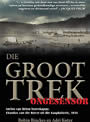
|
Pen & Sword title by Adri Kotzé:
Die Groot Trek
Adri Kotzé
Adri Kotzé is in die koue Hoëveldse winter van 1969 op Belfast, in vandag se Mpumalanga, gebore. Nadat sy daar gematrikuleer het, het sy in die regte aan die Randse Afrikaanse Universiteit (nou die Universiteit van Johannesburg) gestudeer. Op 21 het sy by die destydse Transvaler as joernalis begin werk. Kotzé was van 1994 tot 1998 onder andere misdaadverslaggewer en parlementêre verslaggewer by die Afrikaanse dagblad Beeld. In 1998 was sy een van die eerste joernaliste wat by die SAUK se ondersoekende program, Special Assignment, aangestel is. Sedertdien was sy spesialisskrywer vir die Sondagkoerant Rapport (2003-2005), hoof van navorsing vir etv se ondersoekende program 3rd Degree en insetselvervaardiger by M-Net se Carte Blanche (2006-2009). In 2009 het sy 'n Safta gewen vir beste nuus- en aktualiteitsprogram en in 2007 was sy die gesamenlike wenner in die gesondheidskategorie van CNN Multichoice se Afrika-joernalis van die jaartoekenning. Kotzé woon nou in Londen, waar sy as vryskutjoernalis, -vertaler en -skrywer werk.
|
|
| |
|
|
|
|
|



|