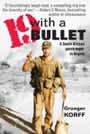
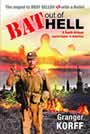
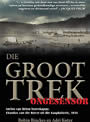
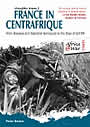
A rough, tough 'Bat in the bush wars of Namibia and Angola
Peter Chapman, ArmyTalk - 2010-04
It is some months since I read this particular autobiography by Granger Korff… when I first read it, I felt completely unable to describe the book in any meaningful context, so overwhelmed was I by the experience, so I have left it until now, and after much musing on its content, am again attempting this review in a more sober frame of mind. If I may, let me start at the end, by saying that I believe this to be THE best personal account of national service by a combat soldier in the old South African Defence Force that I have read to date. Forget the rather negative sounding promotional blurb that you may have read, about the author almost ending up as Jake LaMotta’s son-in-law, or about him becoming a boxer in the United States. That has nothing to do with this book, and in fact is barely if at all mentioned by the author. The book is, purely and simply, about his time as a soldier in the SADF, and particularly as a paratrooper in No.1 Parachute Battalion, and his subsequent struggle to gain some semblance of normality after his time had been served. From the beginning, Granger pulls no punches and his in your face style of living shows on every page; from regular sex with an older, married teacher whilst still in high school, to being expelled from a succession of educational institutions and getting into trouble, seemingly on a never-ending basis. In fact, initially I found it hard to like him, even if I had to admire his remarkable propensity for falling on his feet after each scrape, a trait that would serve him well as a paratrooper. First impressions can be false though, and I am pleased to say that mine were in this instance. Any person who has had to endure what the author and his comrades did, through tough training and later on a succession of external operations into Angola in 1981, will have to admire his human spirit and endurance under extreme duress. Granger Korff, together with a good friend, John Delaney, joined the Parabats, [and] then tried out for Recce selection, but in the end chose to return to the Parabats, and serve out their time there. This decision led directly their involvement in a lot of fighting in northern South West Africa and particularly in Angola, during Operations Protea, Daisy and Ceiling. This was both in the counter-insurgency and conventional roles, and was brutal, even visceral at times. Granger transports the reader from one shocking encounter with often superior forces to the next, describing in detail the noise and confusion of battle, his feelings at killing enemy soldiers, his relief at surviving, his fear and his fatigue, his and his fellow Parabats’ slow descent into numb indifference to the suffering of their own and others. What the reader is left with, as I alluded to earlier, is an overwhelming sense of awe at the endurance of these brave young men, barely out of school, yet thrust into a war they had no way of avoiding, and doing their jobs well and to the best of their ability. The insanity of it all can best be described in two events in the book. The first of these is when he and his Valk returned from weeks of foot slogging through Angola, where they had done some hard fighting and were sorely in need of rest and peace. Instead, on regaining their base, he discovered that his pet cats had been brutally and needlessly killed by a PF infantry Staff Sergeant while he was away on operations. Korff’s response is both bizarre and yet understandable; his grief at the terrible death suffered by his defenceless pets leads him to brutally beat the offender, hospitalising him. Yet this same Korff, defender of a pair of murdered kittens, is the man who has already killed a number of enemy soldiers at this stage in his service. The inevitable consequence of his actions of this occasion was that he was court-marshalled and was awaiting sentence when the rest of his Valk prepared for an all out assault. Rather than be left out, he then chose to go AWOL from the base to which he had been confined, and rejoined his Valk and share the battle with them, thereby retaining that brotherhood which seems to have held all of them together in adversity. The second peek into his mental state that I wish to mention comes right towards the end of his service, when he is part of a group mopping up a band of SWAPO who were fleeing but were chopped down by helicopter gunships. In the mop up he again has to kill an enemy soldier, but then finds a badly wounded old woman, who will obviously not survive her injuries, yet the humanity hidden so deeply within him by this stage still causes him he stumble away to try and find some elusive aid for the dying woman. In the end it is one of his fellow paratroopers who puts the dying woman out of her misery, and again Korff is angry at this comrade for doing what was obviously necessary, as if this one old woman’s death is too much for him to bear at this point. That these experiences deeply affected Granger Korff, and continue to do so to this day, is never in doubt, yet at no point in his story does he complain at his lot. Instead, he gives a blunt, yet fascinating and very honest portrayal of a simple man, a good soldier, who did his duty and who has managed to come to terms with who he was and what he did.
If I had to rate this autobiography on a scale of one to ten, I would give it an eleven. It is, quite simply, outstanding.
Cape Town’s Child - 2010-03-08
This book is a fast-moving, action-packed account of Granger Korff's two years' service during 1980/81 with 1 Parachute Battalion at the height of the South African "bush war" in Namibia (South West Africa) and Angola. Apart from the standard counter-insurgency activities of Fireforce operations, ambushing and patrols, to contact and destroy SWAPO guerillas, he was involved in several massive South African Defence Force conventional cross-border operations such as Protea, Daisy and Ceiling into Angola to take on FAPLA (Angolan troops) and their Cuban and Soviet allies. It's a riveting and emotional read.
Piet Massyn - 2010-02
Just finished your book 19 with a Bullet
It is right up there with Chickenhawk, The 13th Valley and Forgotten Soldier..."
19 en Gewapen
n Suid-Afrikaanse Valskermsoldaat in Angola
Author:
Granger Korff & Lenord le Hanie
R299.00
Die rowwe en eerlike vertelling van 'n 'Bat in the bosoorloë van Namibië en Angola
Other Wars on Terrorism Charles D. Melson, chief historian
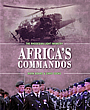
The Rhodesian Light Infantry: Africa's Commandos. By Mark Adams and Chris Cocks (Boksburg Industrial: RLI Regimental Association, 2012. Pp. 320.)
During the short lived British Commonwealth Central African Federation of Rhodesia and Nyasaland several military units were formed in the 1960s that would feature in the subsequent Unilateral Declaration of Independence by Southern Rhodesia and the ensuing Bush War between 1966 and 1979. One was the Rhodesian Light Infantry (RLI), an all-white regular regiment formed to balance the black manned Rhodesian African Rifles. Other units established at the same time were a Special Air Service (SAS) Squadron and an armored car squadron. These regular units backed up the part time reserve and militia Rhodesia Regiment. Bear in mind that the Federation had a colonial police force, the British South African Police, which was larger than its armed forces. Federation army and air force units augmented the British Empire and Commonwealth commands in the various post World War II conflicts of "national liberation." They also saw combat service as part of the independence struggles of southern Africa from Portugal, Great Britain, and South Africa. The regiment had a single battalion with supporting establishment and soon adopted a "commando" or light infantry role as the best means to accomplish its mission as a force in readiness. This included intensive training in the use of helicopters and parachutes for "vertical" envelopment as a quick reaction element. Emphasis was placed on the integration of small units, with superior communications, supported by close air support to close with and destroy terrorist and guerillas. Manned by volunteers, conscription from national service requirements provided most enlistees. These "troopies" also reflected the values and vices of their society as the war went on and younger and younger men were called up. A foreign element was present from the beginning to make up for a lack of qualified local manpower bringing experience from other Cold War conflicts including personnel from South Africa, Great Britain, and America. These provided an outspoken, if not always the most skilled participants, which the native Rhodesians tolerated. One result was that the post war narrative was dominated by the more controversial views or opinions from those with the least to lose from the conflict. This book makes up for this with the authentic voices of its regimental members. As someone who had followed the conflict and the RLI for some forty years, this book is something new. Previous "unit histories" were published in 1977 and 2007. This is a departure from those with a collection of interviews, or oral histories, by veterans. Oral histories, particularly those well after the events in question, need to be considered critically in conjunction with contemporary documents and narratives. For most individuals it takes years or decades to find the words to describe their experience with more eloquence than they commanded at the time the actions occurred. As a result, memoirs are long on subjective experience and can be short on facts. It also means you are dealing with those compelled to tell their story, regardless of significance. The "quiet professionals" are often left out. But these circumstances provide grist for the trained historian rather than the soldier. Even so, this is a valuable book with contributions that would otherwise have been ignored as the former government of Zimbabwe has no one to tell the story. For professional soldiers, historians, and the public this is a good read. The ouens have the last word! For example, there are the seven evocative accounts from the November 1977 Operations Dingo. This raid occurred at two locations respectively 90 (Objective Zulu 1) and 200 kilometers (Objective Zulu 2) inside of Mozambique. A force of 184 RLI and SAS troops on the ground, supported by air force fighters, gunships, and transports took on an enemy force of 7,000. This air and ground attack on the guerilla bases at Chimoio and Tembue netted the largest "bag" of enemy kills of the war through daring and aggression. At the time, there were an estimated 1,200 enemy dead with total casualty counts up to 5,000 based on camp occupancy at the time. The eyewitness narration of these events brings life to the historical narrative. The text is arranged in three chronological parts. Each entry is preceded by a "postage stamp" photo and brief biography of the narrator. It includes a glossary and appendixes. Maps and images illustrate, but do not dominate the text. While a regimental publication, professional editing and design came from 30 Degrees South's Chris and Kerrin Cocks. Graphic and editorial support was provided by Dr. J.R.T. and Carole Wood. Both authors Mark Adams and Cocks served with "The Saints" and are active in the RLI regimental association in South Africa. Profits from sales will go to the association. The book is available from the RLIRA at www.therli.com
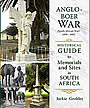
A Guide To The Anglo-Boer War Sites of Kwazulu Natal
The author’s ancestors first came to southern Africa in the early 19th century, and have played a role.
Be the first to write a review on this article
An Unreasonable Woman - LEDA Publishers
South African Historical Fiction
Author:
Ivy May Stuart
R199.00
From Victorian England to the battlefields of South Africa, this is the story of one woman's search for freedom.
Book Review - An Unreasonable Woman by Ivy May Stuart
Pretoria News - 18 May 2015
Review by: Dianne Low
Victorian heroine escapes to Natal
This book is a tribute to all the Victorians, both soldiers and ordinary men and women, who fought, lived and loved so far away from home.
The story starts in England in 1879, when the heroine Judith Armstrong is introduced. The illegitimate daughter of a Lord, she lives like a lady but is not accepted as one, or as a suitable friend or possible wife. She does not accept the restrictions placed on women by society and joins the Ladies National Association when it speaks out about The Contagious Disease Act which was used to control prostitution for the convenience of the men in the Armed Forces.
At an engagement party at the house next door, she meets Ralph Gilchrist, who is attending his sister's engagement, but she knows nothing can ever come of it. He is on leave from the army where he an officer in Her Majesty's 1st Dragoon Guards. After much thought, she decides the only way to escape a life full of Victorian rules, and find the freedom to live her life, is to join her friends at their mission station in Natal.
And so begins her journey to South Africa, just when the Zulu war is about to begin at Isandlwana. If you enjoy an historical novel, then you will enjoy this book. I was surprised by her final decision. I did not expect it from her after everything she had done to change her life. But did she find the freedom and the man she had been looking for?
Ivy May Stuart: 'There is no single truth'
Mail & Guardian - Friday, 24 April 2015
Ivy May Stuart answers our questions about her debut historical novel '? An Unreasonable Woman', which foregrounds the women's rights movement.
Describe yourself in a sentence.
I am always ridiculously enthusiastic and idealistic, no matter what life throws at me.
What was the originating idea for the book?
I began it shortly after my mother passed away. She was the last of her generation and, when I look back now, I wonder if part of the motivation wasn't the fact that our entire family history in this country disappeared with her.
Originally, I began writing random observations in a notebook, hoping to create something meaningful for my daughter; then the writing took on a life of its own. I don't remember exactly when my heroine, Judith Armstrong, appeared, but suddenly there she was: a forthright, rebellious young woman with a giant chip on her shoulder.
The Ladies' National Association to which she belongs in the novel was a Victorian women's group which fought for the rights of prostitutes servicing the British Army between 1869 and 1886. They were the first protest group composed entirely of women and - despite some violence and heavy opposition - they managed to get the abusive Contagious Diseases Act repealed.
Having created Judith, I wanted to see what would happen to her if she was taken from the rigidity of Victorian England and placed in a new world as my own grandmother had been. At the time the Anglo-Zulu war would have been on the go in Natal. To me this was a "happy" coincidence, as I had always been fascinated by the politics of that period and more particularly the Battle of Isandlwana.
Were the years you spent teaching significant?
As preparation for writing a historical novel (always my favorite genre) it didn't hurt that I taught both English and history.
At the time, my pupils were of school-leaving age and I was alerted to the absolute lack of interest in the women's rights movement among young girls. A typical reaction when the topic is raised is a sort of mild embarrassment. Very few girls are aware of, or interested in, the long history of the women's movement and just how difficult the struggle has been. It frightened me to think that our hard-won rights and freedoms could be eroded if women are not vigilant. From time to time we need to be reminded of just how tough life has been and can be for women.
Describe the process of writing the work. How long did it take?
I wrote for three years, at random times of the day or night. After the initial idea, I began to research to get a sense of time and place. Even then it still took a while for the novel to take shape in my head. The truth shifts and changes as you research. When I write I need to grasp on to and hold the different facets that I have glimpsed and beat them all into submission in my brain - every facet must interlock with and enrich the whole. Only then can I say that I have what I believe to be a final, truthful product.
Name some writers who have inspired you and tell us briefly why or how.
I love writers who allow me to see nature through the eyes of someone else. Here I am referring to authors like Sebastian Faulks and Barbara Kingsolver and the poetry of Gerard Manley Hopkins and Wordsworth. They share a sort of wonder at the universe that I often feel but find so hard to express.
Then, too, I enjoy writers who can weave a clever plot like John le Carré. His Cold War thrillers are masterfully written.
For characters that jump out of the page and inhabit your world, Jane Austen is an inspiration. I love her sly sense of humor and dedication to telling it like it is.
Do you write by hand, or use a typewriter or computer?
I sometimes take photographs as an aid to memory, but basically I have a notebook in which I jot down all sorts of observations, ideas and sometimes little sketches of things that are relevant to me. Otherwise, I view the advent of the computer as a minor miracle. I write and rewrite sentences and paragraphs, fiddling endlessly with structure and vocabulary, so writing by hand or typewriter would be out of the question for me.
What is the purpose of historical fiction?
They say that history is written by the victors but ultimately - just as there is no one single point of view in history - there is also no one single truth. For the people in the midst of making history, there is a strong temptation to shape their account to serve their needs. For that reason I believe that no interpretation of an important historical event or period should stand unchallenged. One purpose of historical fiction is to achieve balance, to give voice to the voiceless through an imaginary process of inhabiting a dissenting person of the period.
And then, of course, historical fiction is the ultimate in escapist reading. You move out of the world that you inhabit into another place and time, leaving the modern world behind. It's fun and educational at the same time. You learn about another reality; a less comfortable but perhaps richer world. If I am ever spirited out of this era into another by time machine, I am well-equipped to milk a cow, churn butter or even survive a Viking invasion.
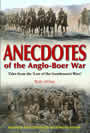
Anecdotes of the Anglo-Boer War
Tales from ‘The Last of the Gentlemen’s Wars’ - Second Edition
Author:
Tony Rob Milne
R255.00
A kaleidoscope of human-interest stories exposing long-kept secrets, mysteries and heroics for the first time
The Sunday Times Travel Weekly - Off The Shelf 25 May 2014 Review by Paul Ash
An A to ZED of conflict - This Anglo-Zulu-War battlefield guide brims with history and practical tips.
Historical Guide to Memorials and Sites in South Africa
Be the first to write a review on this article
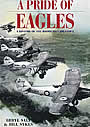
A Pride of Eagles
A History of the Rhodesian Air Force 1920-1980
Author:
Beryl Salt
R759.00
Aviation / Military History / African Studies
Be the first to write a review on this article
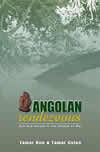
Angolan Rendezvous
Man and Nature in the Shadow of War
Author:
Tamar Ron & Tamar Golan
R255.00
African History / Natural History / Cultural History
Review in: Gorilla Journal 42, June 2011 Editor: Dr. Angela Meder Stuttgart, Germany
Tamar Ron, the biologist who has been working on the conservation of the Maiombe Forest, and Tamar Golan, the first Israelian ambassador in Angola, wrote a book on their experiences in this difficult and exciting country. The fascinating stories of each author are printed in a certain type, and the different themes they cover comple ment each other very nicely. Tamar Golan mainly deals with political and diplomatic aspects, and Tamar Ron reports from the rain forests, the savannas and the rivers and her encounters with all kinds of wild animals and with Angolan people. Apart from the authors' personal narration, the book also contains general information about the history and the nature of Angola.
John Hanks, Signing Off www.africageographic.com
In a country structurally and emotionally shattered by decades of civil war, the loss of biodiversity and habitat goes almost unnoticed. But John Hanks has encountered in Angola, two Israeli women who are optimistic for the future of the nation and its environment. When Libya exploded into civil war unrest earlier this year, images of tens of thousands of refugees streaming out of the country to escape the mayhem of death and mindless destruction filled the media. The recent horrors of human suffering in Darfur and Somalia had extended to the northern extremities of the continent where, as oil prices escalated, they attracted more global attention than usual. Civil conflict is, of course, not new to Africa, but little mention is ever made of the insidious destruction of biodiversity, particularly the large mammals. It's a loss the continent can ill afford. In the civil war in Rwanda in the 1990s, the country's Akagera National Park (see also page 57) lost about 90 percent of its large mammals in a very short time and, just as importantly, habitats disappeared as refugees began to settle within its boundaries. An even more extreme example comes from Angola, a most beautiful country encompassing close to 1.25 million square kilometres (40 times the size of Belgium), and one that few people have visited in recent times. Some 27 years of brutal conflict ended in 2002, leaving at least 1.5 million people dead, thousands maimed for life by landmines and 3.5 million displaced, as well as infrastructure destroyed and public administration and economic enterprises in a shambles. In a situation of such chaos and hopelessness, much of Angola's wildlife did not survive: tens of thousands of the larger mammals were slaughtered for food and the traumatised survivors face an uncertain future in displaced and isolated remnant populations. Towards the end of the war, two remarkable Israeli women arrived in Angola: Tamar Golan, as the Israeli ambassador to the country, and Tamar Ron, a zoologist advising the government on biodiversity conservation. They came face to face with a fractured society. Bereft of hope and seemingly abandoned by the rest of the world, most of the population was living in extreme poverty and among the largest number of unexploded mines per capita, with the highest percentage of child casualties ever recorded. The Israelis' peers had cautioned them about the dangers of working in Angola and warned that there were no easy solutions to the country's downward spiral of despair. Undaunted, these two strong characters from very dissimilar backgrounds formed a bond, determined to make a difference and to help rehabilitate Angola's people and wildlife.
'We fell in love with the country and with the wonderful people we met - the children and the women, whose daily struggle for survival aroused sympathy and admiration,' they explain. 'And we fell in love with the vast open spaces and enchanting natural beauty.'
The pair were united in their respect for the extraordinary resilience of the people, from top government officials to wildlife guards working in the remotest areas with virtually no resources. Together they have produced a poignant but highly authoritative book, Angolan Rendezvous, that will enlighten all who read it - and in particular those Afropessimists who see no hope for countries still wracked by civil conflict and diminishing biodiversity. I had the privilege of travelling with Tamar Ron to what remains of the Maiombe Forest in Angola's Cabinda enclave on the borders of the Republic of Congo and the Democratic Republic of Congo. There we were to begin discussions on the development of a transfrontier conservation area to consolidate and conserve the forest, and restore its spectacular diversity. Describing her first visit at the height of the war between government forces and the Cabinda separatist movement, Ron writes: 'Several giant tree stumps were lying on the barren ground, a terrifying memory of the magnificent tropical forest that grew here until recently; a great nothingness, covering hills and valleys, spreading everywhere.'Deterred neither by threats to her own safety nor by the extent of the forest destruction, Ron established contact with local villagers and started a groundbreaking conservation project. When she introduced me to some of the forest communities with whom she was working, I was profoundly impressed by the way they had accepted her and by the progress her project was making. Mutual trust and respect is such a key ingredient to conservation work and should be embraced wherever possible.
'We need to end ongoing civil conflicts, prevent new ones, build a sustained peace and rebuild countries that have been in conflict,' says Ghanaian K.Y. Amoako, a former UN Under-Secretary-General, of Africa. Angolan Rendezvous tells us how this can be done - and brings with it a message of hope. The detritus of Angola's civil war will litter the landscape for many years, but cannot suppress hopes for regeneration. The two women were united in their respect for the extraordinary resilience of the people, from top government officials to wildlife guards working in the remotest areas with virtually no resource.
B
Bat Out of Hell
Bat Out of Hell
A South African paratrooper in America
Author:
Granger Korff
R355.00 plus shipping
MilitaryHistory/Memoir/African Studies
Be the first to write a review
Biafra
The Nigerian Civil War: 1967-1970
Author:
Peter Baxter
R199.00
Military History / African Studies
Be the first to write a review on this article
Blood Lily
Contemporary fiction
Author:
Mason Cranswick
R125.00
War and decay are transitory … but the land is forever
Amazon UK - 2010-09-09
The fictional relationship at the core of Cranswick's Blood Lily is between two boys born in Rhodesia, one the son of a white farmer and the other that of a black domestic worker on the same farm. For those of us that had our formative years in Southern Africa, this relationship and how it evolves as part of, and in response to the great pressures of the time, makes for a compelling and evocative story. The two boys grow up together as best of friends, with the black servant and her son regarded as part of the wider family circle on the white man's farm. But therein lies the problem in this relationship and the wider society of Rhodesia, as such a paternal outlook fails to provide the basis for true equality and shared aspiration for all the country's people. Cranswick's story takes us through the years of civil war in Rhodesia into the tragedy of life today in Zimbabwe, and there is plenty of excitment and drama to keep one engaged, in what is ultimately a story of betrayal, redemption and Africa's endurance despite the folly of man. Hence the opening dedication in the book, "One generation passeth away, and another generation cometh: but the Earth abideth for ever... (Ecclesiastes 1.4)".
Amazon US - 2010-09-09
"Excellent book. Couldn't put it down. Great story telling and a great overview of an often overlooked chapter of Africa's history." Richard R. Blake, Reader Views - 2010-09-09
Blood Lily is the story of Bruce, Conway, Scott, and Simba, four young men ready to take on the world. Mason Cranswick takes the reader back to the 1970's to a time when Zimbabwe was a respected contributor to African culture. The Rhodesian War left the country devastated and still divided. A nation in which a minority ruled a majority population became a country ruled by terror, greed, and carnage under the rule of Robert Mugabe. Cranswick captures the beauty of the Zimbabwe's vegetation and wildlife. He brilliantly reveals insights into the bonding and friendship discovered in boyhood, the loyalty of friendship developed in the midst of battle, the competitive drive for winning, and the self destruction of personal revenge. Detailed descriptions are given of the meticulous repetition of SAS beret training, the briefing sessions, and the risk of the enemies' reaction to diversionary attacks. The symbolism of the "Blood Lily," reflections seen in the mirrored water, dreams, premonitions, and memories all play a part in carrying out the drama, action, suspense, and romantic aura of Cranswick's sensitive writing. I personally enjoyed Cranswick's literary style and his underlying compassion, in the midst of graphic descriptions of battle, torture, and death. On occasion I found I had to backtrack in my reading to determine the timeline, and some difficulty in sorting out the reality of the plot with the dreams and back-flashes. I enjoyed the choice of word usages of African/ English expressions which added to the local flavor of the story. The author was born and raised in Zimbabwe, has an MBA degree from Cambridge University, a degree in commerce from Rhodes University in South Africa, as well as a career in investment banking with assignments in Tokyo, London, New York, and Singapore which adds credibility to the many facets of the background and plot twists of this complex story. This is a book for the history buff that enjoys the fast pace of battle scenes a realistic look at the political impact on a country's economy, culture, and future, as well as the sensitivity of interpreting individual differences, in abilities and opportunities. "Blood Lily" is a gripping story with a lingering sense of wonderment.
Blue and Old Gold
The History of the British South Africa Police
Author:
Peter Gibbs, Hugh Phillips and Nick Russell
R659.00
The BSAP held the Right of the Line - one of the finest police forces of the British Empire
Paul Naish - August 2011 manMAGNUM
An old gold value indeed it is. Blue and Old Gold - The History of the British South Africa Police (BSAP) by Peter Gibbs, Hugh Phillips and Nick Russell, illustrated by Richard Hamley and published in 2009 by 30 Degrees South, is a magnum opus without compare on the history of colonial police in Africa. This single hard-covered volume absorbs two previous works, contains 57 chapters and three appendices and is well illustrated with sketches, maps and photographs in colour and black and white. Covering, in meticulous detail the 90 years of the force's existence, it is a connoisseur's dream and will be hard to emulate. Although the book has a scholarly approach, it is written in an entertaining easily-accessible style. We are given details of the formative years of the force with its hard-bitten band of colourful adventurers from all strata of society. The men who became the bedrock of civilian authority within the territory and who brought about the occupation of Matabeleland, men depended upon by that icon of imperialism, Cecil Rhodes - who sought the expansion of the British Empire and would-be builder of a railroad from the Cape to Cairo...
The descriptions of the BSAP involvement in the infamous Jameson raid of 1896, the rebellions against the Imperial authority in Matabeleland and Mashonaland, all this and more will enthral those interested in the interlaced tapestry of Southern African history. Sucked into the Anglo-Boer war of 1899-1902, the force subsequently saw service in both the First and Second World Wars; it played a significant role in the formation of the Federation of Rhodesia & Nyasaland; during the emergence of Nationalism in the late 1950s; while Britain was surrendering its colonies...
The individual efforts of its members, regulars and reservists, male and female, black and white, both in the workplace and on the sports field, are vividly captured. Here the book shows the true mettle of the BSAP as exemplified by the indomitable presence of men like Corporal Percy Sillitoe (later Sir Percy Sillitoe head of MI5 ), Bill Bailey and Reg Seekings ex co-founder of the SAS who gave birth to the Police Anti-Terrorist Unit (PATU) which together with the 'black boots', the BSAP Support Unit, were units formed from within, forged in the fires of external conflict and tempered by years of camaraderie. It also records the reminiscences of the Force's earlier commissioners and the intimate revelations of the men and women, regulars and reservists alike, both black and white, who struggled fruitlessly against losing their country to forces of evil.
The 'final chapter' probes the vacillating leadership at the helm of its last commissioner who was unable to make the meaningful decisions needed to keep the force afloat in the face of internal and external pressures. In relating the history of the BSAP, which was 'on stage' during all the dramas directed largely by politicians of various hues, the book provides a different (and controversial) view of the action and very frank opinions on the directors and actors as the action swept across the southern Africa landscape during those 90 tumultuous years. Criticisms? More maps of the earlier adventures, with place names and routes, would have helped the reader along. The plethora of photographs in the final chapters resemble a hastily-compiled family photograph album - a rush to meet the publisher's deadlines perhaps? Nevertheless a thoroughly worthwhile piece of Africana which should inspire further research and fully deserves its prominent place on my bookshelf.
Fred du Toil, the Rhosarian
This book is not a reprint or a sequel of a 1953 publication having the same title. It is a comprehensive history of a military unit which became one of the finest police forces in the world and served Rhodesia very well for almost a century. The history begins, of course, with the planning of a British settlement north of the Limpopo River by Cecil John Rhodes in 1889 and ends when the regiment was disbanded in 1980, and is told in three separate "volumes". Each of these has been published before under different titles. Volume 1 by the late Peter Gibbs, a well-known author of accounts of historical events, covers the period 1889 to 1903 when the regiment was purely military having the structure of a British cavalry unit. For the first half of that period it was Rhodes's private army, the British South Africa Company Police, paid for by that company which held the Queen's charter. In effect, it was commanded by that intelligent idiot Dr Leander Starr Jameson. His misuse of this armed and trained military force led to Rhodes's downfall, as Rhodes said: "he upset my apple cart". The infamous 'Jameson Raid' on the former South African Republic became one of the causes of the Anglo-Boer War which was a disaster for both Britain and South Africa and which still rankles in certain quarters in this country. He and Rhodes were keen to use any excuse to go to war against the Matabele king, Lobengula, and did so, whereas the king was anxious to preserve the peace with the white settlers -despite knowing that he had been tricked by the Chartered Company's officials and agents. At that time, 1892-93, the force was split into the Mashonaland and Matabeleland Police, which operated independently but were reunited as the Rhodesia Mounted Police in 1896. Later in the same year its name reverted to the BSACP and, although the Chartered Company still paid its bills, it came under the control of the British high commissioner in South Africa. In 1907 it became the British South Africa Police (which name the regiment retained until 1980). At the same time the 'Black Watch' was recruited and established, comprising 300 black members. The BSAP saw action in the Anglo-Boer War in the then Transvaal and at the close of that conflict, 1902, it ended its military role and assumed civilian duty as a proper police force. It could boast that no-one had been killed by police action during the following 58 years. Volume 2, also by Peter Gibbs, covers the period 1903 to the outbreak of World War 2, 1939. Before 1909 there were two police forces in the country: the BSAP which served in the rural areas and were reported as being wholly incompetent as policemen and the Southern Rhodesia Constabulary (SRC) which served in urban areas. The BSA Company paid for both and in 1909 they were amalgamated when that Company resumed control of its activities. Nevertheless, the arrangement of 'country police' as distinct from 'town police' endured. At the beginning of this period many members who were experienced soldiers did not consider themselves as civil policemen. (This syndrome was to recur in the mid-1960's, but in reverse, when some policemen objected to having to undergo para-military training - COIN courses - to fight terrorist incursions.) The British Government of the day forbade the BSAP to engage in military operations "unless the high commissioner declared it to be on active service". At the outbreak of World War 1 the high commissioner did just that and contingents of the police force saw 'active service' in German East Africa (Tanzania) and in German West Africa (Namibia). Gibbs's accounts of these activities are most interesting which reveal little-known episodes in the force's history. On the 23d September, 1923, Southern Rhodesia became a 'British self-governing colony'. On the evening of 30 September at the sounding of 'retreat' at the police depot in Salisbury the Chartered Company's flag was lowered for the last time and on the following morning the Union Jack was raised, which formally signified the transfer of control of the BSAP to the Southern Rhodesia Government. During the following years the BSAP developed into an efficient and respected police force, so much so that Sir Theodore Truter, commissioner of the South African Police in that period, used to make periodic visits to Rhodesia in order to examine the reasons for the high reputation that its police enjoyed. He might have found one of the reasons in the discriminating recruiting policy of the BSAP which required young men of a certain 'stamp' and of good education. There is even mention of graduates from top English universities applying to become Rhodesian policemen. A lady who grew up in the then northern outskirts of Salisbury said that when a little girl she knew all about knights in shining armour riding on their steeds because one used to visit her home. He was, in fact, a mounted policeman on patrol - Sgt 'Ses' Green he was - who could sort out all kinds of problems, from a thieving houseboy to a cobra in the chicken run. It is then no wonder that Rhodesian policemen invariably became respected and versatile members of society and, particularly in the rural areas, often among the leaders of communities. Indeed, the author of the third volume of this book, Hugh Phillips, served on the Board of the Arts Council of Rhodesia while a senior officer in the BSAP. In 1926 a special privilege was granted to the BSAP allowing its contingents when appearing at ceremonial occasions of occupying 'the right of the line' in recognition of the regiment's record of service during World War 1. At the outbreak of World War 2 (1939) a large proportion of BSAP members was detached and seconded to Imperial military units, to serve mainly in North Africa and, later, in Italy. Volume 3, by Hugh Phillips covers the most turbulent period of the regiment's existence and its ending.
Although the white population of Rhodesia numbered only some 65 000 it is obvious that the relatively large proportion of males (and some females) that volunteered for active service sorely depleted the qualified manpower to run the services and businesses of the country. The police force was no exception and the Police Reserve was formed from recruits in the remaining adult male population who for one reason or another were unable to 'join up1 in order to maintain adequate policing in urban areas. Later, the Southern Rhodesia Women's Auxiliary Police Service (SRWAPS) was also formed. After the war Rhodesia experienced a high rate of immigration, mostly from Britain where the quality of life was still rather miserable. The BSAP was then fortunate in attracting ex-servicemen who were mature and used to discipline. Some of them stayed in the force for many years to attain high rank with distinction in public service. Some others soon left the force to take up farming or go into business, which contributed immeasurably to the development of the country and so demanded continuing enlargement of the regular as well as the reserve police establishments. The period of the late 50's and early 60's is described as "tumultuous and violent days" (and nights) as a result of black nationalist politicians' lawless activities. Stories of bravery, devotion to duty and initiative by both regular and reserve black policemen in combating serious crime that ensued are recounted. These illustrate the potential that existed then for the continuation of amicable and productive racial harmony in Rhodesia. Then came the Unilateral Declaration of Independence (UDI) from Britain in 1965 which inspired some soul-searching regarding the BSAP's loyalty to the crown. A short while later this dilemma was resolved by the replacement of British flags by the republican 'green-and-white'. A common cause for national cohesion had already become apparent by the infiltration of Communist terrorists (CT's) from Zambia which soon developed into the 'bush war', in which the BSAP played a very significant part in the defence of the country. A return to the military role of the regiment, while maintaining its policing duties, was accomplished by some innovative reorganisation of the force. The anti-terrorist unit (PATU) was the precursor of further integration into the Joint Operational Command structure as the war escalated. Many 'warries' are well-told without the usual embellishments of which not a few describe acts of valour and dedication to the rule of law in the country. The final months of the existence of the BSAP are described in some detail and much of events of the time will be news to many readers. This volume has informative appendices covering the history of the police Radio and Communications Branch, a glossary, a bibliography, the Roll of Honour (in alphabetic order), separate male and female nominal rolls (in order of regimental numbers, earliest dated 1894) and an index. The male nominal roll mysteriously jumps from regimental number 10599 to 110600 (July 1978), ending with 111451 (July 1980). No explanation is given for this succession of numbers (somebody's sense of humour? - humour certainly abounded in the force). Although a history of the BSAP would seem that of Rhodesia it is not so - this is a history of the regiment, purely, and further reading is required to trace the history of Rhodesia though this book is a useful guide. Hugh Phillips also warns that an 'official' history of the BSAP is still awaited. However, this book is very interesting and readable and makes even a lowly field reservist proud to have been associated with the BSAP. It is difficult to put down, except that it is difficult to pick up. It would be even more readable if the first two volumes, the third split in two - up to and from UD1 - and the appendices were bound separately and issued in a presentation box. This important work deserves that. Bob Murray "Plaudits all round. Wonderful!"
Leon Engelbrecht, defenceWeb
Blue and Old Gold is probably the definitive one-volume history of the British South Africa Police (BSAP) and it is unlikely to be trumped anytime soon. The text is not exactly new - a strength as well as a weakness. While allowing for the re-publication of fine out-of-print material, it may have benefited from a 21st Century refresh. Made up of the three parts, the first two are abridged versions of the late Peter Gibbs' more comprehensive "First Line of Defence", published in Salisbury, Rhodesia, in 1972 and "The Right of the Line" in 1974. These cover the years 1889 to 1939. And there the history of the BSAP languished until Australian publisher, Something of Value, commissioned Hugh Phillips to complete the trilogy started by Gibbs. Called "The End of the Line 1939-1980", this was published in 2000. Here, Volume I, the shortened "The First Line of Defence" covers the conquest of Matabele and Mashonaland, a period where the BSAP was the armed wing of Cecil Rhodes' British South Africa Company (BSAC) that spearheaded white settlement in what later became Rhodesia and is now Zimbabwe. It was both a chartered cavalry regiment and a private police; a combination that's not unique in the British empire: the Royal Canadian Mounted Police is another example. In addition to accompanying the Pioneer Column, the company police's role in the Jameson Raid of 1895/6, the suppression of the Matebele uprising and the South African War (1899-1902) is well recorded and superbly illustrated. Indeed, the sheer volume of photographs in this work is a highlight in itself and provided days of entertainment. "The Right of the Line", chronicles the period after the turn of the 20th Century until the outbreak of the Second World War. The main thrust during this time is the steady transformation of a paramilitary with cavalry traditions into a small but efficient civilian police under "responsible government" rather than BSAC control. The End of the Line 1939-1980, Phillips documented the BSAP's role during and after that global conflict, the immediate post-war years, the 1965 declaration of unilateral independence - that placed many police in a difficult moral position and finally the 1966-1980 Bush War. Of particular interest in regard to the latter are the chapters devoted to the Police Anti-Terrorist Unit (PATU) and the Support Unit, the famous "Black Boots". Clearly aimed at Rhodesiana enthusiasts and former BSAP troopers, it is an essential compliment to the similarly-formatted "The Saints: The Rhodesian Light Infantry" and "Masodja: The History of the Rhodesian African Rifles". Blue and Old Gold includes a set of Richard Hamley colour plates depicting regimental uniforms over the years as well as a comprehensive male and female nominal roll and Roll of Honour.
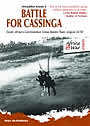
Battle for Cassinga
Africa@War Series Volume 3
Author:
Mike McWilliams
R199.00
South Africa’s Controversial Cross-Border Raid, Angola 1978
Reviewer: Russell A. Burgos, Ph.D. teaches at the International Institute, University of California, Los Angeles USA.
I wanted to take a moment and commend you for the Africa @ War series. I am a political scientist at the University of California, Los Angeles, and one of my areas of research and teaching is conflict in the developing world. Ideally, someone will write a strategic-level analysis of warfare in post-colonial Africa, but I do believe these campaign histories and tactical histories have much to teach us, and I've been finding them especially useful in fleshing out my understanding of the scope and shape of conflict in Africa since the 1960s. Keep up the good work. Best regards Russell A. Burgos
Battle for Cassinga Written by Leon Engelbrecht - Defenceweb Saturday, 25 February 2012
Battle for Cassinga" is the third in a new series on African conflict, Africa @ War", and examines South Africa's still-very controversial cross-border parachute raid in Angola in May 1978. This controversy relates to the ongoing "battle of history" in Southern Africa. In George Orwell's novel, "1984", the motto of the Ministry of Information proclaimed "He who controls the present, controls the past. He, who controls the past, controls the future." To this one can add the observation of Frederik van Zyl Slabbert in his "The Other Side of History" (Jonathan Ball, Jeppestown, Johannesburg, 2006) that "One thing the 'old' and 'new' South Africa have in common is a passion for inventing history. History is not seen as a dispassionate inquiry into what happened, but rather as part of political mobilisation promoting some form of collective self-interest." Cassinga is a text book case of such myth-making and the result, today, is two parallel sets of fervently-held history. McWilliams was one of the Citizen Force paratroopers that dropped on the People's Liberation Army of Namibia's base at Cassinga on May 4. A rifleman (private) he was assault commander Colonel Jan Breytenbach's official photographer and in addition to all his equipment, ammunition and medical kit carried several cameras (some his own) and a cine camera. The result is some spectacular pictures, including many colour shots, taken during the parachute drop, the battle in the base and in its immediate aftermath. The cover picture may be the most jaw-dropping: Taken by photographer Sergeant Des Steenkamp it shows McWilliams himself half out of his parachute harness, pulling himself up the left lift web of his "pumpkin" parachute. The author records the Air Force misdropped the 210 attackers (the paltry number was dictated by the amount of helicopters available to evacuate them. Breytenbach wanted 450 to take on up to 3000 insurgents on the ground) and he was drifting towards the Culonga River and would likely splash down in it. This was no-where near his allocated drop zone... The "Battle for Cassinga" is spirited account of the events that day. If one is seeking a concise, concrete, educational but readable source on the attack on Moscow base, as PLAN called Cassinga, this is it.
Book of Remembrance
Rhodesia Native Regiment
Author: Gerry van Tonder
R555.00
Be the first to write a review on this article
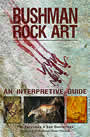
Bushman Rock Art
An Interpretive Guide
Author:
Tim Forssman & Lee Gutteridge
R199.00
The prehistoric record of southern Africa extends back some 2 million years.
Vicky Nardell - archaeologist:
Been meaning to ask you about something in the book.. which I took to Didima Gorge and read in 2 evenings - very unusual as I my attention span does not normally manage academic books at anything beyond a painful crawl. Makes me wonder how the rest of us so completely failed to notice that (now obvious!) gap in the market. The layout is genius - I particularly love your sections on obscure features like formlings, rain / fantasy animals and grotesque beings. the information you offered reminded me what a huge amount there still is to say about so many features of the art in the Drakensberg alone. I also think this is a brilliant resource for people taking tourists to rock art sites and will recommend that Amafa invest in some copies as part of their UDP custodian training schemes. I gave my permanent mountain assistant Mathiba a copy and he shone with excited delight when he leafed through the pages.
Andrei Snyman - a fellow researcher in Botswana:
You are a freakin' machine boetie!! Thanks so much for the book. Got it today. Showed Bob and all the other staff here. They are highly impressed - not sure if that means they thought you were an idiot before? I'll probe into the subject if you want . No seriously. Thank you! This is my first book of this nature - and I'm proud of it.
Heidi -
Finally collected my book from the post office. Just wanted to drop you a quick note to say thank you again, and congratulations on such a wonderful book! It far exceeded my expectations. This should become prescribed reading for every archaeology student! I will definitely reccommend it far and wide. Wish you the very best.
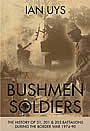
Bushmen Soldiers
The History of 31, 201 & 203 Battalions during the Border War, 1974–1990
Author:
Ian Uys
R355.00
“… an exceptional record of 31 and 201 Battalions and their remarkable personnel” BOOKS MONTHLY
Be the first to write a review on this article
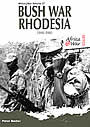
Bush War Rhodesia
Africa @ War Series
- Volume 17
Author:
Peter Baxter
R199.00
Military History / African Studies
Be the first to write a review on this article
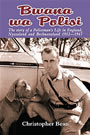
Bwana wa Polisi
Bwana wa Polisi
Author:
Christopher Bean
R155.00
The Story of a Policeman's Life in England, Nyasaland and Bechuanaland, 1952–1967
Be the first to write a review on this article
C
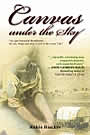
Canvas Under the Sky
Fiction / African Studies
Author:
Robin Binckes
R189.00
The sex, drugs and rock and roll of the Great Trek—as never told before
Editor: Dr. Angela Meder Stuttgart, Germany Sunday Times - 19 February 2012 Aubrey Paton Canvas Under the SkyM
If mountainous breasts, a smattering of political history and plenty of action-including girl on girl, man on woman and Boer on black - appeals to you, then Canvas Under the Sky is a must-read. Judging from the reaction to extracts read aloud in the office, this tale (maybe "tail" would be a more appropriate word) should prove a run-away bestseller. And where does all the excitement take place? Under canvas-covered wagons during the Great Trek. Binckes has done a wonderful - and much overdue - job of sexing up the Voortrekkers, as well as providing an astounding array of euphemisms for genitalia. Not everyone has proved appreciative of his efforts to revamp the Great Trek for a 21st-century audience - apparently there was a run on firelighters by the HNP earlier this year when they held their own Krystal Nag, tossing copies of the pernicious tome into a bonfire. This drug- and sex-fueled romp through thrusting thighs and dangerous veld makes for compulsive reading - get yours before stocks are burned.
Too-hot-for-HNP book on Groot Trek put on the braai Voortrekkers portrayed as sexed up dope smokers Saturday Star, 11 February 2012
Kevin Ritchie
HE SAYS he wrote the story because he was inspired by the exploits of the Voortrekkers. They say he trashed the memory of an entire generation of Afrikaners - so they symbolically burnt his book on a braai. The book in question is Canvas Under the Sky, by first-time writer Robin Binckes, a racy 335-page bodice-ripper currently in its second print run from local publishers 30 degrees South. Billed on the front cover as "an epic historical blockbuster. the sex, drugs and volk spele of the Great Trek", the hero in the novel, a 17-yearold called Rauch, has sex with everyone from his father's freed slave to his stepmother, smoking dagga in between as the trekkers venture into the interior from Grahamstown. It was all too much for the members of the Herstigte Nasionale Party and their leader, Andries Breytenbach, who ceremoniously burnt the book at a gathering at their offices in Pretoria last Friday. Breytenbach, who says he's been associated with the far-right political party ever since it was formed in October 1966 to fight the advent of black majority rule in SA at the expense of an Afrikaner white minority, said he was particularly aggrieved at Binckes's interpretation of the Voortrekkers as a bunch of sexcrazed, licentious ruffians, keeping "Hottentot, San and Khoisan mistresses". He said the HNP, with its claimed paid up membership of 5 000 people and best remembered for its anachronistic leader and founder Jaap Marais and his predilection for raising budgies - among other things - was still fighting against what he bemoaned as the revision of history and the diminution of Afrikaans, particularly in classrooms. "We are already being represented as oppressors and land grabbers, now Binckes's book presents our ancestors as leading smutty, perverted lives, rather than the God-fearing ordinary people that they were." Binckes told the Saturday Star he'd written the book out of admiration for the trekkers, long portrayed as dour Calvinists fleeing the British colonial authorities' insistence that they free their slaves, based on his experiences as a tour guide taking overseas visitors to the Voortrekker Monument outside Pretoria. "I've been working as historical tour guide between Joburg and Pretoria for the last 10 years and I wrote the book out of admiration for their story. It's a really wonderful story that hasn't been told for quite a long time. I wanted to inject flesh and blood, feelings and passion into characters who had effectively been cardboard cutouts until then." His research was so detailed, he says, that his publishers commissioned him to do a non-fiction history of the Great Trek, which he has just finished. Binckes's publisher, Kerrin Cocks of 30 degrees South, confirmed that the non-fiction account would be published by September or October. Its working title is The Great Trek Uncut. "We are doing a 300 000-word book that's massively sourced and referenced - including the smoking of marijuana and the promiscuity. "I don't know how something like this will chip away at the Afrikaner culture. I certainly don't think the Voortrekkers were fragile by any means, they were solid, tough and courageous to do what they did but they were human beings," said Cocks. The problem, she said, was that their exploits had been mythologised by subsequent generations. "The Afrikaners gave them godlike status and took away their human qualities." All of this will only add grist to Breytenbach's mill. "I can't comment on the new book until I have seen it, but based on what Binckes wrote in his novel we've got a major problem with him taking tour groups to the Voortrekker Monument," he said. "What's he telling them if his book is anything to go by? "I've got no confidence in this so called historical account that's coming up." Binckes is puzzled by the outcry. "I'm on holiday in Sabie this week, hiding from the HNP," he joked. "I didn't know the HNP still existed. Who would have believed they'd burn my book? It's only me and Salman Rushdie that I can think of who've ever had our books burnt." Breytenbach denied that Binckes's life was in any danger. "Ag, nee, man, he's mad," said Breytenbach, "we're not militant people, we're just angry about what he's written and wanted to make a symbolic gesture saying just that." Some of the symbolism last Friday included posters that read: "Take note: Afrikaner resistance is on the march" and "rather burn the writer".
Daily Dispatch on 06/02/2012 - HNP burns 'slanderous' Great Trek novel. Dagga-smoking womaniser hero of novel too much for some rightwingers By DAVID MACGREGOR Port Alfred Bureau
AN EPIC Great Trek novel that has a dagga-smoking womaniser - who even has sex across the colour line - for a hero has got some rightwing Afrikaners so hot under the collar that they burned the book. Days after Herstigte Nasionale Party (HNP) leader Andries Breytenbach and a group of placard-wielding supporters publicly burnt a copy of Canvas under the Sky, author Robin Binckes said he still could not understand what all the fuss was about. "I doubt they even read the book," the respected tour guide and historian complained.
"If they had, they would appreciate that the book was written out of admiration for the Afrikaner people."
But Breytenbach is not convinced the novel - which mixes fact and fiction as it charts the mythical Great Trek exploits of hero Rauch Beukes from the Cape Colony to the Battle of Blood River - paints Afrikaners in a good light. Instead, the rightwing leader sees the novel as yet another attack on the dignity and identity of the under-fire Afrikaans minority. A statement on the HNP website said the book-burning was a symbolic act to show liberals that the attacks on the Afrikaner nation must end.
"The self-respect of Afrikaners has to be protected and our children must be taught to honour folk heroes."
The HNP claimed the book was slanderous and eroded their self-respect. But Binckes challenged Breytenbach and his supporters to find a single negative reference in his book to long-dead Great Trek leaders like Piet Retief, Sarel Cilliers, Andries Pretorius and other folk heroes. Although the Eastern Cape-born author, who went to Mthatha High, admitted his hero was a "bit of a stud" who enjoyed a little bed-hopping and dagga puffing, the 70-year-old raconteur said it was not unusual behaviour - even during the Great Trek.
"Every society has people like this."I wrote the book not to be critical of Afrikaners but out of admiration.
"They displayed tremendous bravery, fortitude and persistence on the Great Trek . what they did is one of the most incredible stories in the history of this country." Although Binckes does not have conclusive proof that some Afrikaner trekkers were high on dagga during their cross-country trip in ox-wagons, he says the fact they interacted with indigenous peoples who puffed the weed made it probable.
"They lived among the Khoi, who smoked dagga and had dealings with the Xhosa, who also smoked dagga . and they did not smoke dagga themselves? Come on." References to the Voortrekkers' use of dagga - including recipes - are believed to exist in Rhodes University's prestigious Corey Library archives. "I am sorry they only bought one book to burn - they should have done it properly and bought 1000 and built a bonfire," he quipped. Binckes ' "gobsmacked" publisher Kerrin Cocks yesterday said she found the book burning "mildly alarming".
"The HNP said books like this chip away at the Afrikaner nation - is it that fragile that a book like this can chip away their identity?
Cocks said a non-fiction account of the epic voortrekker migration by Binckes would be released later this year. "If Canvas Under the Sky has wrought such anxiety among the 'Afrikaner people' then what will Binckes ' non-fiction account of the Great Trek, provisionally titled The Great Trek Uncut, due for release in September this year, do? "Also one would think that a true Afrikaner could make a fire without the help of firelighters."
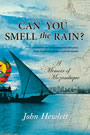
Can You Smell the Rain
African Studies / Memoir / Biography
Author:
John Hewlett
R299.00 + shipping
Be the first to write a review on this article
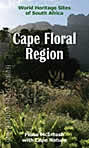
Cape Floral Region
Protected Areas
A Southbound Pocket Guide
Author:
Fiona McIntosh
R75.00
South Africa's World Heritage Sites
Beeld - Naweek - 27 January 2007
Sakgidse ideaal vir almal wat land verken. Suid-Afrika se sewe Werelderfenisterreine word in 'n nuwe reeks Southbound-sakgidse saamgevat. Dit sluit in gidse oor Robbeneiland, Groter St Lucia Vleilandpark, uKhahlamba-Drakensberg-park, die Mapungubwe-kultuurlandskap, Kaapse blomstreke se beskermde gebiede, die Wieg van die Mens en die Vredefort-koepel.
Die klein gidse is nommerpas vir plaaslike vakansiegangers wat hul eie land wil verken, rugsakstappers, toeriste, leerlinge en onderwysers, studente en toergidse en toeroperateurs. Dit is gebruikersvriendelik, nuttig en omvattend en het 'n groot opvoedkundige waarde. Lesers leer wat dit beteken om as 'n wêrelderfenisterrein verklaar te word; meer omtrent Unesco en sy Wêrelderfenislys; hoogtepunte van die Unesco-konvensie; hoe die gebiede kwalifiseer; meer omtrent die geskiedenis van die gebied; die plante en diere van die gebied; hoe die gebied ontwikkel word en hoe die gemeenskap daarby betrek is. Die reisafdeling bevat plekke waar 'n mens kan oornag en aktiwiteite wat 'n mens kan onderneem. Philip Briggs (skrywer van gidse oor die Groter St Lucia Vleilandpark en die uKhahlamba-Drakens-berg-park) skryf oor reis en bewaring in Afrika. Sy eerste boek is in 1991 gepubliseer en sedertdien het hy Bradt-gidse geskryf oor Oos- en Suider-Afrika, Tanzanië, Uganda, Ethiopia, Malawi, Mosambiek, Ghana en Rwanda. Sy artikels verskyn gereeld in plaaslike tydskrifte en koerante. David Fleminger (skrywer van Vredefort-koepel, Robbeneiland, Mpungubwe en Wieg van die mens) se eerste boek, Back roads of the Cape, het in 2005 verskyn. Hy is ook 'n dramaturg, regisseur, redakteur, onderhoudvoerder en vervaardiger en het 'n paar TV-programme geskryf en geregisseer. Fiona Mclntosh (skrywer van die gids oor die Kaapse blomgebiede) is 'n fotojoernalis en redakteur van Out There Adventure en Out There Travel. Sy het al verskeie boeke oor stap-roetes en avonture geskryf soos die Table Mountain Activity Guide.
Bob Truda, Indwe September 2009
The Cape Floral Region is a unique stretch of eight protected areas situated between the Cape Peninsula and the Eastern Cape. UNESCO describes it as "one of the richest areas for plants in the world," as it represents less than 0.5% of the area of Africa, but is home to nearly 20% of the continent's flora. "There is a profusion of fynbos all over the Western Cape, so keep your eyes open and take time to stop the car and smell the flowers," says Fleminger. "Oh, and whatever you do, don't throw your cigarette butts into the fynbos. You might burn down Capetown!" Fleminger has a few recommendations for this area. "The coastal fynbos at De Hoop Nature Reserve is unusual and the beach has towering sand dunes that plunge down to the sea. I also recommend the Harold Porter Botanical Gardens near Hermanus, a fynbos wonderland with a number of rewarding walks into the adjacent kloofs, as well as the weird rock formations of the Cedarberg Mountains"
Garden Route Living Winter 2007
Since SA ratified the World Heritage Convention in 1997, seven biologically diverse and historically significant sites in South Africa have made it onto Unesco's prestigious World Heritage Site List. In an extraordinary tribute to these sites, a series of informative pocket guides has been published. It comes as no surprise that our prized Cape Floral Region (CFR) measured up to the criteria needed to be listed. With an astounding 9 600 species, it is the richest of the world's six floral kingdoms. In addition, about 6 500 of these botanical beauties occur nowhere else on Earth. Eight regions, fragmented across the Cape, are now protected under the CFR umbrella which the United Nations deemed valuable enough to "identify, promote and protect... for the entire world citizenry". These designated areas - Table Mountain, Groot Winterhoek, Cederberg, Boland, De Hoop, Boosmansbos, Swartberg and the Baviaanskloof - contain exceptional richness of species and high degrees of endemism. Packed full of useful info, including tourist listings, maps and colour photos, this guide is the perfect travel companion for those even remotely interested in our floristic heritage.
Carried on the Wind
Wildlife / Pictorial
A Collection of Paintings and Drawings
Author:
Andrew Bone
R995.00
A Collection of Paintings and Drawings
Be the first to write a review on this article
Chopper Down
Author : Carl Alberts
R299.00+ shipping
Softcover / 352 pages
50 colour & 100 b/w photos, 6 maps
The Story of a Mercenary Pilot in Africa
Flights of fear and fancy - memoirs of an aerial 'dog of war'
South Africa's Border War produced professional soldiers who later sold their skills as mercenaries, fighting for whoever paid the highest price. Carl Alberts, in his brutal new book, Chopper Down (30º South Publishers) about his experience with the guns-for-hire organisation Executive Outcomes, cracks open one of the most violent and dangerous chapters of African history. Mark Levin reports
4 December 2016 - Weekend Argus/ Sunday Tribune
IN 1984, during the Border War, the South African Air Force gave assistance to 61 Mechanised Brigade's assault on Cuvelai in Angola. One of the pilots was Carl Alberts, who was later awarded the Honoris Crux - South Africa's highest award for bravery - for his part in that battle.
Nine years later, while based at 15 Squadron in Durban, Alberts was approached by the mercenary outfit Executive Outcomes, which had been contracted by the Angolan government to fight against Unita.
During the Border War, Unita had been South Africa's ally; now Alberts was on the other side. Although there were no medals, he would again display exceptional bravery.
After the end of the Border War, many soldiers missed the years of combat. Executive Outcomes offered both combat and higher salaries. Those salaries were based on the expertise these highly-trained men possessed: Executive Outcomes recruited some of the best, since war was its business.
A substantial part of his memoir deals with the 18 months he spent in Angola. There he discovered just how professional the SAAF had been.
Like others who have written about their mercenary experiences, Alberts had little respect for the average Angolan soldier. Some were no more than 16 years old (being a soldier was one of the few sources of income), often barefoot or wearing only one boot - his buddy would be wearing the other one. Training was minimal, weapons insufficient and as most recruits were "scared s***less", they were recruited from afar so that they would be less likely to run away.
Discipline was non-existent. After a heated exchange between a major and a corporal, the corporal pulled out his gun and shot the major dead. During a desperate attempt to evacuate casualties, Alberts was unable to take off, as a large disorganised mob of soldiers, deciding that they had had enough of war, discarded their weapons and stormed the aircraft. They thought nothing of trampling on the wounded, who screamed in agony. "Individual life actually meant nothing. You died. Too bad."
Their aircraft were unreliable - often only one helicopter was serviceable and available, which meant that pilots could not fly in a pair. If the helicopter went down, there was no back-up. Going down in a battle-frenzied Unita stronghold was their worst nightmare. Unita's revenge - torture andexecution - was inevitable.Alberts lists those men who died during operations, including nine who were executed.
There were their own tragedies, perhaps none more emotional than the failed attempt to rescue one of their colleagues whose aircraft was shot down. He survived the crash and evaded Unita, but as Alberts came down to rescue him, he either ran through the tail rotor or was shot and fell into it. Bits of his mangled body were scattered everywhere. After the objectives of Executive Outcomes had been achieved in that part of Angola, Alberts went to Sierra Leone and, in 2002, to the Ivory Coast, He returned to South Africa in 2003, but in 2004 he was arrested by the "Scorpions."
He was charged in terms of the Foreign Military Assistance Act and fined R20 000, half of which was suspended. There is an ugly stigma attached to mercenaries. Alberts defends his service, pointing out that Angola had been bleeding on both sides with no hope of a political settlement. In Sierra Leone, thousands of people would have died if not for the intervention of Executive Outcomes. Is there really a difference when French gunships intervened in the Ivory Coast?
The issues he raises are complex and difficult to answer, particularly when a country is ravaged by a vicious civil war. For Alberts there is a definite role for an outfit like Executive Outcomes: "Surely there must be a state of peace before one can use peacekeepers, even if this requires initial peace enforcement?"
Come Back to Portofino
World War II combat
Author:
James Bourhill
R199.00
Through Italy with the 6th South African Armoured Division
Article in Rapport, mentioning Come Back to Portofino by James Bourhill
Rapport, Sondag 17 Mei 2015
En hierdie ouens? Wie was hulle?
Waarom is ons so onkundig oor die verlede, vra Rodney Warwick.
Ek het verlede Dinsdag die Universiteit van Kaapstad (UK) besoek en op die plek gestaan waar Rhodes se standbeeld verwyder is.
Dit het my weer opgeval hoe min die huidige generasie jong swart en wit Suid-Afrikaners weet en omgee oor ons eerbiedwaardige wêreldoorlogerfenis.
Want agter die leë voetstuk op die eerste vlak van die Jameson-trap is die oorloggedenksteen vir studente en personeellede van die UK wat in 1914-'18 en 1939-'45 gesneuwel het. En bo-oor die eenvoudige gedenkteken het 'n student geverf: "F*ck Rhodes." Dit is miskien 'n gepaste opsomming van die onkunde, histerie, onredelikheid en rasse-antagonisme wat deel was van die "#RhodesMustFall"-beweging.
Met die 70ste herdenking van Oorwinningsdag in Europa pas agter die rug wonder ek of die UK die enigste universiteit in die Gemenebes of enige van die Tweede Wêreldoorlog-deelnemers is waar 'n oorlogsmonument só onteer sou word.
Oorwinningsdag het die afgelope naweek sentraal gestaan in die nuus, maar ek het nêrens 'n woord oor Suid-Afrikaanse betrokkenheid gelees nie. Ons kan mos nie so 'n geleentheid laat verbygaan om die laaste oorlewende lede van die Unie-Verdedigingsmag (UVM) behoorlik te eer nie! Van ons laaste oorblywende soldate van die Tweede Wêreldoorlog (WO2) sal die jongste nou 87 of 88 wees (as hy 18 was in 1945 toe die 6?SA?Pantserdivisie in Italië geveg het).
Ná die oorlog is daar in Suid-Afrika, met net enkele uitsonderings, inskrywings bygevoeg tot strukture wat die Eerste Wêreldoorlog herdenk, eerder as om nuwe monumente op te rig. As 'n mens die wêreldwye betrokkenheid by die oorlog in ag neem, met meer as 100 lande wat betrek is en die verlies van sowat 61miljoen lewens, was Suid-Afrika se militêre betrokkenheid natuurlik betreklik klein. In syfers lyk dit so: Sowat 11?000 oorlogsterftes uit 334?000 mans en vroue wat vrywillig diens gedoen het. Dit kan rofweg verdeel word in 221?000 wit, 77000 swart en 46000 bruin en Indiër-troepe.
Dis inderdaad besonder gepas om ons veterane, swart en wit, te vereer 70 jaar ná Oorwinningsdag toe die 6 SA Pantserdivisie sy aan sy met die Geallieerdes in Italië geveg het. "6Div" is in 1943 gevorm uit veterane van die woestynveldtog en nuwe vrywilligers.
" Die oorgrote meerderheid was vrywilligers - voetsoldate én offisiere. "
Onder hulle was mense wat later prominent sou staan in die Suid-Afrikaanse openbare sfeer: Michael Corbett, later hoofregter wat in 1994 vir Nelson Mandela as president ingesweer het; Colin Eglin, liberale politikus; Gavin Relly, voorsitter van Anglo American in die 1980's; en, al het hy dit later in sy outobiografie met minagting behandel en al was hy nooit by enige veldslagte betrokke nie, was Joe Slovo 'n lid van die SA Geniekorps. Nog 'n lid van die SAKP, Lionel Bernstein - wat die 1955-Vryheidsmanifes geskryf het - was 'n artilleris.
Afrikaners is ook goed verteenwoordig, veral onder die 6?Div-lede wat later senior range in die 1950's en 1960's in die Suid-Afrikaanse Weermag gehou het. Die oorgrote meerderheid was vrywilligers - voetsoldate én offisiere. Sommige geskiedskrywers het al beweer die onderhoudstoelae wat aangebied is, was die grootste motivering vir baie van die Afrikaner-vrywilligers (en bruin en swart mense) uit arm agtergronde. Dít staan in kontras met die Engelse troepe en die Afrikaanse "Bloedsappe" wat Jan Smuts se rasionaal (wat ons nou weet korrek was) gevolg het dat Suid-Afrika eenvoudig móét betrokke raak.
PG du Plessis se toneelstuk van 1971, Siener in die suburbs, vang 'n literêre essensie van dié tydperk vas toe armoedige Afrikaners nog gesukkel het in die tyd van oënskynlike triomfantlike wit republikanisme. 'n Afwesige pa van 'n disfunksionele gesin is 'n sleutelfiguur - in 1945 as vermis gelys "êrens in die Noorde". Sy oorlogspensioen word steeds uitbetaal aan sy weduwee, maar word ook begeer deur sy uitgebreide familie en agterryers, insluitende die gewelddadige Jakes (wat uiteindelik vir Tiemie vermoor).
Sonder twyfel was 6?Div veel beter voorberei op oorlog as dié Suid-Afrikaners wat vier jaar vroeër vort is na Oos- en Noord-Afrika onder leiding van genl.maj. George Brink en later die bekender genl.maj. Dan Pienaar. Die divisie het in April 1944 in Italië begin aankom ná breedvoerige opleiding in die Egiptiese woestyn - ongelukkig op terrein geheel en al anders as die beknopte heuwels van die platteland waar die soldate sou moes veg. Die skerp punt van die Italiaanse veldtog sou uiteindelik 'n fisiek uitmergelende en bloederige besigheid wees - 'n genadelose tyd.
Anders as die Suid-Afrikaanse troepe in die woestyn, wat die gebrek aan 'n eie pantsermag akuut gevoel het, het 6?Div 'n pantserafdeling met Amerikaanse Sherman-tenks gehad -"Tommykocher", oftewel Tommie-braaiers, het die Duitsers hulle genoem vanweë die neiging van die brandstoftenk om maklik aan die brand te slaan nadat hulle getref is.
Die infanterie, wat eintlik die meer gepaste militêre afdeling vir die Italiaanse terrein is, is toegerus met die Amerikaanse Thompson-submasjiengeweer van 1920's-Chicago-Mafia-faam, benewens hul alomteenwoordige Britse .303Lee-Enfield-gewere en Bren-masjiengewere. Suid-Afrikaanse artillerie het die Britse 5.5-duim-kanon en die woestynveldtog se 25-ponder-kanonne ingesluit.
6?Div is aangevoer deur genl.maj. ¬Evered Poole, oorspronklik van Kaapstad. Hy was 'n beroepsoldaat wat baie agting onder sy manskappe geniet het, maar ná die oorlog deur die NP-regering oorgesien is vir bevordering weens sy duidelike afkeer in hul verdelende politiek.
6 SA Pantserdivisie se veldtog in Italië kan sorg vir vreeslik gekompliseerde leeswerk, maar in kort: Die Suid-Afrikaners het hul pad oopgeveg deur Italië deur van die meedoënloosste slagvelde van die veldtog. Met gedurige hinderlae of vanuit vaste posisies het hulle retirerende Duitse magte bestook, tot die finale aanvalle op bergtoppe soos Monte Sole in April 1945.
Dis in hierdie gebied wat Duitse SS-troepe in vroeg Oktober 1944 Italiaanse burgerlikes uitgemoor het wat verdink is van steun vir die Italiaanse weerstand. Die Suid-Afrikaanse troepe het op die nippertjie opgeruk en die Duitse magte teruggedwing.
In 2007 het die Italiaanse dorp Marzabotto hulde gebring aan 6SAPantserdivisie deur 'n straat na hulle te vernoem. Dié straat verbind Castiglioni dei Pepoli en omliggende gebiede via die Bologna-Modena-hoofweg: dieselfde landskap waaroor Suid-Afrikaners 70 jaar gelede hul pad oopgeveg het en waar baie vir ewig agtergelaat is.
By die Castiglioni- Suid-Afrikaanse begraafplaas het Smuts 'n inskripsie in hul eer ontsluier: "To save mankind your¬selves you scorned to save" bokant die Afrikaans: "Om die mensdom te dien het jul veiligheid versmaad."
Twee persoonlike verhale tipeer die soort opofferings wat Suid-Afrikaners in Italië gemaak het. Lt.kol. Angus Duncan, die offisier in bevel van die Cape Town Highlanders-infanterieregiment in 1945, was, net soos amper al sy manskappe, 'n vrywilliger. Voor die oorlog was hy 'n prokureur. Hy was 35 in 1945, getroud en met drie kinders in Kaapstad.
Duncan het sy regiment by Monte Sole gelei in een van die grootste veldslae waarin Suid-Afrikaners betrokke was. In 'n aanval op die Duitse verdedigingslinie, dae voor die Duitse oorgawe in Italië, is Duncan in 'n landmynontploffing op die berg dood. Duncan was een van vele Suid-Afrikaanse vrywilligers wat geglo het 'n beter wêreld sou uit die ondergang van Nazisme spruit.
'n Ander vrywilliger was kpl. William Cloete van die Kaapse Kleurlingkorps. Hy was die leier van 'n draagbaarspan verbonde aan die Cape Town Highlanders-regiment. In 'n verbete geveg met Duitse magte, waarin sy afdeling aan drie kante van mortier- en masjiengeweervuur omsingel was, het Cloete en sy span tien gewonde Suid-Afrikaners na veiligheid gebring. Hiervoor het hy 'n militêre medalje vir dapperheid ontvang. Amper 'n jaar later, toe hy 24 jaar oud was, is Cloete op Monte Sole getref deur 'n koeël van 'n Duitse skerpskutter en permanent verblind in albei oë. Ná die oorlog het hy die Bellville-skool vir Blindes bygewoon. Hy het 'n spesialis-mandjievervaardiger geword - 'n beroep wat hy vir die res van sy werkende lewe beoefen het. Hy is in 1993 oorlede.
In die Italiaanse veldtog het 6?SA?Pantserdivisie meer as 700 soldate verloor, met vele meer gewond. 'n Spesifieke insident is opgeteken deur James Bourhill van Johannesburg, seun van 'n 6Div-veteraan, wat in 2012 die jongste (en beste) geskiedenis van die divisie in Italië geskryf het. In Come Back to Portofino demonstreer hy hoe die vasberadenheid van die soldate om te oorleef en hul onwrikbare lojaliteit aan mekaar tot genadelose wraak op die vyand kon lei.
Lt.kol. "Papa" Brits, een van die UVM se voorste tenkbevelvoerders wat 1 Spesiale Diensbataljon gelei het, was hoogs verontwaardig toe, slegs dae voor die Duitse oorgawe, een van sy sersante deur 'n Duitse sluipskutter geskiet is. Toe dié Duitser gevange geneem is, het Brits beveel dat hy uit die UVM se veldhospitaal verwyder word en summier tereggestel word deur een van die sersant se vriende. Hoewel die teregstelling van krygsgevangenes op alle fronte van die Tweede Wêreldoorlog plaasgevind het, is dié insident een van bitter min bevestigde gevalle wat Suid-Afrikaners betrek.
Brits is kort daarna terug Suid-Afrika toe en het uit die weermag uitgetree. 'n Paar jare gelede vertel 'n buurman, 'n NG dominee, vir my sy pa het onder Brits ge-dien en het die man amper verafgod.
Daar is nie veel glorie in oorlog en die impak daarvan op die betrokkenes nie. Maar laat ons ten minste die geskiedenis reg onthou - en om die onthalwe van die laaste oorlewende veterane hulde bring aan die Suid-Afrikaanse soldate van die Tweede Wêreldoorlog.
Simplistiese verlede word altyd verkies
In Suid-Afrika se politieke geskiedenis het ons konflikte gereeld eendimensionele historiese tekste opgelewer - tekste wat nie verdraagsaam is teenoor detail wat nie by die heersende ideologie inpas nie.
In my skooldae het die regerende Nasionale Party, wat betrokkenheid by die oorlog verwerp het, die aandag probeer aftrek van die rol van die Unie-Verdedigingsmagte (UVM) teen Duitsland. Die NP-regering se hoofdoelwit met die UVM was om dit te "Afrikaner-iseer", so deeglik en so vinnig moontlik.
Die soldate wat in Noord-Afrika en Italië diens gedoen het, het wel van hul kundigheid aan die Suid-Afrikaanse Weermag oorgedra in 'n tyd van toenemende vyandigheid teenoor apartheid.
Suid-Afrika se oorlog-erfenis het ná 1945 net die minimum amptelike aandag en blootstelling gekry. Jan Smuts se projek om die oorlogsgeskiedenis van die Unie te boekstaaf is teen 1960 laat vaar weens 'n gebrek aan belangstelling. Van die drie volumes wat in die 1950's verskyn het, is nie een in Afrikaans vertaal nie, ondanks die feit dat minstens die helfte van die wit soldate in die Noord-Afrika-veldtog Afrikaners was. In skole is min plek gelos vir die Tweede Wêreldoorlog. Die houding was: As die NP nie die oorlog gesteun het nie, is dit nie die moeite werd nie.
En ná 1994 duur die amptelike gebrek aan belangstelling in die Tweede Wêreldoorlog voort. Die werklikheid is dat Afrikanasionaliste verslaaf is aan 'n verlede van dogmatiese teenpole eerder as een met ingewikkelde nuanse. 'n Voorbeeld is die oproep van die ANC dat geskiedenis verpligtend vir hoërskoolleerlinge moet wees in 'n poging om 'n simplistiese Afrosentriese "strugglegeskiedenis" te versprei.
Die motivering is deels die wanopvatting dat net wit mense deelgeneem en geveg het in die wêreldoorloë. Die boek The Unknown Force (1994) deur lt.genl. Ian Gleeson demonstreer egter duidelik hoe swart, bruin en Indiërsoldate se oorloggeskiedenis gemarginaliseer is. Om dié onreg te herstel is iets wat 'n mens sou verwag reeds onderneem sou word deur plaaslike historici in die afgelope 21 jaar. Ongelukkig weet ons dis altyd winsgewender om historiese onakkuraatheid na te streef, en om soos die NP die lastige nuanses te ignoreer.
Dr. Rodney Warwick is 'n geskiedenis-onderwyser by Bishops in Kaapstad. Die Universiteit van Kaapstad het intussen die graffiti op die oorlogsmonument op hul kampus verwyder.
H R Paterson MA (Natal) Ditsong National Museum of Military History Military History Journal Vol 15 No 3 June 201
As they did with from Fledgling to Eagle, the publishers have shown that, with the right author, they can produce a publication which does both the subject and the author justice. Come back to Portofino's presentation immediately strikes one as being excellent. It has an index, which is always appreciated in a book of this nature. The glossary and regimental abbreviations are very useful (but here the 'Ioggies' and'tiffies' will wonder at the omission of the 'Q' Services Corps and the Technical Services Corps although they feature significantly in the narrative). The second half of the Second World War tends to be neglected, particularly the Italian Campaign after the battles for Monte Cassino (December 1943 to May 1944). Come back to Portofino eloquently resolves this problem and forcefully reminds us that the war continued after the campaign in North Africa. It also prompts us to remember the group of South African soldiers who fought in the later campaigns of the War and receive too little mention in most accounts of the war. Come back to Portofino goes a long way towards rectifying this oversight. The author has chosen a most stimulating format. He has had access to two important sets of private documents. One is a set of notes written by his father during the Italian Campaign; the second is a set of 350 letters written by Corporal J B Hodgson, Royal Natal Carbineers, to his family. The author has used these to form the core of his story. Most authors would be content to use the official histories to lend coherence to this type of treasure trove. James Bourhill does not do so. Instead, he enriches his account with information from the regimental histories and from the war diaries and operational reports in the South African National Defence Force Documentation Centre. The result is a stimulating story which constantly shifts perspective. The mix of military operations combined with sharp personal perspectives is a heady one. It reminded this reviewer of his school days; when most of his friends' parents and many of his teachers were veterans of the Second World War. Come back to Portofino is a particularly well rounded book. James Bourhill eases one gently into the Second World War and the formation of the 6th South African Armoured Division. Here is what undoubtedly will be, for many years to come, the definitive account of the 6th South African Armoured Division's operations. After providing a history of the Division in Italy, he completes the circle by telling readers what happened to his principal narrators, Stephen Bourhill and John Hodgson. (This has a particular resonance for the reviewer, as J B Hodgson went to the same school as he did and his story revived memories of the wall in the Memorial Hall with the names of those old boys who did not survive the War.) The book has few flaws. A noticeable one - and presumably a simple typographic error - is the designation of the South African 136 Tank Transporter Company, 'Q' Services Corps, as 'Q' Services Company, when the company's function was only to transport tanks. It did not carry out the multitude of logistic functions typical of other 'Q' Services Corps companies. The appendix lists the names of South Africans who were killed in Italy. This Roll of Honour is a real bonus, yet James Bourhill may unknowingly have raised an important aspect of the Second World War which started oncethe British Commonwealth forces reached Europe. While the feeling that the war was almost over arose again from late 1944 into 1945, men and women continued to die every day. It took some time after the war ended for the dying to stop. The main reason for this was the German practice of demolishing and booby-trapping as they retreated. These deadly devices continued to kill long after Germany's armed forces ceased to exist. Come back to Portofino is a timely reminder that war is not waged by robots. This point is reinforced by the number of deaths that were the result of accidents or carelessness. Particularly poignant are the letters asking how a son died. In some cases, it was perhaps better not to know. A significant aspect of Come back to Portofino, which may have inspired the title of book, is how South African soldiers spent their time awaiting repatriation and demobilization. When reading about the immigration official who sent a soldier's wife back to Italy, one gets the distinct impression that in South Africa, as elsewhere, there were bureaucrats seemingly unaware that there had even been a war on. Most Highly Recommended.
Book Review on Come Back to Portofino by James Bourhill Donald P. McCracken, Farmer's Weekly, 16th September 2011 War memories
It's hard not to be both intrigued and saddened by the intense nostalgia for the Second World War in SA, certainly among the generation who went through it, particularly English-speaking whites. Even in Britain this feeling, almost of hankering after a lost world, isn't as strong and there's much less obvious psychological heritage - the MOTHS and dilapidated tanks displayed outside ageing shell-holes. This properly researched book, well referenced, stacked with relevant military information, a comprehensive bibliography and good index, is a useful historical record. Though 544 pages long, this cleverly constructed diary of events relating to the 6th SA Armoured Division push across north Africa and up the boot of Italy can be read in easy chunks. The decision to send home the 1st SA Division after its disastrous misfortunes, and in particular the demoralising surrender of General Klopper to Tobruk along with 11 000 South Africans, and then reconstitute a new force, was a successful gamble that saved SA's reputation. I can't agree with the author that Churchill's wartime speeches had more impact in SA than in Britain, but found fascinating his occasional glimpses of an English-SA grouping now lost (in all but Pietermaritzburg), where people spoke 'proper English', went to dance halls with sprung floors and were a mirror of home-counties' Edwardian British society. Sneer as one might, though it was predominately that society which offered, as one of its last meaningful gestures, a fighting force which did all SA proud.
Stephen Coan, The Witness, 5th October 2011 South Africa's role in Italy's World War 2 campaign
SUBTITLED Through Italy with the 6th South African Armoured Division, this evocative book has earned an accolade from Martin Windrow, author of the acclaimed The Last Valley: Dien ¬Bien Phu and the French Defeat in Vietnam, who is quoted on the cover as saying he is delighted "to have this valuable record on my shelf". James Bourhill's book constitutes an almost day-by-day account of the South African role in the Italian campaign during World War 2; from Pietermaritzburg's Hay Paddock, then onto training in Egypt and finally into action in Italy. Many did not return, and a Roll of Honour records those who now lie in cemeteries in such picturesque settings as Arezzo, Assisi and Florence. Bourhill makes good use of letters and diaries, particularly those of John Hodgson and his own father, Stephen Bourhill, which provide something of a narrative thread through the book. In fact, if Bourhill had perhaps concentrated on these, his book could have been something far more than a "valuable record". There's a much better book in here somewhere. While Come Back to Portofino is packed with information (and copiously illustrated with maps and photographs) there's no doubt it could have benefitted from a tighter editorial hand. As personal experience intersects with ¬campaign details and statistics, the writing is at times disjointed and the focus tends to drift. But there is no doubt that local readers will find much of interest. Pietermaritzburg features in the training phase, and one gets a sense of the impact the presence of the transit depot, Hay Paddock (now Hayfields), had on city life at the time. The Natal Carbineers (then the Royal Carbineers) are also ¬prominent and Maritzburg readers will encounter many a familiar name.
Composite Warfare
Author:
Eeben Barlow
R355.00 + shipping
Composite Warfare 2nd Edition
Author:
Eeben Barlow
R695.00 + shipping
The Conduct of Successful Ground Force Operations in Africa
“Composite Warfare” - a composite insight into conflict and war in Africa
defenceWeb - Written by Kim Helfrich, Monday, 17 October 2016
Eeben Barlow is a name well-known to those who are practitioners of military arts and skills, especially in Africa.
He has now taken all his considerable experience and distilled it into a 500 plus page publication titled “Composite Warfare”, which he sees as an African “Art of War”.
Split into three parts – “Understanding conflict and war in Africa”, “Conventional manoeuvre during composite warfare operations” and “Unconventional manoeuvre during composite warfare operations” – there are 22 chapters covering virtually every imaginable aspect of planning and executing war at whatever level in Africa.
Barlow’s introduction sets the tone for his textbook. He writes: “Africa has seen numerous conflicts and wars since the end of the Cold War. I have partaken in some of them as a soldier, an intelligence officer, a covert operative and as chairman of Executive Outcomes, a private military company that focussed on resolving Africa’s problems during the 1990s and more recently as chairman of STTEP International Ltd” adding “international resistance to both Executive Outcomes and STTEP’s desire to end conflicts and wars and see a stable Africa remains unparalleled”.
He has lectured and delivered papers at many African defence and military colleges, including some in South Africa where his insights into the planning and execution of various military tasks have been well received. After reading “Composite Warfare” this reviewer, not qualified in a military sense but a long-time observer of defence and security in South Africa and to a lesser extent, north of the Limpopo River, would venture Barlow’s venture into, for want of a better phrase “teaching writing”, should be compulsory issue for libraries at military education institutions from Cape Town to Cairo.
The author’s conviction that Africa will not see any full-scale conventional war but will have to endure conflicts where a mixture of conventional and guerrilla warfare tactics and operations are employed is carefully and thoroughly explained. Adding more value, from an operational and execution point of view is his comment to this reviewer “that everything in ‘Composite Warfare’ works. Nothing is theory; everything has been put into practice”.
This is in line with the hands-on manner and methods Barlow has worked out and put into practice on the ground in Africa. Again, his own words describe it best – “what is in the book has been successfully employed against groups and organisations including Boko Haram and Lord’s Resistance Army (LRA)”.
He adds ruefully that “outside interference” put an end to what would ultimately have been successful operations. That the interference hasn’t worked can be measured against the activities of both Boko Haram and LRA, both of which are still active and operational.
Barlow introduces each chapter with an appropriate quotation, the majority his own words, and these serve as an able stimulant for the student to delve properly into the wise words that follow.
As an example: “We need to not only look at how we organise ourselves, we also need to take a step back and revisit our principles of war. If we look at post-1945 conflicts and wars – and there have been many in Africa – we will note they have been very different from those beyond our shores. We seem to have a misguided belief that we can simply accept the principles of war of other nations and then all will be well. Our conflicts and wars are different. Besides, where exactly have those principles worked in Africa?” he asks before discussing the modern principles of war.
Barlow takes a different view on some aspects of war, but agrees with military scholars on others. As an example he told a division commander “somewhere in Central Africa” in 2011 that “firepower, mobility and manoeuvre are critical to our success”.
“Without these we cannot achieve our operational and tactical objectives. If we cannot meet our objectives, we give the enemy an advantage he certainly does not deserve. Give us firepower, mobility and the ability to manoeuvre and we will give you the enemy”.
Writing about defence and protection of the pillars of state, he notes: “We (soldiers) are merely an extension of politics. As long as Africa remains at war with itself, it will be unable to flourish and take its place in a vibrant, economically powerful and politically stable international community”.
Barlow’s seven pillars of state are intelligence, law enforcement, armed forces, governance, economy, populace and perceptions. He points out a personal analysis and dissection of every African conflict and/or war since 1945 allowed him to identify numerous commonalities.
“These led to the pillars of state theory, a theory that has proved itself in every conflict and war in Africa.”
An example of how well Barlow reads and knows the Africa situation comes in a single line caption to one of the many photographs illustrating the book. A photograph and Barlow and two unidentified Libyans is accompanied by the words: “In Benghazi in 2013 the author tried to warn the Libyans of what was coming … they opted to believe others”. Those who study and keep a weather eye on African affairs will know Libya today is not a well state.
There are other pithy comments by Barlow which all add value to a work that should be ignored - at their peril – by those wanting to learn about conflict and war on the African continent.
“Composite Warfare” is published by Thirty Degrees South Publishers.
Congo Unravelled
Africa@War Volume 6
Author:
Andrew Hudson
R199.00
Military Operations from Independence to the Mercenary Revolt, 1960–68
Reviewer: Russell A. Burgos, Ph.D. teaches at the International Institute, University of California, Los Angeles USA.
I wanted to take a moment and commend you for the Africa @ War series. I am a political scientist at the University of California, Los Angeles, and one of my areas of research and teaching is conflict in the developing world. Ideally, someone will write a strategic-level analysis of warfare in post-colonial Africa, but I do believe these campaign histories and tactical histories have much to teach us, and I've been finding them especially useful in fleshing out my understanding of the scope and shape of conflict in Africa since the 1960s. Keep up the good work. Best regards Russell A. Burgos
Counter-Strike from the Sky
The militarily acclaimed Fireforce concept
Author:
Dr JRT Wood
R255.00
The Rhodesian All-Arms Fireforce in the War in the Bush 1974–1980
Richard,
received copy of your book Counterstrike. I am up to the Op Dingo and am amazed at the audacity and not surprised at the success as the Sun Tzu dictum of knowing oneself and enemy did bring success with soldiers who were very good and with excellent leadership. Your writing is superb and the details explain much of what I was wondering about in terms of FireForce Ops from what I have read so far. I am just trying to figure out what we as US Forces could adopt. Certainly some things tactical but trying to get past risk aversion , and other bureaucratic issues to have excellent training and tactics. I am currently in training but will finish your book this week I am sure. Regards, Mark
YouTube comment
I really recommend the Counter-Strike from the Sky; book (with the free DVD). It is a must read for any soldier anywhere in the world to learn the skills created by the masters of airborne COIN ops. The book has so much detail it's like a manual but it's also a must read book for anyone interested in military history. Great work JRT Wood, thank you so much for this great book.
Marine Corps University Journal Spring 2010
Almost half a century after these events took place, there is still an active interest in the details of the Rhodesian War, the last of the British Empire and Commonwealth's independence struggles in Africa. Recently, this has even seen the reprint of previous accounts but without substantial update. Yet original records and study exist, and this narrative is a first-rate example of what the last decade of research work have accomplished. The author, J.R.T. Wood, produced on of the classic company commander's accounts of the Rhodesian War, The War Diaries of Andre Dennison (1989), while editor Chris Cocks wrote the defining personal memoir of front-line fighting in Fireforce: One Man's War in the Rhodesian Light Infantry (1997). Both men have also been active in continued work and publication of material on the conflict that continues with this current project. My interest in the conflict in Rhodesia began in 1971 while in Southeast Asia. As a junior leader, I was pondering how to do a better job in my small patch of the Vietnam War. Direct exposure to British experience in Malaya and reading about Rhodesia's "thin white line" seemed to offer other solutions to tactics, techniques, and procedures. A number of Americans, including U.S. Marines, served in the Rhodesian Security Forces during the war, bringing back firsthand experience and recollections. The U.S Marine Corps maintained a low level of continued curiosity in pseudo techniques, mine- and ambush-proofed vehicles, and the conduct of operations through the 1980s and 1990s. The so-called Global War on Terrorism witnessed a renewed (or belated) focus on irregular warfare and low-intensity conflict that conventional campaigns, as shown in the current U.S. Army and Marine Corps field manual Counterinsurgency (FM 3-44, MCWP 3-33.5). How does the Rhodesian experience apply to Iraq and Afghanistan? This text provides some of the needed answers. References like this book should be found on professional reading lists and as command and staff course text. If not, true professionals will buy it "on their own dime." Wood uses sixteen chapters to describe the development of just one of the tactical innovations coming out of the Rhodesian conflict. This was the successful use of air-ground task forces to eliminate guerrilla bands with the direct application of aerial firepower and maneuver. With the example of similar British, French, American, and Portuguese experience, the Rhodesians developed a unique brand of aviation technology, command and control, and effective troop units to meet the situation they faced on the ground. I would argue this was the result of necessity rather than innovation, as the problem was how to cover MMBA ("miles and miles of bloody Africa") with limited manpower. This was the same problem the nationalist insurgents dealt with by flooding the country with large numbers of ill-trained and ill-equipped terrorists and guerillas to dominate areas populated by rural black Rhodesians. Fireforce was a concept and application that depended on killing the insurgent to the detriment of occupying the territory thus cleared by police, militia, auxiliaries, and other "protective" forces with an acute lack of political and material support. The Fireforce "killing machine" was not a "hearts and mind" effort. Despite this, it allowed the Rhodesian Security Forces to fight guerilla incursions to a standstill to allow time for political solutions to be negotiated. Wood covers this from Sinoia to Chimoio by describing the evolution of Fireforce as well as providing context in the form of background on the "armed struggle" by nationalists, the security forces response, and the overall development of the counterinsurgency campaign. His coverage ranges from border control and support to the civil power, to the joint operations command, and to the implementation of combined operations and evolving civil-military response to the insurgent threat. He describes the place of the internal Fireforces as well as an example of Fireforce "writ large" with the November 1977 raid on Chimoio, Operation Dingo. This shows how a predominantly internal technique worked for external operations. As the road less taken, the use of the concept outside Rhodesia's geographic borders was soon countered by the guerillas expanding the area covered by their camps and staging points and no longer providing a concerntrated target that could be confined successfully. There came a point when the combined operations commander, Lieutenant General George P. "Peter" Walls, realized that more insurgents could be killed by external rather than internal operations. Fireforce remained the backbone of the internal effort, while flying columns and special forces led the attacks in external operations. The Rhodesian defensive effort focused on holing "vital asset ground", at the expense of good tactical terrain and other ground. With this, Fireforce soldiered on with almost daily actions and casualties, as covered by Wood's final chapter. On 28 December 1979, a last call out occurred from Grand Reef as a brokered cease-fire went into effect. Wood's prose, graphics, illustrations, and Cock's audio-visual presentation successfully bring the reader and viewer into the intense world of Fireforce operations. This is a fully documented work written and edited from insights of participants. I highly recommend it, as the lessons of the past have a relevance to the needs of the present.
George Hall, UK
I have recently purchased and read your book "Counter-Strike from the Sky" and I must congratulate you on the book. I consider it to be a milestone in books about Rhodesia and it has brought to light issues I had never known or considered. I served with the RLI and therefore your book has a particular resonance to me but also to my family.
D
Delta Scout
Ground Coverage Operator
Author:
Tony Trethowan
R199.00
Delta Scout was the call sign for Tony Trethowan’s Ground Coverage...
Be the first to write a review
Deslocado Redemption
A Story of Africa
Author:
Chris Cocks
R350.00
Deslocado is Portuguese for ‘displaced’. This is a story of redemption set in Zimbabwe,
Be the first to write a review
Die Groot Trek
Verlos van Britse Heerskappy: Eksodus van die Boere uit die Kaapkolonie, 1836
Author:
Robin Binckes & Adri Kotzé
R355.00
Geskiedenis / Afrika Studies
Be the first to write a review
Discovering the Battlefields of the Anglo-Zulu War
Discovering the Battlefields will enable visitors to find...
Author:
Ken Gillings
R255.00
Interest in KwaZulu-Natal’s battlefields – especially those of the Anglo-Zulu War
Discovering the Battlefields of the Anglo-Zulu War.
MARK FROM WI | 2ND MARCH 2015
Review by John Stallard
There are many publications available today that cover the short but bloody Anglo - Zulu War and certainly many existing books that are rather good cover the battlefields as this new book is set to do. They are larger books, cover the battles in extreme detail and are often lavishly illustrated with excellent shots of today's battlefield. Why then would you buy this book if it's all been done before?
Well, of course, it hasn't all been done before. Each writer brings a fresh perspective to the events of 1879, a political view, a cultural view, etc. They may have either more recent access to facts or interpret them differently, and Ken Gillings, being a South African writer, and an accomplished one at that, has provided us with a terrific slim volume, just over 200 pages, that any budding battlefield explorer should slip into their bush jacket when battlefield walking.
Walking old battlefields is beneficial in so many ways. From helping local economies economically, sharing fact and counter fact with fellow travellers ad nauseum, but mainly the fact that it's so difficult to appreciate a battle, of any size or complexity, excluding you are perhaps a soldier well versed in reading maps, unless you walk them yourself and see what the generals could see and what the other ranks could see (generally not a lot). Ken certainly has done a lot of walking in his time and also provides tours of the battles, both the obvious Rorke's Drift and Isandlwana, to the far more obscure fields of conflict that are well off the beaten track.
The South African government, tourist board and local historians have tried hard over the years to maintain signage tracks and roads to dozens of battlefields/skirmishes and graves, and, in general, using a cheap and cheerful hire car you can get to visit most of the places of interest. What works against this is time, extremes of climate, cattle, termites and grave robbers, to mention just a few.meaning that sometimes you will have no idea where to look as there will no longer be markings or signage. With the wonders of modern technology however, GPS is your friend. This book has all the interesting co-ordinates for you to load in and my understanding is that these things are accurate to a metre or two, enabling you for instance, should you wish, stand exactly by Jim Rorke's grave-S28 21.409' E30 32.298', and why wouldn't you!
The book is carefully split to cover both campaigns and to cover all the columns, so you can follow their progress in a coherent manner. The military history is good and the assessment of the British and Zulu armies most useful to any war gamer who struggles with what appears at first to be a mass of amorphous Zulus and exotic Natal volunteer units.
Encouragingly, Mr Gillings has an excellent endorsement to his research in the shape of a foreword written, with care, by no other than Prince Buthelezi, Zulu Prime Minister and who had the Zulu King Cetshwayo as his maternal great grandfather. The Prince writes of his enjoyment in reading the book and praises its fairness to all, a theme I certainly warmed to when reading it.
It is well illustrated in black and white, with just some spots of colour to make the excellent maps really stand out.
Finally, like all good writers, he acknowledges handsomely the other people upon whom he has based so much of his research in a good bibliography and a page of thanks to all who helped compile this most useful book, which will certainly accompany me on my next trip to Natal. A good read.
Review by Paul Jackson
Another publication from the excellent 30° South Publishers who produce a lot of very valuable books for anyone interested in African military history, this book is really a battlefield guide for the visitor and has a good maps section. The author, Ken Gillings is a well-known writer and researcher on the Anglo-Zulu war and is also a battlefield guide himself. And you can tell. The format of this book is an introductory chapter on the background to the war followed by two chapters on the Zulu and British forces. There are then five chapters on different aspects of the war - the five British columns 1-5 and then the Relief of Eshowe - a chapter on the second invasion and then some information on the aftermath. There is also a useful bibliography and also an interesting looking section on little known sites of interest and memorials. Each of the chapters on the fighting, contains orders of battle, photographs of the sites, records of where they are, how to get there and what to look for. This is a practical guide written by someone who knows these sites very well and has been there. As such, it is an invaluable resource for anyone thinking of visiting these popular sites. So far, so good, but in my opinion where this book comes in to its own is in its documenting of the Zulu sites and lesser known areas that might be missed by the casual tourist. This is much more than a book with lots of directions in it, however (although it does have that), it reads as if you are listening to the guide himself taking you to the site and adding in lots of detail about why the site is important, the difficulties of finding the site itself, etc. I really, really enjoyed reading this book and next time I go to South Africa (in a month or so) I will take it with me and I will try to look up Port Durnford. The book says of this site: "such a journey should not be attempted in a conventional vehicle or without a guide". Sounds like my sort of place.
Review by: H R Paterson MA (Natal) Curator of Ordnance
Ditsong National Museum of Military History - June 2014
Ken Gillings is one of the most knowledgeable men alive when it comes to the Anglo-Zulu War. His knowledge is not simply scholarly but comes from an intimate knowledge of terrain. To this is added a fund of knowledge gained from many hours of talking to people. It noteworthy that Prince Mangosuthu Buthelezi MP, Nkosi of Buthelezi Clan and Traditional Prime Minister to the Zulu Monarch and Nation, has written the foreword to this book. The first chapter is a good account of the outbreak of the war and the chapter on the Zulu Army is also particularly commendable. The chapter on the British Army is worthy except for a tangle with Pattern 1871 Valise Equipment. It is noteworthy the Donald Morris, Washing of the Spears, also provided a misleading description. Mike Chappell's British Infantry Equipments, 1808-1908 (Osprey, London, 1980, revised edition Oxford, 1999) provides an accurate description of the ammunition carries by a British infantryman in 1879. The ammunition was carried in two pouches with twenty rounds in two packets to a pouch and further thirty rounds were carried in an ammunition bag. Mike Chappell's book should have made the selected biography, The description of the ammunition boxes is basic and Ken Gillings skates over what is a complex and controversial issue. The chapters on the war itself, which usefully come with GPS references to the sites, will enable the battlefield explorer to find and understand them. Many, although unfortunately not all, of the photographs will aid this. However, one failing of the publication is the small size and contrast of the photographs. This is partly due to the paper on which they are printed. The reproduction of the pictures of the Royal Artillery guns is also disappointing. The same weapons, properly restored, are on display at Ditsong National Museum of Military History. They have been used to illustrate Anglo-Zulu War publications. The choice of illustrations is excellent but, as indicated above, their presentation is spotty. Where the publishers have let their author down particularly badly is with the quality of the maps. Firstly, the page location of the maps is not indicated, which is a serious omission in the guide book. Secondly, the scale is out and what is described in metres is more possibly hectometres or even kilometres. Some of the scales are blurred. The bibliography is a select one with two curios omissions. These are The James Stuart Archive, Volume 5, and Donal Featherstone's Weapons & Equipment of Victorian Soldier. The omission of the James Stuart Archive is notable because on page 176 is a description of kinds of assegais. While this guide can be recommended to someone wishing to explore the Anglo-Zulu War battlefields, the purchaser should be aware of the flaws in presentation.
Discovering the Battlefields of the Anglo-Zulu War.
Author: Ken Gillings
Publisher: 30 Degrees South
Review: Mark Levin
The Anglo-Zulu War of 1879 has been tackled by many military historians of repute. Joining them is Ken Gillings, whose knowledge of Natal colonial warfare has made him a much respected and sought-after battlefields guide.
His new book reflects both his intimate knowledge of the period and of the actual battlefields sites. He provides a short synopsis of each battle, but with sufficient detail to convey the cut and thrust of each engagement. Both Isandlwana and Rorke's Drift have been widely researched. However, Gillings reminds us that many pieces of information are missing because after the Battle of Isandlwana (January 22, 1879) there were so few survivors providing accounts in English. Those who do exist are often contradictory. Few attempts were made to record Zulu or Natal Native eye-witness recollections and those that were recorded were not usually reliably translated. At best, we know only what probably happened. While historians may have divergent views, enthusiasm for the Anglo Zulu War (periodic re-enactments) remains undiminished. The tourism industry has benefited and toward that end, this practical book should have a ready market. In keeping with a growing trend, GPS coordinates are provided for the sites, graves, memorials and forts. The descriptions of the sites today are most invaluable. Not all are easily accessible, some roads are badly potholed, thorn scrub is prevalent in certain areas and in the case of the site where the Prince Imperial died, and there is a frustrating lack of signage, exacerbated by constant theft.
Indeed, visitors should not purchase relics that are sold by the local people. Not only are battlefields being ruined by unauthorised excavation, but it is also illegal. The book has many period and recent photographs. While the latter would have benefited from colour reproduction, this book will provide a handy guide to both the casual visitor and intrepid explorer.
An A to Zed of conflict: The Anglo-Zulu War battlefields guide brims with history and practical tips
30 Degrees South Publishers Review by Paul Ash Sunday Times, May 25 2014.
There is a relentless and apparently unquenchable fascination with the wars fought on South African soil. Ken Gillings's guide to the battlefields of the brief but bloody clash between the British Empire and the Zulu nation taps into that interest but takes it a step further with a detailed guide on how to visit the key sites. Battlefields tourism supports some 1500 permanent jobs in the region, so maybe some good did come out of the bitter and unnecessary fighting. A battlefields guide himself, Gillings knows his stuff and the book shines with the sort of details that only someone who has spent a long time in research -50 years in the authors case- would have uncovered. He is also sensitive to what the war did to the Zulu people "Alas, a spear has been thrust into the belly of the nation." King Cetshwayo lamented on hearing about the Zulu death toll at Isandlwana. Gillings mourns the dead amabutho left to rot on the battlefields and reminds us that the war did not end for the Zulus with their defeat at Ulundi ? following Sir Garnet Wolseley's partitioning of Zululand, a civil war began, which continued to tear the nation apart for nearly another decade.
The book is both a route guide to the sites, the military cemeteries and the lonely monuments, remainders of young men dying far from home. There is much useful advice, such as that, when visiting the grave of King Cetshwayo kaMpande: "Utmost respect should be practised upon entering the sacred grove: speak in a low tone and do not turn your back on the grave when leaving the fenced-off enclosure."
What really makes this guide come alive are the small details, the little stories that remind us of human frailty and fear and courage. Spare a thought, perhaps, for Major Robert Henry Hackett, shot through the temple at the Battle of Khambula and blinded for life, to return home a hero but living out his life in darkness. There is the story of trooper "Chops" Massop of the Frontier Light Horse and his loyal horse Warrior, who carried him to safety at the Battle of Hlobane and died the next day with his head in the trooper's lap. And what of Private Waters, who was in the hospital at Rorke's Drift when the uDloko, iNdlondlo and uTulwana regiments fell upon the missions station? Waters first hid in a cupboard. Then, finding a black coat in the cupboard, he camouflaged himself to escape into the darkness before, finally, hiding in the cookhouse chimney, "emerging rather sooty on the morning of 23 January".
There is the lonely last stand of Private John Morris at Isandlwana, who made his way into a recess on the top of the mountain and shot and bayonetted any warriors who came close, "until the shadows were long on the hills". There is a strangeness too, such as the story of a cavalryman's sword, which lieutenant James Henry Scott Douglas of the 17th Lancers had on him when he and another trooper ran into a Zulu party near present-day Melmoth on June 30 1879. It somehow ended up being advertised for sale in a Texas newspaper in 1972.
The events leading to the death of the Prince Imperial, Napoléon Eugene Louis Jean Joseph, son of Napoleon III, have been well researched. The Prince Imperial, serving with the British as a volunteer, was ambushed while on an ill-advised patrol and killed along with two of the troopers assigned to protect him. A year later, his grief stricken mother, Empress Eugénie, journeyed to Zululand to erect a stone cross at the site where her son fell. She spent the last night kneeling by the cross in prayer. Just before dawn, the candle flickered. "C'est toi? Veux-tu que je parte maintenant?" (Is it you? Do you wish me to go now?) And with that, she left Zululand.
Gillings's book is a solid addition to the historiography of the war. But its practical information gives us all an opportunity to visit those killing fields and give us an insight into one of the most decisive episodes in our country's history.
Discovering the battlefields of the Anglo Zulu War by Ken Gillings Mon Jan 13, 2014 1:46 pm
This new work from Ken is a must have addition to the library. It is in essence a tourist guide to the battlefields plus a lot more. Maps, Photos, where they are, what happened, how they look now: superbly presented and not just confined to the major areas. The smaller incidents are equally well covered with GPS references to aid in their location. Having spent a hell of a lot of time cruising around trying to find some of these sites my only criticism of Ken is why the hell didn't you do this earlier. Having just bought a similar publication from Nicki Von Der Heyde I can but compare. Nicki's book is broader in its scope taking in the Anglo Boer war and a bigger Geographical area but lacks the coverage of the AZ as a result. I've bought both but the first one I will reach for will be Ken Gillings.Price R299.00 From Fogarty's Bookshop: fogartys@global.co.za ISBN 978-1-920143-90-9
Ndlaka: The true hero of isandlwana.
Nice one Ken
New battlefields book is helping South Africans discover their own history
January 24, 2014
THE WITNESS
STEPHEN COAN
THE odds are that if you don't find Ken Gillings at his home in Pinetown, he's wandering around a battlefield somewhere, guiding a tour. Currently chairperson of the KZN Tourist Guides Association and programme organiser of the Durban branch of the South African Military History Society, Gillings's name has long been synonymous with all things military and historical in KwaZulu-Natal. Gillings's interests combine in his latest book Discovering the Battlefields of the Anglo-Zulu War, which reflects an enthusiasm that began in childhood. "When I was a kid we used to go up to Dannhauser in northern Natal to family gatherings," Gillings says. "We used to take the back roads and whenever we passed a sign indicating a battlefield or a military cemetery, I would plead with my dad to take us there." Gillings senior would respond: "Look to the future, forget about the past," recalls Gillings junior, "but he would always take me there. And that whet my appetite." Back home in Durban, the young Gillings would rush to the local library and research what he had seen. This was in the late fifties and early sixties, when information on the Anglo-Zulu War was in short supply. "I would get old books out of the library and family and friends would find things and give them to me." Gillings recalls C.T. Binn's book The Last Zulu King, published in 1963, as the first substantial contemporary work dealing with the Anglo-Zulu War that he encountered. The king in question being Cetshwayo ka Mpande, who was defeated and deposed by the British in the war of 1879. In 1966, came The Washing of the Spears by Donald R. Morris - "It took an American to teach us our history," notes Gillings, an ironic allusion to Morris's nationality. The same year saw Gillings join the Durban Ramblers Club. "That's when I started leading battlefield tours." Gillings had matriculated from Westville Boys' High School in 1964 and, following his national service (then obligatory), passed up the chance to go to university. "I was too busy exploring battlefields". But he finally found time to join H.L. Hall, the well-known fruit processing company, graduating from sales representative to national sales manager by the time of his retirement. "The Halls were very conscious of history and encouraged my interest," he says. Perhaps not surprising, as the man who started the company's Natal operation, and later became company managing director, was the respected military historian Darrell Hall. Fulltime paid employment saw Gillings buy his first car, a 1958 DKW. "My parents despaired," says Gillings. "Every Friday after work, I would head up to the farm in Dannhauser or stay with friends in the area and explore." What is the vital ingredient that fuels the continuing interest and fascination for this 19thcentury campaign? "The fact that an indigenous army could defeat highly trained British soldiers at the battle of Isandlwana - that attracts a lot of people - plus on the same day you have a handful of men doing the exact opposite at the battle of Rorke's Drift." You can also add the compactness of the campaign - just over six months - which makes it manageable for writers and readers. A timeframe that includes the major defeat at Isandlwana, the heroic defence of Rorke's Drift -"and not only those two battles; there is the drama of all the others" - as well as poignant vignettes, including the death of Louis Napoleon, the Prince Imperial. Gillings is no stranger to print; his articles have appeared on a regular basis in the South African Military History Journal and he was co-editor of The War Memoirs of Commandant Ludwig Krause for the Van Riebeeck Society. His Battles of KwaZulu Natal is now in its fifth edition. This book was done in collaboration with photographer John Hone, who died in 2012. "We would go to the battlefield and I would sit and read the text aloud while he looked around. Then John would say 'I know what I am going to do', and he would capture the spirit of that particular battlefield with his camera." Gillings's last book was The Battle of Thukela Heights, now revised as While they Kept the Flag Flying: The Relief of Ladysmith. Discovering the Battlefields of the Anglo-Zulu War came about after Martin Everitt, former curator of the Regimental Museum of the Royal Welsh, "told me to get off my backside and write it", says Gillings. "He suggested people who might want to do their own thing on the battlefields would find a guidebook useful." The result is both a guidebook and a history, copiously illustrated with maps and photographs; together with directions and coordinates (and the occasional warning about snakes) to orientate other would be explorers of the province's battlefields. The book looks set to catch a new wave of interest in the Anglo-Zulu War battlefields, a local one. "Ten years ago, 95%of participants on my tours were British. Now, 78% are South African. We have finally discovered our own history." Discovering the Battlefields of the Anglo-Zulu War by Ken Gillings is published by 30 Degrees South.
Stephen.Coan@witness.co.za
12 February 2014 PRINCE MANGOSUTHU BUTHELEZI MP PRESIDENT: INKATHA FREEDOM PARTY
I was delighted to receive a copy of your book "Discovering the Battlefields of the Anglo-Zulu War" which you so kindly delivered to our Durban offices.Thank you for this thoughtful gesture. I must again express my appreciation for the meticulous research and attention to detail that went into the writing of this book. You have given a great gift to historians and laymen alike; I also appreciate your willingness to -engage my advice and amend the chapter dealing with King Cetshwayo's night and surrender. lt was a small amendment, but significant for the record of history. My office has approached the Library of Parliament to ensure that they stock a copy of this important book. They will, no doubt, be in touch with you to arrange that. I understand from my Private Secretary that the Castle of Good Hope opened a permanent exhibition of the Anglo-Zulu War this week. I am sorry that I was not aware of this, as I would have been honoured to attend the opening. Nevertheless, I will be sure to visit the exhibition when my Cape Town diary allows. Once again, I wish you everything of the best for the success of your book. Thank you for bringing me a copy.
Hugh Bland
Hi Ken,
Thanks for the invite to the book launch.
Congratulations on your new book which I have already acquired as soon as it hit the shelves. I am intending to visit a number of the sites, like eNtombe and some of the more obscure forts that I was unable to locate e.g. Crealock or have yet to visit, and your book will be most useful. The publication of the co-ords is the biggest plus for those interested, and for future generations, as are the clear charts, which are so often very confusing. Good luck with the launch, Regards - Hugh
April 30 2014 at 01:15pm By BARBARA COLE
Acclaimed battlefields tour guide, Ken Gillings, who has spent more than 50 years researching the Anglo-Zulu War, has released his third book about his favourite subject. He says that his Discovering the Battlefields of the Anglo-Zulu War (30 Degrees South, R250) is not intended to replace other historical guides but rather that it could be a useful training manual for potential battlefield tour guides. And that was because "some of us are getting older", the military historian grinned at the launch of his latest book at Adams Bookshop, Musgrave Centre. "You won't make a lot of money, but if you have a passion, this book will help you," he said. Internationally respected Gillings has blended first-hand accounts of the battles passed on from both warring sides, with official or newly researched information that has become available in recent years. He also takes the reader to some of the more remote rural areas. Gillings told guests at the launch that one of the most difficult hikes he ever made was to where King Cetshwayo was captured at kwaDwaza in the Ngome Forest. Detailed directions as well as GPS co-ordinates are provided to help travellers who want to take their own journeys of exploration to the various battle sites. There is also useful information for people planning their journeys. At Colonel Anthony Durnford's grave at the Fort Napier cemetery, Pietermaritzburg, for instance, visitors will find that the gate has multiple padlocks. However, the Commonwealth War Graves Commission has put up a sign providing two cellphone numbers where tourists can get one of the combinations. Another site is situated on the opposite bank of a river, but Gillings warns that it is too deep to wade across safely. And at King Cetshwayo's grave, visitors should wait for the custodian to arrive before entering the precinct. and "utmost respect should be practised when entering the sacred grave: speak in a low tone and do not turn your back on the grave when leaving the fenced-off enclosure", Gillings advises. iNkosi Mangosuthu Buthelezi, who wrote the foreword and whose paternal grandfather, Mkhandumbe Buthelezi, was wounded at the Battle of Isandlwana, says that the book is a valuable addition to the treasury of historical accounts of the war. He admired how Gillings had captured the pathos of the battlefield without emotively favouring either side. Gillings, who has two other books in the pipeline, reminded guests of the famous saying: "Those who do not study history are doomed to repeat it." Gillings senior would respond: "Look to the future, forget about the past," recalls Gillings junior, "but he would always take me there. And that whet my appetite." Back home in Durban, the young Gillings would rush to the local library and research what he had seen. This was in the late fifties and early sixties, when information on the Anglo-Zulu War was in short supply. "I would get old books out of the library and family and friends would find things and give them to me."Gillings recalls C.T. Binn's book The Last Zulu King, published in 1963, as the first substantial contemporary work dealing with the Anglo-Zulu War that he encountered. The king in question being Cetshwayo ka Mpande, who was defeated and deposed by the British in the war of 1879. In 1966, came The Washing of the Spears by Donald R. Morris - "It took an American to teach us our history," notes Gillings, an ironic allusion to Morris's nationality. The same year saw Gillings join the Durban Ramblers Club. "That's when I started leading battlefield tours." Gillings had matriculated from Westville Boys' High School in 1964 and, following his national service (then obligatory), passed up the chance to go to university. "I was too busy exploring battlefields". But he finally found time to join H.L. Hall, the well-known fruit processing company, graduating from sales representative to national sales manager by the time of his retirement. "The Halls were very conscious of history and encouraged my interest," he says. Perhaps not surprising, as the man who started the company's Natal operation, and later became company managing director, was the respected military historian Darrell Hall. Fulltime paid employment saw Gillings buy his first car, a 1958 DKW. "My parents despaired," says Gillings. "Every Friday after work, I would head up to the farm in Dannhauser or stay with friends in the area and explore." What is the vital ingredient that fuels the continuing interest and fascination for this 19thcentury campaign? "The fact that an indigenous army could defeat highly trained British soldiers at the battle of Isandlwana - that attracts a lot of people - plus on the same day you have a handful of men doing the exact opposite at the battle of Rorke's Drift." You can also add the compactness of the campaign - just over six months - which makes it manageable for writers and readers. A timeframe that includes the major defeat at Isandlwana, the heroic defence of Rorke's Drift -"and not only those two battles; there is the drama of all the others" - as well as poignant vignettes, including the death of Louis Napoleon, the Prince Imperial. Gillings is no stranger to print; his articles have appeared on a regular basis in the South African Military History Journal and he was co-editor of The War Memoirs of Commandant Ludwig Krause for the Van Riebeeck Society. His Battles of KwaZulu Natal is now in its fifth edition. This book was done in collaboration with photographer John Hone, who died in 2012. "We would go to the battlefield and I would sit and read the text aloud while he looked around. Then John would say 'I know what I am going to do', and he would capture the spirit of that particular battlefield with his camera." Gillings's last book was The Battle of Thukela Heights, now revised as While they Kept the Flag Flying: The Relief of Ladysmith. Discovering the Battlefields of the Anglo-Zulu War came about after Martin Everitt, former curator of the Regimental Museum of the Royal Welsh, "told me to get off my backside and write it", says Gillings. "He suggested people who might want to do their own thing on the battlefields would find a guidebook useful." The result is both a guidebook and a history, copiously illustrated with maps and photographs; together with directions and coordinates (and the occasional warning about snakes) to orientate other would be explorers of the province's battlefields. The book looks set to catch a new wave of interest in the Anglo-Zulu War battlefields, a local one. "Ten years ago, 95%of participants on my tours were British. Now, 78% are South African. We have finally discovered our own history." Discovering the Battlefields of the Anglo-Zulu War by Ken Gillings is published by 30 Degrees South. Stephen.Coan@witness.co.za
E
Eating Bananas in Durban
Anglo-Boer War / African Studies
Author:
Chris Ash
R695.00
The Boer Invasion of Natal, 1899–1900
Be the first to write a review on this article
Echoes of an African War
Poetry / Military History / African Studies
Author:
Chas Lotter
R355.00
Over 500 unique and previously unseen, private photographs
Published by Military Review, extracted from the book Echoes of an African War, by Chas Lotter,
who served as a field medic for nine years in the Rhodesian Army during that country's civil war, which lasted from 1964 to 1979. Rhodesia is now Zimbabwe, and former Sergeant Lotter now resides in Pretoria,South Africa.
Landmine A ponderous, bloated contraption Lumbers up the road,
Troopies peer over its sides, rifles at the ready,Casually chatting But with their eyes In the bush; searching, seeking For ambush. But they cannot see, nor can the driver see What sits beneath the road in the silent hours To wait out its short, appointed time
Until A massive wheel seeks, depresses A switch Then a deafening roar as the debris-cloud rises. Our metallic protector lurches and skids As the driver becomes Another passenger. In the truck behind muscles tighten and Eyes swivel forward. Their driver brakes. But They cannot help us. They are observers. We are lost in the cloud as our shattering ride continues. Debris is falling. Reaction! We gather ourselves, Grope for triggers; fire in case of ambush Hopelessly. For the danger's not out there. It is past. It was beneath us. Dust settles. Fire ceases. We spring to life, urgently debussing. Take cover in the bush nearby. Two men remain lying on the truck. We gather our senses. Look around. The sky is still out there. The earth remains firm Beneath our feet. The Dark Angel has only touched us. No more. We look at each other. A hard knot of resolution takes form To catch and to kill Those who did this to us.
Lt-Col Ron Reid-Daly CLM, DMM, MBE
"This book will have a powerful impact on all Rhodesians; particularly those who served in the Rhodesians Security Forces."
Allan Thrush (Author: Of Land and Spirits)
"There are verses here to stir the soul- flashes that recall the pride and the tragedy of that time in frica's History."
Mike Hagemann (English teacher)
"Chas Lotter is the soldier poet of the Rhodesian bush war. His work is well crafted, honest and supremely evocative of a difficult period in our recent history."
Enduring Valour
South Africa's Cross of Honour
Author:
Ian Uys
R255.00
Military History / Border War / African Studies
Be the first to write a review on this article
Executive Outcomes
Against all Odds
Author:
Eeben Barlow
R595.00 + shipping
Executive Outcomes was already well known to several governments
Be the first to write a review on this article
Exploring the Unknown
A South African’s backpacking adventures abroad
Author:
Tim Ramsden
R299.00 + shipping
A personal account of a South African’s backpacking journey of self-discovery
Be the first to write a review on this article
F
Fireforce
One man's war in the Rhodesian Light Infantry
Author:
Chris Cocks
R255.00
A classic on war … moving and gut-wrenching
Book to my soldiers, so when they are complaining about a long hump up a mountain that it could always be worse. Thank you for writing such a great book. Very Respectfully, Ron Bailey
Ian Wilson - Hong Kong
I have just finished reading Fireforce. What a brilliant scary read. I grew up in Rhodesia aged 8-13 in Bulawayo between '71-'76 and never really knew exactly what the fighting was like, but your book really brought it home to me, and made me appreciate you guys even more. Brilliant man. Keep up the good work, and all the best to you.
Fireforce: A Memoir of the Rhodesian Light Infantry - April 30th, 2012
There is always a book somewhere out there that should have been read, but has not. As an author and writer on themes of African warfare and general history it is incumbent on me to read as much on the subject as is available, and there is a lot available. The Rhodesian War has generated an enormous amount of biographical material and general military analysis over the years, to the extent, I sometimes feel, that the whole episode has been mythologized far beyond the scope and significance of the war itself. To put it in a brief historical context, the Rhodesian War was fought in real terms between 1965 and 1980 as the culminating chapter of an almost century long effort by the white settlers of Rhodesia and the British Government to find some sort of formula whereby a transplanted white minority could retain substantive power into perpetuity in an African territory. When this was ultimately proved impossible, and as African decolonization was accelerating throughout the 1960s, Rhodesia, under Prime Minister Ian Smith, took the provocative and highly suspect decision to declare independence from Britain unilaterally. By doing so Rhodesia effectively isolated itself from direct British moral or military support, facing the inevitability of civil war entirely alone. The military history of Rhodesia at various phases has been well covered, and no doubt will continue to be examined in the future, and military biographies of the bush war abound. Having read quite a few of these, however, I was conscious of never having read Chris Cocks' memoir Fireforce, which is not new to market, and which has over the period since its release been widely recognized as a landmark narrative. I recently mentioned this fact to Chris, who kindly sent me a copy, and feeling somewhat that I might be sitting down to read yet another iteration of an old and tired story, I settled down to read. Within a few pages it had become clear that this is not so. This book is a vital and important chronicle, very different in style and context to most others, and certainly deserving of the accolades it has amassed. Having said this, it is not easy to put my finger on why this is so. In this, Chris' first book, the style of writing is neither as literary or as polished as his later work would be, and yet there are many more tutored writers out there who have covered the same subject with a great deal less of the visceral impact that oozes from the pages this book. There is a keenly observed human intensity in the narrative that is amplified and improved by loose grammar and the liberal use of slang and profanity. This immediately detaches the reader from the expectation that yet another ballad of the glory boys of the Rhodesian war is to be sung with all the crude, violent and nasty aspects of the experience bleached out. This is precisely not what Chris Cocks achieved in this book. Those who lived through the times will remember the Rhodesian Light Infantry for all the incredible work that the unit did during the hardest days of the war, but also, at times, reflective of all that was base and repugnant about white Rhodesia during the 1970s. The men of the RLI, in a nutshell, were the doughboys of the Rhodesian army. They were regulars, informed by a highly militaristic society, itself informed by a laudable if somewhat anachronistic determination to maintain the best attributes of the British Imperial period. The battalion did much of the hard fighting during the war, and in doing so carved a reputation in military circles that has endured ever since. As Chris Cocks reveals, however, and as most white Rhodesians of the time were quite aware, the RLI was a rough and ready conglomeration of men, mostly young men, some hardly men at all, who knew how to fight, and fought hard and consistently. It is also a fact that they brawled, drank, stole, vandalized and philandered freely in a society that tolerated such misbehavior largely because The Saints suffered such hell on the front line, and could hardly be expected to maintain order when stood down - and also, perhaps, because, en-mass, the RLI could be extremely intimidating and difficult to handle, and anyone trying could run into a pack of teenage terriers ready and able to tear a person to ribbons. There was also a culture of impunity surrounding much of the RLI misbehavior during this period, and although I do not wish to dwell on this aspect more than is merited, it is a fact that commanders were often indulgent because they had no choice. Chris Cocks makes the observation towards the end of the book that by 1979, 24 men on Fireforce duties at Grand Reef were covering the entire Operation Thrasher area, and call outs were a daily occurrence, sometimes twice daily. If a section of these men tore their way through bars and clubs in Umtali over any given weekend they could do so knowing that the army could hardly afford to reduce strength further by taking them off the line for any sort of disciplinary action. I quote a comment from an old RLI national service member, Jo' van Tonder , who later served, and was seriously injured, as a territorial member of the Rhodesia Regiment. 'Out of action,' van Tonder remarked, '.the RLI were slapgat. but as soon as the bullets started flying the guys were quick into shape.' And without a doubt this was true. The RLI were a light infantry commando battalion, often operating below strength, but highly trained, well led and extremely efficient at what they did. This is more than anything else the story that Chris Cocks tells, and the dichotomy that he perfectly illustrates. He does not waste a lot of time dwelling on the politics or the morality of white Rhodesia, but paints a picture of life in the rank and file of the RLI that is arguably the most authentic on the market. From arriving at the gates of Cranborne Barracks to his first active deployment, training is described in terms both accurate and colorful. It used to be said of the regular Rhodesian Army that a career therein was a choice made by those who had no practical alternative, and so it was. The RLI tended to be populated , initially at least, by much human flotsam, which thereafter defined somewhat the nature and character of the battalion. This was the case even after the RLI ceased to be a last chance career choice and began to attract men of a much more intellectual cut, such as Chris Cocks himself, and others from many different social niches in Rhodesia, and indeed internationally, hoping for a slice of the action, or perhaps the glory, or even, as Chris himself observes, for the pure love of killing. There is also a great deal of technical information for those with an interest in terms of operational procedure, tactics, equipment and weaponry. However, it is the action sequences that deliver the most honest portrayals of the book. The grim reality of being under fire, the human responses in desensitizing circumstances and the gradual layering of stress and horror as ever greater emotional demands are made on an ever decreasing pool of men. Looting bodies for cash, drugs and souvenirs, grotesquely distorted casualty figures such as regularly characterized external raids, and the chipping away of the battalion itself as infrequent but consistent fatalities in action gnawed at the morale of a small and tight knit unit. Fatalities might have been infrequent, but they were coupled with a great many more emotional and physical injuries that tended to pitch broken men back into a society that was itself in a crisis of collapse, and had neither the wherewithal nor the expectation of any long term future under which to care for veterans. There is great humor and pathos in this book, but more than anything an overarching sadness that will be felt most acutely by those whose lives at some point overlapped the period of white rule in Rhodesia. Within it there is a sense of loss and futility that seems to exceed that of any 'normal' war, for the soldiers in this army arguably lost no single battle, and moreover, in ultimately losing the war lost everything else besides. Although many do not necessarily grieve the fact, it remains true that there is almost no semblance remaining in Zimbabwe of what once was, and what was once so bitterly fought over. There are no heroics or official recognition of achievement. There are no pensions, no after care, no counseling and no respect other than what is exchanged within the fraternity itself. The Rhodesian war is now a discredited period of history, and the Rhodesian Army a discredited institution. Whatever might have been the true facts of the situation, this is what we are all left with, and if writing this book was an act of catharsis for Chris Cocks, then congratulations to him. He speaks on behalf of a generation of men who simply did what soldiers do.
Dear Chris,
Thanks for a marvelous book about your experiences in the RLI. Believe it or not, I've read Fireforce 5 times and have ordered out of action for the second time from our local library in Brackenfell. It's riveting stuff. As a teacher, avid reader and a person with a great interest in everything surrounding the Rhodesian war, I've devoured everything I could find on the subject. That includes your stuff on the internet. Please be so kind as to let me know when you are in the area for a book release, report or as speaker at a book club. It would be an honour indeed to attend. Regards MATIE JOUBERT
Mr. Cocks
I just had the pleasure of reading your book "Fireforce". Your tale is very inspirational to myself, as an NCO in the US Army infantry. I can draw some parallels to the current war we have been fighting in Iraq and Afghanistan to the conflict you endured over 30 years ago. I am recommeding your. Talking Travel Africa. Superbly compiled with all the relevant information, this book has justly been called "The best book on the Rhodesian War" by many military personnel and historians
Farmer's Weekly - 30 June 2006
Now in its fourth edition, this has become a classic of both Rhodesian and war history, drawing complimentary comparisons with Commando (Boer War), All Quiet on the Western Front (First World War) and Dispatches (Vietnam War). Much of this book's success is due not to lurking when-we-ism but to the clear-eyed, honest, though not self-pitying portrayal of what it feels like physically and emotionally to be thrust into civil war as a young conscript, being forced to grow up fast in a male- and violence-dominated world. These factors will make it, like Commando, not just a memoir for its times but a historical source for the future.
Kramer Pierce
Chris,
Just finished reading Fireforce. Thank you for writing such a fantastic book about your time in the RLI. I was amazed at the amount of time you guys spent in the field. I can only imagine the stress it must have placed on even the youngest soldier. I was equally surprised at the number of nationalities you had on the books. I am presently serving as a Warrant Officer in the Royal New Zealand Navy. I often encourage younger sailors to read about the service of hard fighting units such as the RLI to stress that what some of the younger generation regard as arduous conditions are not really that arduous. Thanks again Chris and if you ever find yourself in New Zealand then this is one sailor who would consider it a privilege to buy you a beer. Rgds Kramer Pierce
First In Last Out
The South African Artillery in Action 1975–1988
Author:
Clive Wilsworth
R395.00
From the 25 pounder to the devastating G5 and G6 guns—to the Valkirie
Dear Clive,
I would like to compliment you on the work you did with First In Last Out, what an excellent read, which I finished yesterday !
It was very descriptive, and precise, and straight to the actual going on's during the war up north, with no hidden facts, which I could relate to during my 2 years National Service and Citizen Force participation ! I can now quite believe the book taking over 3 years to complete, with all the actual data you have put in the book. I can really see the good solid hard work that went into this work! Just wish, if we had known, I could have supplied you with some more info and photos, which I still have, regarding some of the stories and descriptions I read about, including the G5's that were issued to Ian Johnson, 142 Battery in 1982, where we commenced with testing and training and some of the incidents that took place on the Firing ranges, for example when a SAAF Alouette, which was also our "OP Taxi", almost got taken out by a G5 Projectile landing on the target where the chopper took off from about 3 - 5 seconds before the shot landed ! You can imagine what the Radio Waves sounded like from the Chopper pilot ! Almost had to walk home that night ! Well Done Sir a book I will definitely recommend to fellow colleagues with similar interest ! Are we going to possibly see more work coming out in the future? Best Regards, Gunner Claude 77339638 BG Claude Allman
Greg Hutson, Daily News
In 1975, South Africa's artillery strength grew from a very modest 17-man troop and two medium 25-pounder guns to become an artillery brigade with world-beating equipment, supporting a mechanized division. In the process, they were involved in all the major operations of the border war, starting with Ops Savannah and continuing through until the last rounds were fired against the Cuban 80th division in southern Angola in 1988. As such, First In Last Out should hold more than just a passing interest for any of the 8 500 former gunners who served during that time, as well as those with a nose for military history. Reminiscences are chronologically merged with fact to highlight the Herculean feat of the gunners in overcoming a chronic shortage of modern equipment and a far stronger enemy. Many a troopie will attest to the sense of security of having bombardiers nearby. A chapter on the origins of South Africa's world-beating, devastatingly accurate G5 and G6 artillery systems, as well as the M5 mortar and Valkyrie multiple rocket launchers, fits in well within the 352 pages, interspersed with 200-odd colour photographs and maps, that makes for a worthy read.
Bloemstein, the Citizen
Between 1975 and 1988, the South African Artillery saw much action against Fapla, with their Cuban allies, and Swapo in Angola. Operation Savannah exposed the shortcomings of the combined SADF forces. However, the success of the artillery placed this branch of the military at the forefront of development in a country faced with an international arms embargo. This is the story of the 8500 South African gunners who fought in the Border War. They witnessed the transformation from the 25 pounder to the devastating G5 and G6 guns, the Valkyrie multiple-rocket launcher and M5 mortar. Yet in order to obtain that technology others had to operate "illegally" behind the lines.
AAF Journal
There is an old chestnut - much favoured by the army - that the artillery's main function is to kill the infantry, it doesn't matter whose. While both amusing and highlighting the inherent 'tribalism' prevalent within most military organizations, it could not to further from the truth as Clive Wilsworth's book, First In, Last Out: The South African Artillery in Action, reveals. First In, Last Out is the second general history of South African Artillery - although the first to be done by an individual author- that this reviewer is aware of. The first being Ultima Radio Regum, a compilation written by a host of contributors and published as number eight in the Black Book Series of South African military history publications put out by the Government Printer (so called because the majority of the volumes are bound in black). There are of course other publications dealing with the history of a particular artillery regiment within the artillery corps. A possible exception is the massive second volume of the history of the Transvaal Horse Artillery (THA), Wherever Destiny Leads, by Stan Monick which, following on Neil Orpen's more modest first volume, manages in some way to straddle the divide between a regimental and a corps history. Wilsworth's book deals roughly with the same period as that of Monick, 1975 until the cessation of the Angolan conflict in 1988 (although Monick's THA history continues up to 1992). Wilsworth, who retired as a Lt Col after serving in the artillery for the duration of the conflict, firstly as a reservist (territorial) in the Natal Field Artillery before joining the Permanent Force in 1978, is highly qualified to write the book both from a tactical and a technical perspective. The title first In, Last Out is derived from the fact that the first South African troops deployed to Angola in the wake of Portugal's sudden withdrawal was an artillery troop which, at Quifangondo, fired the first South African rounds of the conflict in support of Holden Roberto's FNLA, whereas the last rounds of the war were fired by the G5s of 61 Mech Bn Gp's Seirra Battery some 14 years later. In this instance the South African Artillery Corps were truly the "first in" and the "last out" The story of South Africa's artillery during the Bush War is in many ways the story of the South African Defence Force (SADF). It started the conflict ill-equipped and largely unprepared to wage war in sub-Saharan Africa and ended it, in many ways, at the height of its power. The re-equipping of the South African Artillery Corps is one of the great success stories of the conflict. With the extremely unfavourable air situation facing the SADF at the end of the war, it became one of the main arbiters of real power on the conventional battlefield that the South Africans possessed. It emerged as the lynchpin around which their manoeuvre forces could function, often with impurity. In an age before precision airpower of the kind witnessed in both Gulf Wars had come to southern Africa, precision artillery fulfilled that task for the South Africans. Wilsworth's book covers how this came about. Startling with a brief background of the conflict he moves quickly to discuss the key concepts of deploying an artillery force on the modern battlefield and the organisational and technical problems it faces. He then moves on to describe the first deployment of an artillery force in the conflict which, incidentally, also coincided with the first shots fired in anger by the SADF. It was also the first shots fired by the South African Artillery Corps in anger since the Second World War some thirty years before (using the same equipment, the 5.5 inch medium gun, the G2, it must be added). He then moves seamlessly into Operation Savannah, the first and deepest of South Africa's incursions into Angola. While giving broad description of the conflict in order to place the role of the artillery in context, Wilsworth introduces the practice of inserting boxes of technical information in the text in order to assist the lay reader in understanding what is meant by artillery terms and practices. This reviewer found this to be an excellent means to explain matters often obvious to gunners but little known to the general reader. He wishes more author would make use of this device.
Wilsworth then methodically progresses through the various operations and equipment upgrades that came to constitute the "gunner's war". In the process he dispels several myths and sheds light on some others. A typical example would be the South African Valkyrie, the 127mm Multiple Rocket Launcher (MRL). Operation Furrow, the project designation for its (the MRL) development commenced in 1974, the year before South Africa became embroiled in Angola. Based on a SAAF rocket, it was never, as is still widely believed, a copy of a captured BM21 "Stalin Organ". Furthermore, the name "Vorster's Organ" was used only briefly in the media to describe it, and the term was never adopted in artillery circles. Another interesting fact is that the G5's official designation is the Luiperd (Leopard). The name, however, never took and the artillery piece is known universally simply as the G5. Co-operation with Israel on the 120mm mortars is also discussed shedding light on the development of 44 Parachute Brigade's airborne artillery component. Wilsworth closes his account with a description of various development programmes undertaken by Armscor to upgrade and equip the SADF's artillery capability. Wilsworth's book is an impressive achievement and a fitting tribute to the role of the South African Artillery Corps during the Angolan conflict. As such it is a welcome addition to the growing body of Bush War literature. It comes highly recommended by this reviewer.
Footprints - Tzaneen
On the Trail of Those who Shaped the History of Tzaneen
Author: David Hilton Barber
R255.00
Here is an idiosyncratic view of one of South Africa’s loveliest districts
Be the first to write a review on this article
Footprints - Lowveld
On the Trail of Those Who Made History in the Lowveld
Author: David Hilton Barber
R255.00
OUT OF STOCK
This book is a story of success, of the triumph of man over a wilderness
Be the first to write a review on this article
Four Ball One Tracer
Commanding Executives Outcomes in Angola and Sierra Leone
Author: van Heerden, Roelf & Hudson, Andrew
R199.00
Brutally honest and devoid of hyperbole ...
EXECUTIVE OUTCOMES: FOUR BALL ONE TRACER - Friday, August 24, 2012
eebenbarlowsmilitaryand securityblog.blogspot.com. Posted by Eeben Barlow's Milsec Blog at 3:11 PM 11 comments:
For many years, Executive Outcomes was - and still is - the target of a web of lies, deception and blatant disinformation by those who were deeply concerned that we might prevent countries in Africa from imploding and whose sole interest was the destruction of the continent for economical and other gain. A quick Google search will reveal just how many lies are out there on the company. Granted, the media did finally publish an apology for being the mouthpiece of a massive disinformation campaign but it was a little too late as far as I was concerned. Some of these despicable, lying, self-serving members of society who jumped on the bandwagon under the banner of "journalist" had, however, effectively played their role in ensuring the longevity of terrorist groups and insurgents - at the cost of many hundreds of thousands of lives. They also very successfully contributed to the bad name many true journalists have to endure. When I finally wrote my account of Executive Outcomes (EO), it was primarily to give my version of events - a version which unlike the media's and the intelligence services', was based on company documents, interviews as well as video and audio recordings of many of the men who were part of EO or senior government officials who EO had worked for. After my book was published, I continued to hope and wish that someone who was at the forefront of EO's operations in the field would follow suit and document their version of events - the good and the bad. After all, as I was trying to run the company whilst fending off the liars, intelligence agents and BS artists who overnight had become "specialists" on EO, I could seldom even visit our AOs, let alone spend much time on the ground. Rudolph van Heerden, known to many within EO as "Ruff" or "Roelf" finally put pen to paper and along with Andrew Hudson wrote a perspective on EO as seen through the eyes of one of the commanders who was on the ground. I was excited at the news as I believed that it would fill in many of the gaps my book may have left. And I believe the book will do just that. I was keen to lay my hands on Ruff's book and when I finally managed to get a copy, - its title is "Four Ball One Tracer" - I was enthralled. Roelf tells the story of EO from the day he signed up to join the company, the nightmare that was Soyo and until the end of the Sierra Leone campaign. Roelf discusses a lot of things - the training, the tactics, the hardships and the laughs. He tells his story as he lived it - straight and to the point. He also pays tribute to the many good men who served in EO and used their skills and knowledge to bring about positive change in war torn countries. I do not want to spoil anyone's anticipation but I would recommend Roelf's book to anyone who is interested in a lot more detail about EO's operations.
It is a very good read.
Well done Roelf and thank you again for your service in EO. Amazon.com - review on 19 July 2012 By: Troy A. Lettieri "Professional Warrior"
FOUR BALL, ONE TRACER: Commanding Executive Outcomes in Angola and Sierra Leone
Executive Outcomes in Action! "Four Ball One Tracer: Commanding Executive Outcomes in Angola and Sierra Leone" by Roelf van Heerden as told to Andrew Hudson. This book covers operations by Executive Outcomes (EO) which was a private military company founded in South Africa in 1989. It later became part of the South African-based holding company Strategic Resource Corporation. EO provided military personnel, training and logistical support to officially recognized governments only. Where assistance was given to corporations in conflict areas, EO had the host government's approval to provide such assistance. EO initially trained and later fought on behalf of the Angolan government against National Union for the Total Independence of Angola (UNITA) after UNITA refused to accept the election results in 1992. In a short space of time, UNITA was defeated on the battlefield by EO and sued for peace. In March 1995, the company contained an insurrection of guerrillas known as the Revolutionary United Front in Sierra Leone, regained control of the diamond fields, and forced a negotiated peace. In both these instances they are credited with rescuing the legitimate government in both countries from destabilizing forces. Ultimately in the end both had mixed results. The also illustrates how EO was notable in its ability to provide all aspects of a highly-trained modern army to the less professional government forces of Sierra Leone and Angola. For instance, in Sierra Leone, Executive Outcomes fielded not only professional fighting men, but armor and support aircraft such as two Mi-24 Hind and two Mi-8 Hip helicopters, the BMP-2 infantry fighting vehicle and T-72 main battle tank. It also possessed medical evacuation capabilities for the wounded. Overall, the book is a very good insight to EO and conflict in Africa.
Four War Boer
The Century and Life of Pieter Arnoldus Krueler Foreword by Colonel John H. Roberts, British Army (Ret.)
Author: Colin D. Heaton
R299.00
Brutally honest and devoid of hyperbole ...
Be the first to write a review on this article
France in Centrafrique
Africa @ War Series - Volume 2
Author:
Baxter, Peter
R199.00
France in Centrafrique explores the early colonial and post-colonial history ...
Reviewer: Russell A. Burgos, Ph.D. teaches at the International Institute, University of California, Los Angeles USA.
I wanted to take a moment and commend you for the Africa @ War series. I am a political scientist at the University of California, Los Angeles, and one of my areas of research and teaching is conflict in the developing world. Ideally, someone will write a strategic-level analysis of warfare in post-colonial Africa, but I do believe these campaign histories and tactical histories have much to teach us, and I've been finding them especially useful in fleshing out my understanding of the scope and shape of conflict in Africa since the 1960s. Keep up the good work. Best regards Russell A. Burgos
Book review: France in Centrafrique
Written by Leon Engelbrecht - Defenceweb
Saturday, 25 February 2012
"France in Centrafrique" is the second in a new series on African conflict, "Africa @ War", and concentrates on French misadventures in the Central African Republic (CAR). Peter Baxter chronicles the CAR's turbulent path to independence, notably the public beating to death of a chief in late 1927! That chief was a distant uncle to one Jean Bokassa - and his rise to power is the second strand of this tale of woe. Bokassa joined the French Army just before World War Two and served with Free French forces during that time. He would later imagine much about this service, including the grateful thanks for Free French leader Charles de Gaulle. He served in Vietnam after the war and was commissioned, serving in the signal service. In 1962 he transferred to the CAR armed forces and was appointed battalion commander. In December 1964 he was promoted the CAR's first colonel. "Most historians would agree that the deeloping tragedy of the CAR began at this moment. It is not the intention to summarise Baxter's work, suffice to say Bokassa next became army chief I what was now a one-party dictatorship marked with a withering state, kleptocracy, corruption and a consuming paranoia. On New Year 1966 President David Dacko's fears realised when Bokassa took power. In 1972 he was "president for life" and in 1977, in a replay of the Brothers Grimm fairytale The Fisherman and His Wife, this too was soon not enough. In 1977 he became "emperor" In a lavish ceremony paid for mostly by France. This and Bokassa flirting with Libyan leader Moammar Gadhafi - thereby threatening the French position in Chad - meant his number was up. France decided to restore Dacko while Bokassa was in Libya in September 1979. This largely set the tone to the present day, with Chad and the DR Congo and Sudan sometimes drawn into the fray too. However, Baxter believes (the insecurity I the CAR [remains] a phenomenon related more to banditry, the internal political see-saw and the revolving carousel of ethnic ascendency and decline." As France gradually tired of interventionism - in the CAR at least, Organisation of African Unity troops were deployed (with little success) and when the latest round of trouble broke out in 2007, a UN force, MINURCAT was deployed, with a "European Union Force" (EUFOR) in support. "It was the French, as might be expected, who were the primary force behind the deployment, and they who contributed the lion's share of troops, equipment and logistical support. The launch of the operation as somewhat fated from the onset, with numerous delays experienced in generating troops and equipment . which was seen by many as symptomatic of a noticeable reluctance on the part of EU members other than France to throw their weight behind an operation that few trusted an fewer wanted to be part of." And MINURCAT? "On the whole the mission attracted very little positive reportage, with the exception perhaps of the airy and institutionalised optimism of the United Nations itself. It could not, therefore be reasonably claimed that the deployment was a success. Certainly, the operational and logistical, and indeed perhaps more importantly, the geographical difficulties, rendered much of what was attempted symbolic, expensive an irrelevant. An apt epitaph for UN missions - an expensive fraud. Tought-provoking to say the least and excellent pictures by veteran combat photographer Yves Debay.
Review in: Gorilla Journal 42, June 2011 Editor: Dr. Angela Meder Stuttgart, Germany
Tamar Ron, the biologist who has been working on the conservation of the Maiombe Forest, and Tamar Golan, the first Israelian ambassador in Angola, wrote a book on their experiences in this difficult and exciting country. The fascinating stories of each author are printed in a certain type, and the different themes they cover comple ment each other very nicely.
From Addis to the Aosta Valley
A South African in the North African and Italian Campaigns 1940–1945
Author:
Keith Ford
R255.00
With the foreword by Colonel Jan Breytenbach
Be the first to write a review on this article
From Fledgling to Eagle
Author:
Dick Lord (Deceased)
Softcover
R355.00
Hardback R299
With the foreword by Colonel Jan Breytenbach
Paul Kennard Sqn Ldr RAF
Sir, You may recall that we met at RIAT Fairford back in July. A condition of you selling me a copy of your book was that I contacted you once I completed it! A recent vacation has enabled me to devour your excellent book. Can I firstly say that I found the book to be wonderfully written with some amusing, and poignant anecdotes. I found the some parts particularly interesting. Firstly, as a Helicopter Tactics Instructor who teaches FJ v RW DACM, I was fascinated by the account of the successful Impala engagements against the Mi-25 and Mi8. I note that the Angolans were using poor tactics (2000ft transit in an air threat is not the place to be...) but I am impressed by the effort and training that your Impala crews put in. If you are still in touch with any of the aircrew involved I'd appreciate talking to them. Secondly, given the nature of your relationship with the Israelis, I was a little surprised that the SA7 cames as such a nasty shock to you. The Israelis had taken heavy losses in '73 to the SA7 / ZSU-23/4 combination and, indeed, the US had taken several losses to the -7 in the latter stages of Vietnam. Given the apparant numbers of -7s given to the enemy, I'm surprised it took the SA defence industry so long to produce and field a counter. Third question is more personal. You seem to indicate a very healthy respect for the MiG-23. Was this respect gleaned from your time with the USN? There did seem (with the benefit of hindsight) to be a tendency to consider the -23 as a single engined F14. Were the SAAF ascribers to this view of the -23? Recent works (notably Davies' book "Red Eagles") describe the US exploited -23s as really only good for high speed slashing attacks due to the poor radar and pretty awful handling (esp departure) characteristics. Did the SAAF get anything "through the grapevine" about the -23, or were you in a position where you just had to accept its' perceived threat? Lastly, I admire the obvious respect you have for your RW and AT breatheren. All too often in Air Forces not forged upon the anvil of combat there exists an artificial divide between aviators of different disciplines. We, in the RAF, are only really starting to achieve this with the kinetic nature of current ops. Can I finish by saying that you have truly done service to your colleagues' memories, and have brought vividly to life an all-too easily forgotten chapter in the cold war. I await next years reprint of "Tailhooker" with eager anticipation! Respectfully Yours Paul Kennard Sqn Ldr RAF
Kim Helfrich, the Citizen 19 January 2009
Hidden history of SA Army. JOHANNESBURG - This year's Infantry Memorial service looks set to attract considerably more attendance than in the past. Military watchers put this down to, among other things, the refusal of Freedom Park management to put the names of dead South African Defence Force (SADF) soldiers on its Wall of Remembrance, while including the names of Cuban soldiers who died in the Bush War. Other reasons for a resurgence of interest in the units making up the South African Army's Infantry Formation come from what many veterans see as a distinct attempt by government to marginalise them and to play down what they did in that turbulent period of South Africa's history.Previous SADF chief General Jan Geldenhuys sees it as an ANC attempt to create a military history for itself the organisation does not really have.He quotes the example of the so-called Battle of Quito Cuanavale as one.
"South Africa did not lose that battle as many would have us believe nowadays, and the battle was not about Quito Cuanavale it was about the Lomba River." These and other hard facts about the Bush War are contained in an 8 000 word essay he has written on South Africa's military involvement in Angola, Mozambique and Botswana.It is titled Veterans of the Cold War Truth and Propaganda. Another top soldier who believes the truth about the Bush War is being hidden to satisfy political objectives is retired South African Air Force Brigadier General Dick Lord.His latest contribution to South Africa's military literature From Fledging to Eagle intimately details the airborne arm of service's involvement in the conflict. "It is my attempt to set the record straight as far as some recent statements regarding that war." In addition to these, there are also a number of websites where SADF veterans have vented their spleens about the shoddy treatment they are now receiving. Flypast March 2009. A tour-de-force of South Africa's 'Border War' in Angola and Namibia, waged from 1966 to 1989. Types employed included such mouth-waterers as Atlas Impala lls, Dassault Mirages, Douglas Dakotas, EE Canberras, HS Buccaneers, Sud Alouette llls and Transall C-160s - all in a particularly 'hot' war. This is a very readable account of a 'forgotten' conflict.
G
Greater St Lucia Wetland Park
A Southbound Pocket Guide
Author:
Philip Briggs
R75.00
Let Southbound take you to a very special place on the south-eastern coast of Africa
Bob Truda, Indwe September 2009
Recently renamed iSimangaliso, which aptly means 'marvel' in Zulu, the former Greater St Lucia Wetland Park is South Africa's third largest protected area, and its first World Heritage Site. At 810,000 acres, this untouched park is unique in that it combines subtropical coastline, wetlands and tropical forest, thereby supporting a greater diversity of species than larger areas such as the Kruger National Park or the Okavango Delta. Fleminger recommends that visitors "spot the crocs and hippos while enjoying a leisurely boat cruise on the St Lucia estuary." He also says that, if you have a suitable vehicle, "the lonely, sandy shores of Lake Sibaya make for a fantastic drive."
Beeld - Naweek 27 January 2007
Sakgidse ideaal vir almal wat land verken Suid-Afrika se sewe Werelderfenisterreine word in 'n nuwe reeks Southbound-sakgidse saamgevat. Dit sluit in gidse oor Robbeneiland, Groter St Lucia Vleilandpark, uKhahlamba-Drakensberg-park, die Mapungubwe-kultuurlandskap, Kaapse blomstreke se beskermde gebiede, die Wieg van die Mens en die Vredefort-koepel. Die klein gidse is nommerpas vir plaaslike vakansiegangers wat hul eie land wil verken, rugsakstappers, toeriste, leerlinge en onderwysers, studente en toergidse en toeroperateurs. Dit is gebruikersvriendelik, nuttig en omvattend en het 'n groot opvoedkundige waarde. Lesers leer wat dit beteken om as 'n wêrelderfenisterrein verklaar te word; meer omtrent Unesco en sy Wêrelderfenislys; hoogtepunte van die Unesco-konvensie; hoe die gebiede kwalifiseer; meer omtrent die geskiedenis van die gebied; die plante en diere van die gebied; hoe die gebied ontwikkel word en hoe die gemeenskap daarby betrek is. Die reisafdeling bevat plekke waar 'n mens kan oornag en aktiwiteite wat 'n mens kan onderneem. Philip Briggs (skrywer van gidse oor die Groter St Lucia Vleilandpark en die uKhahlamba-Drakens-berg-park) skryf oor reis en bewaring in Afrika.
Bruce Dennill - The Citizen 23 November 2006
The rich natural heritage of our country is well worth exploring. Not only are the sites involved important and historically vibrant, but they're also all beautiful to travel through. Visiting a World Heritage Site need not be some educational chore, although children might benefit more from a trip to one of these locations than from another morning bus ride to the zoo or the Voortrekker Monument, or where ever. This is a series of guides that make visiting - and understanding the locations easy, safe and convenient. Literally pocket-sized (as opposed to the many publications described as such that you would battle to fit into a briefcase), each book - there is one title devoted exclusively to each heritage site -breaks the attractions and points of interest down into bite-sized fact files. The different authors involved (Philip Briggs, Fiona Mclntosh and David Fleminger) each have slightly different styles, but each pays exquisite attention to detail. Such need-to-know things as the best routes to take and where to stay once you arrive are well handled, and the authors have taken the sensible step of only including the details of the parties in involved, rather than specific details regarding pricing and so on. The latter may change, and budgeting around a guide book and arriving to a different scenario is incredibly frustrating. Other subjects covered explain why the different locations were declared World Heritage Sites, what steps have been taken to conserve the irreplaceable resources there, what is most interesting to see and what times of the are best to each place. These booklets reveal fascinating parts of our country that many of us aren't properly aware of. They'd make excellent gifts, singly or collectively, and are great primers for planning a holiday.
Jane Strode - Daily Sun 20 October 2006
These are fantastically comprehensive guides to KwaZulu-Natal's world heritage sites. They are packed full of information and beautiful photographs and are small enough to slip inside a backpack. There is an explanation of what a world heritage site is, a bit of history about the province and plenty of information about the flora and fauna of the area. Both books contain information on the smaller areas within the sites: The Drakensberg Park book covers areas like Cathedral Peak and Sani Pass, while the St Lucia book covers areas like Charters Creek and Sodwana. Briggs writes in an easy and informal style, entertaining us and informing us at the same time. My only criticism is how poorly the book is bound - pages are already working loose in the Drakensberg book.
Great Lakes Conflagration
– Great Lakes Conflagration – Africa@War Vol. 14
Author:
Tom Cooper
R199.00
Great Lakes Conflagration is the second in two volumes covering military operations in the Democratic Republic of Congo (DRC)
Be the first to write a review
Great Lakes Holocaust
– Africa@War Vol. 13
First Congo War, 1996 - 1997
Author:
Tom Cooper
R199.00
Great Lakes Holocaust is the first in two volumes covering military operations in Zaire
Faced with numerous challenges resultant from intelligence inertia, information overload, agenda-driven intelligence ...
“A seminal and ground-breaking work on the practices and theory of military intelligence tradecraft.”
Dr Thys van den Berg, South Africa
“Written with knowledge and insight gained from personal experience for the military intelligence practitioner operating in the challenging and dynamic African environment, it is definitely a must-read for all African armed forces.”
Dr Eddie Mienie, USA
“This book will be of great interest not just to practitioners, but also anybody with an interest in intelligence matters, and military operations in general.”
Kurt W. Steiner, MA, South Africa Author
I
I am Soldier of Fortune
Dancing with Devils
Author: Lt. Colonel Robert K. Brown, USAR (Ret.) with Vann Spencer
R355.00
Military History / Memoir
Be the first to write a review
International Rugby Encyclopedia
All the facts! All the figures!
Author: Andrew de Klerk
R199.00
The Rugby Football bible
J.A Badics, Eastern Michigan University published in Choice Magazine
(a publication of the Association of College and Research Libraries in the division of the American Library Association) This book reflects the passion of its author. De Klerk (independent scholar) has compiled the history of the international rugby competition from its conception through the present. First he covers the Six-Nations Championships and the Rugby World Cup. He also documents the significant matches of the Tier-One countries - Argentina, Australia, England, France, Ireland, Italy, New Zealand, Scotland, South Africa, and Wales - versus each other as well as other countries. Additionally, the book examines the success of the British and Irish Lions touring team (rugby's version of the Harlem Globetrotters, representing the four countries of the UK). Many of the results are arranged in charts and include the significant records and statistics. De Klerk's pithy narratives embellish mere statistics and bring the games back to life. The final chapters are devoted to famous players and stadiums. A mixture of photographs and illustrations show the action and faces throughout the years. Overall, this would be a valuable addition to libraries with extensive sports collections. Summing Up: Recommended. Lower-level undergraduates and above; general readers.
Adam Wakefield, Scrum
Want to know who scored four tries for New Zealand against England when the two sides clashed at Crystal Palace in London, December 2nd, 1905? Did you know that when Ireland play Scotland, they are playing for the Centenary Quaich, which has been contested between the two rugby nations since 1989? These and every other fact imaginable can be found in what is probably the most comprehensive rugby encyclopaedia ever written: the International Rugby Encyclopaedia. Researched and put together by Andrew de Klerk, the International Rugby Encyclopaedia chronicles all matches played at international level since 1871 between the 10 tier one nations (Argentina, Australia, England, France, Ireland, Italy, New Zealand, Scotland, South Africa and Wales) since the first international in 1871 between Scotland and England in Edinburgh. Divided into nine chapters, from the history of rugby to great players to Test matches to stadiums, De Klerk has created the complete rugby compendium for anyone who takes an interest in the game. The goal of the book is to introduce the global history of rugby to fans worldwide. The final product is a 576 pages long packed with stats, stories, records and pictures. If you want to know the game of rugby, this is the book for you. Bronwyn Wood, Australian Rugby Union "...it is fabulous! Congratulations! We will be proud to include it in our Library Collection, thank you."
Isandlwana
An exploration into some of the unanswered questions around one of the major battles of The Anglo - Zulu War (1879)
The never-ending struggle for land, cattle and power
Author: Robin Binckes
R199.00
R420.00 + shipping
Soft cover / 560 pages,
Illustrations & maps
“Binckes has written a marvellously chronological overview of our boiling pots and melting pots as they rubbed each other over the centuries. South Africa is a jigsaw puzzle, and someone has to open the box. The potential of the box lies in the remarkable details he has uncovered. A strongly recommended read to anyone who wants to understand our past and our future.”
Prof. Nick Binedell – Founder and Professor at Gordon Institute of Business Science
“A book of high historical importance that every South African should read.”
Jacques Pauw – Author and Investigative Journalist
“A pulsating take on some of South Africa’s iconic bygone moments related with aplomb by one the country’s gifted storytellers. It reads like a thriller without losing its intention of being a valuable contemporary historical primer.”
Jeremy Maggs – Communications Specialist
“Robin Binckes once again demonstrates his grasp of the vast landscape of South African history, unearthing a treasure trove of fascinating tales.”
Chris Gibbons – News and Business commentator
“It is a powerful, meticulous and comprehensive account of the southern African region’s painful but still relevant history. “Robin’s storytelling is at another level. The history of the 19th century wars of resistance, colonialism, and mass migrations is often told in a dull and uninspiring manner. However, his storytelling is so engaging and always cognisant of the sensitivity associated with the loss and dispossession that characterised the era. “The book is a must-read for scholars and anyone who is interested in the socioeconomic and political transformations which occurred in our region during the 19th and early 20th centuries. I am convinced that the book will make a profound contribution to critical scholarship on matters of land, cattle and power. “The relevance of this book cannot be overstated. I hope it reaches our schools and universities and also be accessible to the general public. It’s an inspiring journey of critical enquiry.”
Sibongiseni Mkhize – Historian, Author and CEO of State Theatre
I Won't Be Home Next Summer
Ronnie Selley, a South African from rural Natal, joined the RAF
Author:
Ron Selley & Kerrin Cocks
R189.00+ shipping
Aviation / Military History / Memoirs
Be the first to write a review
J
Jeannot's War
By Peter Weinberg
R260.00 + shipping
A Novel of the Boer War
Be the first to write a review on this article
K
Kenya Cowboy
A Police Officer’s Account of The Mau Mau Emergency
Author:
Peter Hewitt
R255.00
How a brutally savage ‘liberation movement’ was wholly destroyed
The Witness - 30 July 2008
This is a reissue of Hewitt's first-hand account of his experiences as a Kenyan police officer during the Emergency of the fifties. It also looks at the state of the country today, a country which the author argues could until recently claim to have matured as an independent sovereign republic but is now suffering from the curse of corruption.
Lindsay Slogrove, Natal Mercury 16 October 2008
An interesting perspective on the Kenyan conflict that pitted the settlers against the Mau Mau. Told from the viewpoint of a young, inexperienced Briton sent to the African country as part of a police force that was superficially trained and unprepared for the harshness of Africa, it has moments of quaint colonial thinking that are sometimes cringe worthy. Hewitt arrived in the country in 1953 from a grey autumnal Britain to the heat and blood of Kenya under attack by the nationalist Mau Mau movement. Hewitt is sent into the country where he lives among the farmers who bear the brunt of the vicious Mau Mau attacks. Originally written in 1963 and first published in 1999, Kenya Cowboy - the name given to the men sent out as "supernumerary" colonial officers has its foundation in the journal Hewitt kept during his time there. The most striking thought that lingers after finishing this story is the tragedy that, decades after the Mau Mau uprising, there may be new enemies, but there is much in Africa that hasn't changed a great deal.
Dries Brunt, the Citizen 17 July 2008
History helps us to understand contemporary happenings in a country. If you put your mind back to the Fifties, you'll remember the Mau-Mau emergency in Kenya. The British government reacted to the atrocities committed b/ people from the Kikuyu tribe by sending police reinforcements. These chaps were called "Kenya Cowboys" and Peter Hewitt, himself a "cowboy" relates his experiences in this book. Mau-Mau was the most cruel of all independence movements in Africa. From its ranks emerged Jomo Kenyatta, a flamboyant leader who established a stable Kenya society that was long regarded as a model African state. However, the seeds of corruption were planted in those early days that today have yielded a rich harvest. This is an interesting book written by an objective observer who has witnessed the gradual decline of a country that showed so much promise.
Garth Johnstone, the Ridge/ The Crest Aug/Sept 2008
When Briton Peter Hewitt volunteers for the Colonial Police Service in Kenya in the 1950's during the Mau Mau rebellion, his eyes are opened to a rugged, exciting and at times brutal world. This is the start of a love affair with the country and a long battle against the rebel uprising which preceded Kenya's liberation from Britain in 1963. Fresh off the plane, Hewitt is shuffled off to a crash course in police work and on how to deal with the much-feared rebels, before being slotted in as a commander of a lonely forest post.Here, he and his team of askaris enforce local gun laws, deal with cattle theft and petty crime, but most importantly police the area guarding against the spate of savage attacks that have terrorized the "White Highlands". The fertile farming region, in many ways the jewel in Kenya's crown, is in the grip of Mau Mau terror, with the brave and stoic white farmers living in constant dread of attack, usually involving butchered limbs, disembowelments, unnecessary slaughter of cattle and the like. Hewitt is often left astounded at the Mau Mau's mobility and ability to melt into their surroundings, and he and his men are frustrated at their failure to end the attacks. While this book starts off a little slowly, and Hewitt seems to plod along in his accurate, methodical style, he soon warms up to tell an engaging story and quite brilliantly portrays the electric atmosphere of fear and adrenalin of the time and place. For me, though, the true value of Kenya Cowboy is in the detail: there is simply no other book that could have so accurately portrayed the events and the day-to-day detail of life in Kenya at the time. Coupled with Hewitt's at times delightful descriptions, this makes Kenya Cowboy a must-have for Africana collectors and history buffs.
Kalahari Dreaming
The Romance of the Desert
Author:
David Hilton-Barber
R189.00
OUT OF STOCK
The second Boer War is the most important war in South African history
Hermanus Times
16 July 2015
Kalahari Dreaming
Kalahari Dreaming is the latest book by historian David Hilton-Barber. It is described as a whimsical anthology of those who were inspired by this desert, those who lived in its bitter confines and those who died in its dry embrace. For hundreds of years the vast territory of the Kalahari remained a blank on the map. Yet it gripped the imagination of poets, painters, writers, dreamers, adventurers and some charlatans.
Hilton-Barber, great-grandson of Frederick York St Leger, founder of the Cape Times, says he has written extensively about the history of the Lowveld. Research in a previous book, The Baronet and the Savage King: The Intriguing Story of the Tati Concession had taken him to Francistown in Botswana.
"My interest was then piqued to pen something on the Kalahari where there are so many stories with a footprint in the area." The book is available in local book stores.
Kruger, Kommandos and Kak
Debunking the Myths of The Boer War
Author:
Chris Ash
R355.00
The second Boer War is the most important war in South African history
Kruger, Kommandos & Kak
Business Day - Jul 29, 2014 | Maarten Mittner. Chris Ash, a Scotsman married to an Afrikaner woman, rewrites the lore of the Boer, writes Maarten Mittner. MOST people will groan: "Oh no, not another book about the Boer War". But this book shows the final word is far from being spoken. Chris Ash, a Scotsman married to an Afrikaner woman, who says he grew tired of all the drunken Boer victory stories he heard in bars, challenges the conventional view of the war as one of brave Boer underdogs pitted against the mighty British Empire. Ash lucidly and in a thought-provoking manner makes his case. After all, he says, the British were victorious, so they must have done something right. Steve Hofmeyr won't like this book. And predictably, the book has been savaged by Afrikaans critics for being a rehash of Victorian British views discredited over time. But few have responded to Ash's arguments, instead focusing on perceived factual errors. Indeed, some of the mistakes are glaring, such as continuously referring to the Free State town of Winburg as Winberg. He also has some rather naive views about Afrikaner women such as that the Boers were quite happy to surrender their wives to the British, whom they trusted would not harm them. But, for the rest, the author has painstakingly researched all the main battles and has clearly read every important book on the conflict. The result is a new perspective on a war that has been greatly mythologised. Some of it is not new, such as that the Boers, or the federals or republicans as Ash more correctly calls Boer warriors, were strategically inept. He describes the Boer invasions of Natal and the Cape as unmitigated disasters, with the regulars being little more than marauding bands looting towns and property. Probably the most interesting new view is that the Cape political party, the Afrikaner Bond, played a much more influential role in causing the war than previously thought. The Bond's view was one of "Africa for the Africanders", meaning the development of an eventually united SA under Dutch/ Africander rule. Cecil John Rhodes and his allies could not allow this to happen. Far from being the villain as so often portrayed, Ash describes Rhodes as much more of a tactician and subtle strategist than a land grabber, despite Sir Leander Starr Jameson's ill-fated 1896 Transvaal invasion. Ash's view, which has upset some academics, is that Rhodes and the mining magnates did not want the war. They were playing at brinkmanship and expected Kruger to accept the five-year franchise plan for "uitlanders" (outsiders/foreigners) just before the outbreak of the conflict. Of what use would destroyed gold mines be for the British?, Ash asks. Although this view can be questioned, the Afrikaner view of a noble and unaggressive Kruger being a victim of Rhodes' machinations is also untenable. Maybe Kruger was not so innocent. The South African Republic was aggressive in attacking black tribes as well as withholding the uitlander franchise, despite the uitlanders paying most of the taxes and offering some semblance of prosperity to the formerly backward republic. It takes two to tango. Ash's strongest vitriol is kept for the Orange Free State and its war president, Marthinus Theunis Steyn. In Afrikaner circles, Steyn has often been called the greatest Afrikaner of all times, mainly due to the fact that he was the soul of the resistance struggle and was never captured, in contrast to Kruger, who fled the Transvaal. Ash is scathing about the Free State joining Kruger, saying the British had no quarrel with the model republic. This book presents the other view of what could, or should have been. In the face of an apparently low-keyed resurgent Afrikaner nationalism, epitomised by Hofmeyr recently singing the old anthem Die Stem in a political fashion, the book serves as timely warning for all Afrikaners to learn from their torturous past.
Please upload the book review below on the book page of The Witness - Book snaps: 04 Jun 2014
Kruger, Kommandos & Kak: Debunking the Myths of the Boer War Chris Ash 30 Degrees South Publishers AUTHOR Chris Ash claims that his book will take everything you thought you knew about the Boer War and turn it on its head, exposing the side of the war "which the apartheid propaganda machine didn't want you to know about". His aim is to force readers to re-assess previously held notions of the rights and wrongs of the conflict.
Book review by Robin Smith 11th June 2014 Kruger Kommandos and Kak by Chris Ash
The title may be a little unfortunate because there's a load of common sense in this book. Books of less than 400 pages are usually not worth reading. This book is 400-pages long and is well worth reading. It took a good number of years of research and investigation to get all this data into written form. Afrikaner nationalism in the 1930's and the apartheid regime in the 1950's and 60's have seen to it that their largely mythical version of events still largely prevails in South Africa. Everyone thinks they know about the Anglo Boer War (and the First World War) but in most cases their knowledge is hearsay. Chris Ash therefore writes an account of the war by standing up for the men of the British Army who, he maintains, were for the most part "brave, decent, honourable fellows." He provides references and footnotes for practically every statement that he makes. These are all from primary documents and personal accounts as well as other works of scholarship. Many of the fifteen chapters have more than one hundred references and footnotes, so his forthright opinions are strongly backed. There is also a comprehensive bibliography, as well as some beautifully crafted maps of the major battles, and a useful timeline and appendices. He covers the formation of the Boer republics of the Transvaal, the South African Republic, and the Orange Free State. He then goes on to describe the internal policies of the two republics and their leadership. South Africa at that time was a region consisting of a number of political entities, not a single sovereign country as it is now. British concern at the expansionist policies of the Transvaal was the root cause of the conflict. There was the prospect of the southern part of Africa coming under the control of an unfriendly power, should the Transvaal gain control of the two British colonies of the Cape and Natal. This differs from the reasons that pro-Boer writers have usually put forward. The question of granting the franchise to the uitlander community (foreign citizens, mostly British, running the gold mining industry) was the immediate catalyst for the conflict. In spite of owning property and paying taxes, full citizenship of the Transvaal and the right to vote was almost impossible to gain for non-Boers. Yet, in the neighbouring Orange Free State, the franchise law allowed this to all residents after a reasonable residence time. He deals with that exceedingly touchy subject of the concentration camps, established by the British to house people displaced by the fighting. The first inmates of these camps were the indigent poor white people that gravitated to the towns of the republics when the British occupation began. As the war progressed, many more unfortunate people needed to be accommodated. Read this chapter and make up your own mind. Boer and British strategy and tactics are dealt with. Boer and British generals and their fighting men are dealt with and the two sides' successes and failures are analysed in some detail. His analysis of the guerrilla phase of the war will certainly stoke controversy, but again his opinions are amply referenced. This is a book that should be read by everyone with an interest in the history of the Anglo Boer War. It will cause strong reactions and feelings, indeed passions, but if it causes more debate about this fascinating, though tragic, period of our history then Chris Ash will not have laboured in vain.
Kruger's War
The Truth behind the Myths of the Boer War
Author: Chris Ash
R429.00 + shipping
Military History / African Studies
In October 1899, tens of thousands of Boer horsemen ...
Be the first to write a review on this article
KWETE NO!
Author:
Richard Wood
R499.00
The Veto of Four Per Cent of the Governed:
The Ill-Fated Anglo-Rhodesian Settlement Agreement, 1969–1972
Be the first to write a review on this article
L
Lesotho
A Southbound Travel Guide
Author:
David Fleminger
R179.00
From the mists of Basotho legend—from the time of King Moshoeshoe
Bonnie Neely, Real Travel Adventures
Lesotho: Southbound Travel Guide by David Fleminger is another very good guide book for those going to the south of Africa. The country of Lesotho has been torn my many tribal wars and other problems but is now slowly becoming a place for tourists. You can plan your trip there with utmost details in this travel guide. You will be able to learn the history, the best places to see, and where to stay and eat.
Evan Haussmann, Getaway
Highly recommended reading. Lesotho: Southbound Travel Guide by David Fleminger is a fun book to read - which says a lot for the guide. The author manages to impart real nuts-and-bolts information in fine detail, suggest excellent itineraries and give accommodation options - all with a quirky sense of humour. He makes you want to go to the Mountain Kingdom, even if you're already there
Sarah Borchert, Africa Geographic
"Informal, easy to read and extremely detailed, it will prove to be an indispensable travelling companion. The next best thing, in fact, to hiring your own personal guide."
Libyan Air Wars
- Volume 19
Author:
Tom Cooper, Albert Grandolini & Arnaud Delalande
R199.00
Be the first to write a review on this article
Life, Love and Death in the Lowveld
The compassionate pachyderm and other tales from the pioneer days of South Africa
Author:
Wilf Nussey
R255.00
The compassionate pachyderm and other tales from the pioneer days of South Africa's wilderness - the evil horn, tragic love, the bloody baboons, snakes galore, gold. And, of course, Nellie's Tavern.
Be the first to write a review
M
Malloch's Spitfire
The Story and Restoration of PK350
Author:
Nick Meikle
R255.00
Spitfire PK350 is the only late-mark Spitfire, an F Mk 22, to have ever been restored to full flying status
Malloch's Spitfire By Nick Meikle 30 Degrees South Publishers Cape Argus 30 June 2014
When one hears the name Spitfire, one thinks of those beautiful aircraft that roared through English skies during World War 2.
And then one cannot help but think of then English Prime Minister Winston Churchill's words of how so many owed so much to so few for the brave defence the pilots of those planes, among others, put up against the attacking Luftwaffe of Nazi Germany during the Battle of Britain.But one is hard put to imagine one piercing the skies of southern Africa, thundering over airfields in the bush of sub-tropical Zimbabwe. PK350 was one such an aircraft. Among the last of its kind to be built, PK350 belonged to the then Rhodesian Air Force, who retired her and put her on display.
But retired RAF wartime pilot Jack Malloch, then the owner of an air freight company in Rhodesia, was having none of that. She had to be restored and he took up the task with gusto that, by all accounts, typified the man. Meikle writes well, factually and to the point. Here and there, perhaps he tries too hard to bring out the drama, resulting in somewhat confusing word order. But it is rare and I enjoyed his technical descriptions, his clear and detailed telling of historic events and his ability to bring out the character of his main protagonist, the pilot and restorer. What I appreciated most was his ability to write about technical matters in a conversational way that made it clear as a bell. The restoration started in 1977 and on March 29, 1980, she flew again, 35 years after the war ended with Jack Malloch as the pilot. This came after a lengthy period of difficult technical work, the remanufacture of parts that were impossible to get and even, ironically, a propeller made in Germany, the old enemy against which the aircraft meant to fight. PK350, also known as SR64, first flew on July 25, 1945, two months after the end of the war in Europe. Meikle got the details of the first test pilot to fly her, and was able to speak to the restoration project's lead engineer and most of the surviving pilots who had flown her during her time of active service, being sent to Rhodesia in 1946. For two years, this beautiful silver of roaring metal was the delight of many around the city now known as Harare. During those two years, Malloch made it his business to bring joy, to show and to demonstrate the lovely aircraft. And then came what was meant to be her last flight, before she would return to preservation and static display. The end may be tragic, but it is also fitting.
Mad Dog Killers
The Story of a Congo Mercenary
Author:
Ivan Smith
R189.00
Ivan Smith, a mercenary volunteer in the Armée Nationale Congolais ...
WEEKEND POST Saturday, June 23, 2012 -
Story of a Congo mercenary cuts to brutal core of greed for power A dominant theme is Smith's take on Africa, writes John Harvey. 'Shops standing empty, everything is overgrown, there is no water and I think to myself, 'I have seen it all before' THE old saying, "when men were men . . . " rings especially true when speaking to former Congo mercenary and Joubertina resident Ivan Smith. It may be more than 40 years since Smith - bored by endless nights of casual sex and drunken debauchery - decided to sign up for a six-month tour of duty as a volunteer in the Armeé Nationale Congolaise, but he has lost none of the stouthearted candour he possessed as a young buck out to make even bigger bucks under the command of the notorious mercenary "Mad"Mike Hoare. . . . Which may not be to everyone's liking, let it be said. He tells it like he thinks it is. Smith's new book, Mad Dog Killers: The Story of a Congo Mercenary, details his experiences in the Congo circa 1964, when Patrice Lumumba's rebels attempted to rape and pillage their way to ousting then president Moise Tshombe's government forces. Tshombe had enlisted young Rhodesians like Smith, South Africans and, on a far more clandestine level, the CIA, to thwart the rebels whose uprising ultimately would lead to a coup in the Congo. The American involvement coincided with that country's burgeoning efforts at the time to combat the spread of communism at the onset of the Cold War. However, while Mad Dog Killers provides a superb historical context, it is also Smith's descriptions of the harrowing moments that invariably "feel like a lifetime" for a soldier of fortune - that cuts to the core of the reader: "The rape and murder went on all night and day after day. "Time was in suspense and distorted as in a dream; it might have been a long or short time. The rich cloying smell of blood and rotting flesh hung heavy in the air. "The corpses of those shot while running away lay where they fell in the streets and backyards, bloated with gas and fast rotting in the humid air. Gleaming white skeletons of victims of the period of rebel rule were to be seen all over town and new bones were being added to the litter." That is not to say that Smith, now as then, has been consumed by endless bouts of post-traumatic stress disorder as fictionalised by cinematic accounts of the Vietnam War and other "popular" bombardments. Yes, there are several instances to which he refers that clearly illustrate that the killing of men takes a toll on the psyche, regardless of gung-ho and immortal attitudes of youth, but for the most part these mercenaries knew that they were paid to kill and get the job done. And that is where the "man" Smith - unrepentant, outspoken and fearless - remains steadfast in his outlook, particularly in correlating his experiences from his time in the Congo and the Rhodesian Bush War with South Africa, for which he is growing increasingly concerned. "I was a wild man back then, and obviously I have calmed down as I have become older," Smith said from Joubertina this week. "The 1960s were a time of rock 'n roll. It was a different time. It was a case of getting into the pub and having a punch-up afterwards. "That is what we did and that is why all us young men were fearless in everything we did. We felt no fear in becoming mercenaries." By contrast, he said, the youth of today lived "technocrap, artificial lives", where experiences were seldom ever real. Smith, who is a regular contributor to several hunting and munitions magazines, said the idea for the book had come about after an old friend from his Salisbury [now Harare] days, Armand, contacted him and suggested it. "It was that simple. I sent about 40 pages to a book editor, they liked it and they asked me if I would like to expand on what I had written." One of the predominant themes in the book is Smith's hard-line take on Africa, which he believes is defined by power-mad governments espousing policies of looting and corruption. "The main road of Joubertina has four or five shops standing empty, everything is overgrown, there is no water and I think to myself, 'I have seen it all before'. I saw the same thing happening in the Congo and I saw it in Zimbabwe. "The Americans' fear of communism growing in Africa in '64 are founded because today we see the Chinese are everywhere. "They own most things in Africa, although admittedly they are far less 'communist' than they were." Smith claimed another facet of African style of government being seen extensively in South Africa today was the "wage" system that ensured maintenance and service delivery was never a priority.
"You are getting people earning around R60 000 a month in the Kou-Kamma Municipality - salaries that are on a par with Johannesburg and the bigger centres - yet nothing works. That is the story of African governments."Troubled by what he is witnessing in South Africa, Weekend Post asked Smith whether he believed the time would ever come where foreign mercenaries would be called upon to intervene in this country. "I don't think so. There are so many United Nations conventions that do not allow a country to interfere in the business of another, it would just look bad. "Although having said that it hasn't seemed to have stopped the Americans in other countries . . . " For Smith, if South Africa is to overcome its troubles it is imperative that people "stop apologising" and get over their perceived oppression."Every group in history has been oppressed at one or other time and they have had to let go. The time for excuses is over."