|
Southbound |
| |
|
|
|
|
Bushman Rock Art |
 |
An Interpretive Guide
Author:
Tim Forssman & Lee Gutteridge
R199.00

|
The prehistoric record of southern Africa extends back some 2 million years. |
|
|
|
|
Cape Floral Region |
 |
Protected Areas
A Southbound Pocket Guide
Author:
Fiona McIntosh
R75.00
|
South Africa's World Heritage Sites |
|
Beeld - Naweek - 27 January 2007
Sakgidse ideaal vir almal wat land verken. Suid-Afrika se sewe Werelderfenisterreine word in 'n nuwe reeks Southbound-sakgidse saamgevat. Dit sluit in gidse oor Robbeneiland, Groter St Lucia Vleilandpark, uKhahlamba-Drakensberg-park, die Mapungubwe-kultuurlandskap, Kaapse blomstreke se beskermde gebiede, die Wieg van die Mens en die Vredefort-koepel.
Die klein gidse is nommerpas vir plaaslike vakansiegangers wat hul eie land wil verken, rugsakstappers, toeriste, leerlinge en onderwysers, studente en toergidse en toeroperateurs.
Dit is gebruikersvriendelik, nuttig en omvattend en het 'n groot opvoedkundige waarde. Lesers leer wat dit beteken om as 'n wêrelderfenisterrein verklaar te word; meer omtrent Unesco en sy Wêrelderfenislys; hoogtepunte van die Unesco-konvensie; hoe die gebiede kwalifiseer; meer omtrent die geskiedenis van die gebied; die plante en diere van die gebied; hoe die gebied ontwikkel word en hoe die gemeenskap daarby betrek is. Die reisafdeling bevat plekke waar 'n mens kan oornag en aktiwiteite wat 'n mens kan onderneem.
Philip Briggs (skrywer van gidse oor die Groter St Lucia Vleilandpark en die uKhahlamba-Drakens-berg-park) skryf oor reis en bewaring in Afrika. Sy eerste boek is in 1991 gepubliseer en sedertdien het hy Bradt-gidse geskryf oor Oos- en Suider-Afrika, Tanzanië, Uganda, Ethiopia, Malawi, Mosambiek, Ghana en Rwanda. Sy artikels verskyn gereeld in plaaslike tydskrifte en koerante.
David Fleminger (skrywer van Vredefort-koepel, Robbeneiland, Mpungubwe en Wieg van die mens) se eerste boek, Back roads of the Cape, het in 2005 verskyn. Hy is ook 'n dramaturg, regisseur, redakteur, onderhoudvoerder en vervaardiger en het 'n paar TV-programme geskryf en geregisseer.
Fiona Mclntosh (skrywer van die gids oor die Kaapse blomgebiede) is 'n fotojoernalis en redakteur van Out There Adventure en Out There Travel. Sy het al verskeie boeke oor stap-roetes en avonture geskryf soos die Table Mountain Activity Guide.
Bob Truda, Indwe September 2009
The Cape Floral Region is a unique stretch of eight protected areas situated between the Cape Peninsula and the Eastern Cape. UNESCO describes it as "one of the richest areas for plants in the world," as it represents less than 0.5% of the area of Africa, but is home to nearly 20% of the continent's flora. "There is a profusion of fynbos all over the Western Cape, so keep your eyes open and take time to stop the car and smell the flowers," says Fleminger. "Oh, and whatever you do, don't throw your cigarette butts into the fynbos. You might burn down Capetown!" Fleminger has a few recommendations for this area. "The coastal fynbos at De Hoop Nature Reserve is unusual and the beach has towering sand dunes that plunge down to the sea. I also recommend the Harold Porter Botanical Gardens near Hermanus, a fynbos wonderland with a number of rewarding walks into the adjacent kloofs, as well as the weird rock formations of the Cedarberg Mountains"
Garden Route Living Winter 2007
Since SA ratified the World Heritage Convention in 1997, seven biologically diverse and historically significant sites in South Africa have made it onto Unesco's prestigious World Heritage Site List. In an extraordinary tribute to these sites, a series of informative pocket guides has been published.
It comes as no surprise that our prized Cape Floral Region (CFR) measured up to the criteria needed to be listed. With an astounding 9 600 species, it is the richest of the world's six floral kingdoms. In addition, about 6 500 of these botanical beauties occur nowhere else on Earth.
Eight regions, fragmented across the Cape, are now protected under the CFR umbrella which the United Nations deemed valuable enough to "identify, promote and protect... for the entire world citizenry".
These designated areas - Table Mountain, Groot Winterhoek, Cederberg, Boland, De Hoop, Boosmansbos, Swartberg and the Baviaanskloof - contain exceptional richness of species and high degrees of endemism.
Packed full of useful info, including tourist listings, maps and colour photos, this guide is the perfect travel companion for those even remotely interested in our floristic heritage.
|
|
|
|
|
Exploring the Unknown |
 |
A South African’s backpacking adventures abroad
Author:
Tim Ramsden
R299.00 + shipping
|
A personal account of a South African’s backpacking journey of self-discovery |
|
Be the first to write a review on this article
|
|
Footprints - Lowveld |
 |
On the Trail of Those Who Made History in the Lowveld
Author:
David Hilton Barber
R255.00
|
This book is a story of success, of the triumph of man over a wilderness |
|
Be the first to write a review on this article
|
|
|
Greater St Lucia Wetland Park |
 |
A Southbound Pocket Guide
Author:
Philip Briggs
R75.00
|
Let Southbound take you to a very special place on the south-eastern coast of Africa |
|
Bob Truda, Indwe September 2009
Recently renamed iSimangaliso, which aptly means 'marvel' in Zulu, the former Greater St Lucia Wetland Park is South Africa's third largest protected area, and its first World Heritage Site. At 810,000 acres, this untouched park is unique in that it combines subtropical coastline, wetlands and tropical forest, thereby supporting a greater diversity of species than larger areas such as the Kruger National Park or the Okavango Delta. Fleminger recommends that visitors "spot the crocs and hippos while enjoying a leisurely boat cruise on the St Lucia estuary." He also says that, if you have a suitable vehicle, "the lonely, sandy shores of Lake Sibaya make for a fantastic drive."
Beeld - Naweek 27 January 2007 Sakgidse ideaal vir almal wat land verken
Suid-Afrika se sewe Werelderfenisterreine word in 'n nuwe reeks Southbound-sakgidse saamgevat.
Dit sluit in gidse oor Robbeneiland, Groter St Lucia Vleilandpark, uKhahlamba-Drakensberg-park, die Mapungubwe-kultuurlandskap, Kaapse blomstreke se beskermde gebiede, die Wieg van die Mens en die Vredefort-koepel.
Die klein gidse is nommerpas vir plaaslike vakansiegangers wat hul eie land wil verken, rugsakstappers, toeriste, leerlinge en onderwysers, studente en toergidse en toeroperateurs.
Dit is gebruikersvriendelik, nuttig en omvattend en het 'n groot opvoedkundige waarde.
Lesers leer wat dit beteken om as 'n wêrelderfenisterrein verklaar te word; meer omtrent Unesco en sy Wêrelderfenislys; hoogtepunte van die Unesco-konvensie; hoe die gebiede kwalifiseer; meer omtrent die geskiedenis van die gebied; die plante en diere van die gebied; hoe die gebied ontwikkel word en hoe die gemeenskap daarby betrek is. Die reisafdeling bevat plekke waar 'n mens kan oornag en aktiwiteite wat 'n mens kan onderneem.
Philip Briggs (skrywer van gidse oor die Groter St Lucia Vleilandpark en die uKhahlamba-Drakens-berg-park) skryf oor reis en bewaring in Afrika.
Bruce Dennill - The Citizen 23 November 2006
The rich natural heritage of our country is well worth exploring. Not only are the sites involved important and historically vibrant, but they're also all beautiful to travel through. Visiting a World Heritage Site need not be some educational chore, although children might benefit more from a trip to one of these locations than from another morning bus ride to the zoo or the Voortrekker Monument, or where ever.
This is a series of guides that make visiting - and understanding the locations easy, safe and convenient. Literally pocket-sized (as opposed to the many publications described as such that you would battle to fit into a briefcase), each book - there is one title devoted exclusively to each heritage site -breaks the attractions and points of interest down into bite-sized fact files.
The different authors involved (Philip Briggs, Fiona Mclntosh and David Fleminger) each have slightly different styles, but each pays exquisite attention to detail.
Such need-to-know things as the best routes to take and where to stay once you arrive are well handled, and the authors have taken the sensible step of only including the details of the parties in involved, rather than specific details regarding pricing and so on. The latter may change, and budgeting around a guide book and arriving to a different scenario is incredibly frustrating.
Other subjects covered explain why the different locations were declared World Heritage Sites, what steps have been taken to conserve the irreplaceable resources there, what is most interesting to see and what times of the are best to each place.
These booklets reveal fascinating parts of our country that many of us aren't properly aware of. They'd make excellent gifts, singly or collectively, and are great primers for planning a holiday.
Jane Strode - Daily Sun 20 October 2006
These are fantastically comprehensive guides to KwaZulu-Natal's world heritage sites. They are packed full of information and beautiful photographs and are small enough to slip inside a backpack.
There is an explanation of what a world heritage site is, a bit of history about the province and plenty of information about the flora and fauna of the area. Both books contain information on the smaller areas within the sites: The Drakensberg Park book covers areas like Cathedral Peak and Sani Pass, while the St Lucia book covers areas like Charters Creek and Sodwana. Briggs writes in an easy and informal style, entertaining us and informing us at the same time. My only criticism is how poorly the book is bound - pages are already working loose in the Drakensberg book.
|
|
|
|
Kalahari Dreaming |
 |
The Romance of the Desert
Author:
David Hilton-Barber
R189.00
|
The second Boer War is the most important war in South African history |
|
Be the first to write a review on this article
|
|
|
|
Lesotho |
 |
A Southbound Travel Guide
Author:
David Fleminger
R179.00
|
From the mists of Basotho legend—from the time of King Moshoeshoe |
|
|
|
|
|
|
|
|
Robben Island |
 |
A Southbound Pocket Guide
Author:
David Fleminger
R75.00
|
South Africa's World Heritage Sites |
|
Bob Truda, Indwe September 2009
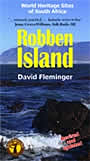
Now a symbol of the oppressive Apartheid regime, Robben Island was home to exiled prisoners as far back as 1525, and through the years has been used as a criminal and political prison; a 'hospital' for lepers and the criminally insane; and a military base. A visit nowadays is much less daunting and includes the ferry trip from Cape Town, as well as tours of the island and the prison. "Pre-book your tickets online before you arrive," advises Fleminger. "That way you won't have to stand in the queues or run the risk of being turned away." He also recommends getting an outside seat on the ferry, as "the views of Table Bay are nearly as inspiring as the tour of the island itself"
Talking Travel Africa February 2007
Robben Island, the desolate island off the coast of Cape Town to which ex-President Nelson Mandela and his colleagues were sent, including an exclusive interview with Mtlakana Philemon Tefu who was incarcerated there for 21 years.
Garden Route Living Winter 2007
Since SA ratified the World Heritage Convention in 1997, seven biologically diverse and historically significant sites in South Africa have made it onto Unesco's prestigious World Heritage Site List. In an extraordinary tribute to these sites, a series of informative pocket guides has been published. It comes as no surprise that our prized Cape Floral Region (CFR) measured up to the criteria needed to be listed. With an astounding 9 600 species, it is the richest of the world's six floral kingdoms. In addition, about 6 500 of these botanical beauties occur nowhere else on Earth. Eight regions, fragmented across the Cape, are now protected under the CFR umbrella which the United Nations deemed valuable enough to "identify, promote and protect... for the entire world citizenry". These designated areas - Table Mountain, Groot Winterhoek, Cederberg, Boland, De Hoop, Boosmansbos, Swartberg and the Baviaanskloof - contain exceptional richness of species and high degrees of endemism. Packed full of useful info, including tourist listings, maps and colour photos, this guide is the perfect travel companion for those even remotely interested in our floristic heritage.
|
|
|
|
South Africa |
 |
2010 Travel Guru
Author:
Kerrin Cocks
R125.00
|
The all-in-one pocket info-directory for South Africa |
|
|
|
|
Swaziland |
 |
A Southbound Travel Guide
Author:
David Fleminger
R149.00
|
Discover the Kingdom of the Reed Dance |
|
Lisa Johnston, Getaway
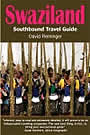
Swaziland's landscapes range from dramatic mountain peaks to lush green valleys and bushveld plains, making it hard to believe its Africa's third-smallest country. It measures just 175 kilometres north to south and 115 kilometres from east to west - perhaps these 'village-like dimensions' is why the people are so friendly and laid-back. As Fleminger writes in the introduction to his guide: 'Just like Aesop's tortoise who won the race against the rushing rabbit, time in Swaziland moves at snail's pace, steady and slow.'
He admits to having had his heart stolen by the charming mountain kingdom and this informal and light. The information, however, is concise and relevant, with chapters on each region and the country's rich history. There are suggested itineraries for every budget and plenty of ideas for things to do, from river rafting and mountain biking to hiking and horse-riding trails. Lists of places to stay range from backpacker accommodation to five-star hotels. This is touted as the first guide specifically on Swaziland to be published internationally since 1983 and is a good, easy-to-read source of information on South Africa's tiny neighbour.
Lisa Witepski - Freelancer Magic kingdom
It feels as if I'm being hugged by nature. That's the only way I can describe the depth of peace that descends when I look about me-left, right, forwards and back-and am met on every side with a seemingly endless vista of rolling green. The infinite horizon which has so beguiled me is, perhaps, the greatest hallmark, and most remarkable asset, of Swaziland. That, combined with the country's syrupy pace-Swazi time makes ordinary African time, legendary for its languor, appear to rival a New York minute-creates an ambience which is entirely unique. It may be more chilled than a winter Sunday in Cape Town, but at its heart is a tranquillity, rather than a laziness, that you just can't help surrendering to. Don't get me wrong. It's not as if nothing happens in this little kingdom; far from it. But, like the best fairytale kingdoms, it's enchanting-and relatively unknown. Think about it: apart from King Mswati's approach to nuptials-which make Elizabeth Taylor's seem conservative-how much do you know about Swaziland? If your answer is 'not much', you're not alone; nor can you be blamed. It's been a while-two decades, in fact-since Swaziland was last granted a dedicated travel book of its own; usually, it's had to make do with a few pages sandwiched between the Big Five boastings of larger sub-Saharan countries with whom it can barely compete. If we were talking Hollywood, Swaziland would be a starlet, blessed with talent and good looks, but lacking the PR power and clout of the heavy hitters. Until now, that is, and the release of Swaziland Southbound Travel Guide by David Fleminger. We predict that with its own showcase, Swaziland is poised to start hitting back. And it has plenty of ammunition with which to do so. Round One: game parks. Yes, every African country can boast a nature reserve (or seven), and most are truly impressive. But conservation in Swaziland has a story that would impress even the most hard-bitten, green-washed cynics. It's the story of Ted Reilly, a visionary whose family farm, Mlilwane Wildlife Sanctuary, is now the flagship of Big Game Parks, and who is largely to thank for arresting wildlife poaching in the country. Mlilwane is, of course, a tribute to the spirit of conservation; but more than that it's an ode to nature's bounty. We're talking silver rivers, undulating valleys and scenery that startles. It's also just one of several nature reserves: for such a small country, Swaziland has an astonishing percentage of land under protection. For similarly spectacular scenery, visit Malolotja Nature Reserve, Hawane Nature Reserve, Mantenga Nature Reserve and Phophonyane Falls Ecolodge and Nature Reserve. The latter, especially, deserves special mention: although I became accustomed to literally drawing my breath at the new revelation of beauty with every bend in the road, Phophonyane stands out as one of those extra special places where you can feel your soul sing. But enough about pretty places. Swaziland's Round Two is culture. We're talking all types of culture, here: move over Paris and Milan, the country has its own fashion week. It also has outstanding live performances at one of the most memorable venues you're likely to see: House on Fire. Take the eccentricity and warmth of the Market Theatre, and amplify its heart exponentially, and you have an idea of just how special and laid back this place is. I think that this is because it's been built with love, colour and passion: lyrical verses line the walls, and mosaics splash vivid hues across imaginatively designed walls that wouldn't appear out of place in Barcelona. It's also an ideal spot to do some shopping: the quirky creativity that seems to run deep in Swaziland's veins (no kitsch zebra prints here, thank you very much) appears to have its source here. Visit Baobab Batik, Gone Rural and Zoggs Handicrafts for one-of-a-kind items with true character. There are also plenty of treasures to be found at Mantenga Craft Centre: look out for delicate, organic-inspired pottery, whisper-soft mohair weaves, and singular carvings that will tickle your sense of humour even as they delight your eye. There's nothing twee or clichéd about Swazi crafts: from baskets to blankets and inimitable soapstone carvings, they're design items in their own right. Of course, no discussion of Swazi crafts would be complete without mention of Ngwenya Glass or Swazi Candles-so be sure to visit these landmarks, too. Oh, and if it's living culture you're looking for, you'll find it here. The Swazis maintain a vibrant connection with centuries-old traditions, which means that rituals like the Umhlanga Festival are still highly respected and a major highlight on the Swazi calendar. Swaziland's next great draw card: adventure. I tried my hand at caving in the Gobholo caves-a strange choice for a self-confessed claustrophobe-and found it to be extraordinary. The soft darkness of the caves, hugging to themselves billions of years of the earth's secrets, high-pitched squealing of the bats and-most importantly-the triumph of navigating channels only as wide as my shoulders made it an experience I'll never forget. But, if earth isn't quite your element, you can always try your hand at white-water rafting, or any of the other many daredevil activities offered by Swazi Trails, from quadbiking to rap jumping. The next offering: glamour. It may not be Monaco, but like any kingdom, Swaziland has its glitzy side. Here, it comes in the form of the Royal Swazi Sun; the Grande Dame of gambling. What I'll remember most from my Swazi sojourn is its gentle pace; a polite decline to join in the stresses of the modern world. As Rod de Vletter, my host at Phophonyane, commented, Swaziland seems to attract an entirely different sort of person: those who enjoy opening their hearts, minds and eyes, and the result is an experience that's vastly different to the African safari stereotypes that we've become used to-and far richer.
About the book
Published by Southbound, an imprint of 30° South Publishers, David Fleminger's Swaziland Southbound Travel Guide takes a fresh, new look at a country that truly deserves one. Fleminger's chatty and informative style will make you feel as though you have a guide with you all the time-one who keeps you laughing. Most importantly, he covers every element of the country-from its history to politics and, of course, the landmarks and attractions that set it apart-in extraordinary depth. Don't think of visiting Swaziland without it.
Africa Talks May/June 2009
"Once again author David Fleminger has excelled with his latest guides.Thus the reader can be assured of the latest information."
Georgina Haupt, Saturday Star 11 July 2009
"David Fleminger's Swaziland, a Southbound Adventure, is an indispensable guide. It's the first travel guide written about the country since 1983... For an insider's guide to Swaziland, visitors are advised to take one along before entering the country."
|
|
|
|
The Cradle of Humankind |
 |
A Southbound Pocket Guide
Author:
David Fleminger
R99.95
|
South Africa's World Heritage Sites |
|
Bob Truda, Indwe September 2009
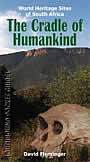
Western Gauteng's Cradle of Humankind, or 'place where we once lived' in Setswana, is a complex network of dolomitic limestone caves where at least 40 different fossil sites have been discovered. Only 13 of there are currently being excavated, yet fossil giants such as Taung Child, Mrs. Ples and Little Foot have already emerged from this area. While the scenery may look barren at first glance, the Cradle of Humankind is one of the richest sources of hominid fossils in Africa. David Fleminger, author of five of the eight Southbound Pocket Guides to South Africa's World Heritage Sites, recommends you plan to get to Maropeng Visitors Centre in time for lunch or sundowners, as you can relax on the terrace overlooking the misty Magaliesberg. "Obviously, a tour through the Sterkfontein Caves is a highlight of the Cradle," he adds. "And don't be put off by memories of school trips from years past. Facilities have been upgraded and the new museum is excellent. I have visited Sterkfontein several times and it never gets old."
Journal of Speleon History Jan/Feb 2009
Among the most famous archaeological sites in the world are the many fossil-bearing dolomite caves of South Africa. The region known as The Cradle of Humankind contains a number of sites that are particularly rich in high-quality hominin-fossil remains (i.e., the remains of our distant ancestors), with finds dating to as much as 3.5 million years ago. Among the wealth of fossils unearthed from The Cradle are some of the most important finds ever made, including Raymond Dart's famous Taung child (the first species of Australopithecine-Australopithecus africanus-ever found and, in fact, the first significant hominin fossil to be found in all of Africa), and Robert Broom's outstanding Mrs. Ples (the most compete A. africanus skull ever found in South Africa). Many other luminaries in the field of paleoanthropology have labored in the rich fossil beds of The Cradle and the area is still an active site of excavation. The annals of paleoanthropology duly record the scientific community's initial skepticism of the Australopithecus skull found by Dart. In a time when the smart money centered on an Asian origin of humanity and the scientific world was still in the grip of the infamous Piltdown hoax, Dart was heavily criticized by his peers. However, Broom's discovery-bolstered by yet additional finds-provided valuable support for the ultimate acceptance of the Australopithecines as ancestral hominins and for the inevitable recognition of the African continent as the birthplace of humanity. Because of its tremendous historical significance and continuing importance to ongoing paleoanthropology research, The Cradle of Humankind was declared a World Heritage Site by UNESCO in 1999. The site itself consists of a large number of caves, the most important of which are Sterkfontein, Swartkrans, and Kromdraai. Like a number of other archaeo-logically important cave sites-such as Britain's Creswell Crags with its Ice-Age petroglyphs and a variety of painted caves in France and Spain (including several manmade replicas)- many of the numerous caves in The Cradle are open to the public.1 While some can be visited on regularly scheduled guided tours, others require prior arrangements through one of the specially licensed tour-group operators in the area. In this most recent addition to the Southbound Pocket Guides to South Africa's World Heritage Sites, David Fleminger provides a wealth of information for travelers interested in touring this celebrated locale that figures so prominently on the stage of human prehistory.Information provided in this guidebook includes details of guided cave tours (including costs, hours of operation, and contact information for arrangement of special tours of various archaeologically active sites), availability of on-site facilities, and descriptions of the various museums-both in and out of The Cradle-that specialize in human-origins displays. Material is also provided about the numerous other visitor attractions in the region, including contact information, detailed driving directions and road maps, details of room and board, options for area dining, and information about local flora and fauna. A visit to The Cradle of Humankind or to any of the painted caves of Europe is nothing short of a journey of self-discovery, helping travelers to uncover the deepest origins of the human species. For readers who aren't actually planning a South African vacation in the near future, but who are still quite interested in human prehistory, Fleminger also provides a wealth of detailed information about the area's caves and the historical significance of local fossil finds to our understanding of human origins. A detailed discussion of human evolution places these finds into appropriate context for general-interest readers not already versed in the subject. Many of the Cradle's most famous caves are considered from an historical perspective, with information provided on early gold-mining activity, quarrying operations, and fossil excavations. Almost two dozen distinct locations on the overall heritage site are discussed. The Cradle of Humankind is a well-written and interesting book, easily read by the general reader. More than 80 full-color photographs highlight the beauty and diversity of the region, its people, and its wildlife. A useful list of relevant references and websites is also provided. This pocket guide is sure to be an invaluable aid to travelers interested in the story of human origins or spelean history as it unfolded in this part of the world.
www.saexplorer.co.za
This title will take you back to where we came from - The Cradle of Humankind in the Magaliesberg region of the Gauteng and North West provinces of South Africa and uncover the myths and intricacies of our species. The Big Bang! and where it all started - Sheesh! Ta-dah! Introducing the ancestral cast - Mrs. Ples (or is that Mr.?), the Taung child, Little Foot and a host of fossil extras and where they hung out - the caves of Sterkfontein, Kromdraai and Swartkranz, then digging 'em all up - Raymond Dart, Robert Broom, Ron Clarke, Lee Burger. History of the area and the people, the fauna and flora. Detailed maps, colour photographs, route guides. Listings for travellers of places to go, things to see, and accommodation.
Anita Henning, To Go To December 2008
The Cradle of Humankind is a concise guide on this amazing phenomenon - one of the eight World Heritage sites in South Africa. It highlights the importance of the site, its location, and provides a brief summary on some of the most valuable findings by archaeologists. This booklet is one of a short series on World Heritage Sites of South Africa, a handy Quick reference. It is written for the novice in a relaxed style with enough information to enable the reader to compile a route planner and spend a couple of days in the Cradle. The guide provides reference for accommodation and other places of interest for the convenience of the reader. As indicated above, the book is produced in a nifty pocket size with a soft cover, complete with maps, pictures and indexes.
|
|
|
|
The Greatest Safari |
 |
In the Beginning Was Africa:
The Story of Evolution Seen from the Savannah
Author:
Søren Rasmussen
R299.00
|
|
|
Be the first to write a review on this article
|
|
|
|
The Richtersveld Cultural and Botanical Landscape - incl. Namaqualand |
 |
A Southbound Pocket Guide
Author:
David Fleminger
R75.00
|
South Africa's World Heritage Sites |
|
|
|
|
The Whale Trail of South Africa |
 |
A Southbound Pocket Guide
Author:
Allen Davie
R75.00
|
South Africa's entire coastline |
|
Beeld 7 September 2008 Tyd weer vir walvis kyk
Roetes, webtuistes tot kontaknommers van die beste bly- en kykplekke en walvistoere/staptogte ter land en see. Dié 176-bladsy-juffer met haar 55 kleurfoto's en 10 kaarte is deel van 30° South se oulike Southbound-sakgidsreeks. Dit is nou prima tyd om te sien hoe die walvisse paar, baljaar en kalf. Ons walvisroete is langer as 2 500 km, van Paternoster tot net suid van Mosambiek.
Garth Johnstone, The ridge/ The Crest December 2008
A handily sized pocket book, The Whale Trail offers whale enthusiasts all the information they need to plan a day out or holiday to view the beautiful, gentle giants of the ocean. With the South African whale trail stretching from Kosi Bay to Donngbaai, southeast of Cape Town, and the West coast to Lambert's Bay, there's plenty of coastline to explore-but for local enthusiasts the good news is that from June to November, Durban is a recognised hot spot for sea life charters. So, although Hermanus is obviously the gold standard of whale spotting in SA, when the time is right, a viewing of these wondrous beasts is close at hand. Handy features of this guide include quick facts (did you know that Hector's dolphin is probably the world's smallest cetacean, reaching only 1.2m in length when fully grown, or the male humpback whale sings songs lasting 30 minutes that can be heard underwater hundreds of kilometers away), whales of the whale trail, colourful sections on the Southern Cape whale trail, West coast whale trail and East coast whale trail, and a fascinating section on Cetacean intelligence. Crammed full of useful info - including accommodation and national parks - and with multiple maps, The Whale Trail will encourage novices and experts alike to take the plunge and hit the road.
Caroline Hurry, Saturday Star 20 September 2008 Whale-watching? It's all in this book!
Whales and dolphins are central to the ancient myths of many nations, both as tribal folklore and mainstream classics such as Herman Melville's Moby Dick. The slaughtering of cetaceans is a trust betrayed and we should ask ourselves why we revere whales and dolphins, yet slaughter them in their thousands. The Whale Trail of South Africa quotes a figure of 36 390 whales slaughtered in Antarctic waters in one year alone. New England whalers killed around 100 000 Southern Right whales during the 19th century and by the late 1930s barely 100 grey whales remained from an estimated population of 25 000 in 1840. Durban ran one of the largest land-based whaling stations in the world until it was shut down in 1975. Whaling ceased in South Africa in 1976, mainly due to the collapse in whale populations and the soaring cost of fuel rather due to any change of heart. Indeed South Africa continued to oppose a moratorium on commercial whaling for years afterwards until it finally bowed to pressure from the Dolphin Action and Protection Group in 2001. Today Southern Right whales are a common sight around Hermanus, often approaching to within 50m of land. Whale-watchers descend on the town every year amid a carnival atmosphere. A "whale-crier" blows on a horn and brandishes a placard with details of recent sightings. And it's not just in Hermanus that you can enjoy these magnificent sentient creatures either. I spent many a happy afternoon watching whales from my parents' balcony in Fish Hoek. Indeed the Whale Route stretches from Paternos-ter/Saldanha Bay on the West Coast (Atlantic), south around the Cape of Good Hope, and some2500 kilometres northeast to Kosi Bay in the iSi-mangaliso Wetland Park (St Lucia), a World Heritage Site, just south of the Mozambican border. The Southern Right whales leave Antarctica in May/June, and swim thousands of kilometres to mate and calve. When they leave, the humpbacks arrive with their calves. Enthusiasts can see them in the Cape's Stilbaai, Witsand, De Kelders near Gansbaai, as well as along the Garden Route at Mossel Bay, Knysna, Plettenberg Bay and northeast up through the Wild Coast and finally to the Dolphin Coast of northern Zululand. Boat-based expeditions are also growing in popularity and offer whale-watchers a chance to get up-close and personal with these wondrous denizens of the deep. This book offers you all you need to know to plan a whale-watching trip and will teach you all about blowing, breaching, lobtailing, spy-hopping and grunting!
Paul Winter, Out There Travel December 2008
It's the smallness of this book that makes it appealing - it is compact enough to stuff into a daypack with a pair of binoculars and some snacks for a day's worth of whale-watching. The Whale Trail of South Africa offers all you need to know to plan a whale-watching trip - anywhere from Paternoster/Saldanha Bay on the West Coast and south around the Cape of Good Hope up to some 2 500 kilometres north-east to Kosi Bay in the St Lucia Wetlands Park. It'll also teach you about blowing, breaching, lob-tailing, spy-hopping and grunting!
Longevity November 2008
Now that suntans are so last season, ditch your beach holiday and book a trip with a purpose instead. If you're looking to skip the mid-December mayhem, why not go whale spotting instead? It'll take you to some of the most beautiful spots South Africa has to offer (Cape Town, the Garden Route, the Wild Coast and the Dolphin Coast), and, using this guide, you'll learn all you could imagine about these gentle giants. Packed with beautiful photos, practical information and a host of whale factoids (did you know that the blue whale eats up to four tons of krill a day?), this pocket-sized guide makes for the ultimate travelling companion.
|
|
|
|
uKhahlamba-Drakensberg Park |
 |
A Southbound Pocket Guide
Author:
Philip Briggs
R75.00
|
South Africa's World Heritage Sites |
|
Beeld - Naweek 27 January 2007 Sakgidse ideaal vir almal wat land verken
Suid-Afrika se sewe Werelderfenisterreine word in 'n nuwe reeks Southbound-sakgidse saamgevat. Dit sluit in gidse oor Robbeneiland, Groter St Lucia Vleilandpark, uKhahlamba-Drakensberg-park, die Mapungubwe-kultuurlandskap, Kaapse blomstreke se beskermde gebiede, die Wieg van die Mens en die Vredefort-koepel. Die klein gidse is nommerpas vir plaaslike vakansiegangers wat hul eie land wil verken, rugsakstappers, toeriste, leerlinge en onderwysers, studente en toergidse en toeroperateurs. Dit is gebruikersvriendelik, nuttig en omvattend en het 'n groot opvoedkundige waarde. Lesers leer wat dit beteken om as 'n wêrelderfenisterrein verklaar te word; meer omtrent Unesco en sy Wêrelderfenislys; hoogtepunte van die Unesco-konvensie; hoe die gebiede kwalifiseer; meer omtrent die geskiedenis van die gebied; die plante en diere van die gebied; hoe die gebied ontwikkel word en hoe die gemeenskap daarby betrek is. Die reisafdeling bevat plekke waar 'n mens kan oornag en aktiwiteite wat 'n mens kan onderneem.Philip Briggs (skrywer van gidse oor die Groter St Lucia Vleilandpark en die uKhahlamba-Drakens-berg-park) skryf oor reis en bewaring in Afrika. Sy eerste boek is in 1991 gepubliseer en sedertdien het hy Bradt-gidse geskryf oor Oos- en Suider-Afrika, Tanzanië, Uganda, Ethiopia, Malawi, Mosambiek, Ghana en Rwanda. Sy artikels verskyn gereeld in plaaslike tydskrifte en koerante.
Upfront Magazine November 2008
This pocket guide takes you to a place of wonder and beauty that sprawls in breathtaking splendour between the KwaZulu-Natal Midlands and the ice-capped peaks of the Kingdom of Lesotho. The AmaZulu-'People of Heaven'- who live in the long eastern shadow of the mountains call them uKhahlamba, the 'Barrier of spears'. The first Boer settlers to trail their ox-wagons into the foothills dubbed them the Drakensberg, the 'Dragon's mountain'. Both names are in official use today, but South Africans, in unconscious recognition of its singularity, tend simply to refer to the uKhahlamba-Drakensberg as The Berg-'The Mountain'.
Bruce Dennill - The Citizen 23 November 2006
The rich natural heritage of our country is well worth exploring. Not only are the sites involved important and historically vibrant, but they're also all beautiful to travel through. Visiting a World Heritage Site need not be some educational chore, although children might benefit more from a trip to one of these locations than from another morning bus ride to the zoo or the Voortrekker Monument, or where ever. This is a series of guides that make visiting - and understanding the locations easy, safe and convenient. Literally pocket-sized (as opposed to the many publications described as such that you would battle to fit into a briefcase), each book - there is one title devoted exclusively to each heritage site -breaks the attractions and points of interest down into bite-sized fact files. The different authors involved (Philip Briggs, Fiona Mclntosh and David Fleminger) each have slightly different styles, but each pays exquisite attention to detail. Such need-to-know things as the best routes to take and where to stay once you arrive are well handled, and the authors have taken the sensible step of only including the details of the parties in involved, rather than specific details regarding pricing and so on. The latter may change, and budgeting around a guide book and arriving to a different scenario is incredibly frustrating. Other subjects covered explain why the different locations were declared World Heritage Sites, what steps have been taken to conserve the irreplaceable resources there, what is most interesting to see and what times of the are best to each place. These booklets reveal fascinating parts of our country that many of us aren't properly aware of. They'd make excellent gifts, singly or collectively, and are great primers for planning a holiday.
|
|
|
|
Vredefort Dome |
 |
A Southbound Pocket Guide
Author:
David Fleminger
R75.00
|
South Africa's World Heritage Sites |
|
Bob Truda, Indwe September 2009
Lying 120 km southwest of Johannesburg, Vredefort Dome is part of a massive meteorite impact that dates back an astonishing 2.023 million years. It is unique in that it is the largest, most deeply eroded and oldest meteorite impact site yet found on Earth. "Hire a guide for the day to take you through the Dome, as many of the best attractions are tucked away on private farms," recommends Fleminger. He also suggests doing an outdoor activity such as kayaking on the Vaal River, to truly appreciate the beauty of the landscape.
Kim Shaw - Style Magazine December 2006 Proud heritage
With the recent declaration of the Vredefort Dome near Parys as a UNESCO Heritage Site, South Africa is now home to seven such sites, the others being Robben Island, Cradle of Humankind, Greater St Lucia Wetland Park, uKhahlamba-Drakensberg Park, Mapungubwe Cultural Landscape and the Cape Floral Region Protected Areas. For those wanting to know more, the seven handy pocket guides are perfect for exploring each site. Packed with information, the guides vary from 144 to 208 pages and include maps and full colour photographs.they're easy to slip into your luggage and will make you even keener to travel locally.
Melanie Reeder, Longevity December 2008
These guides will make handy travel companions if you're anywhere near one of South Africa's official UNESCO World Heritage sites this holiday. There are seven guides available, written by expert travel authors and photo-journalists, including Robben Island, St. Lucia Wetland Park, uKhahlamba-Drakensburg Park and the Cradle of Humankind to name a few. The guides may be small, but they're literally jam-packed with information, from the fauna and flora and history of the area, to where to stay and useful websites to visit. There are also beautiful photographs and useful detailed maps, making these guides holiday must-haves for an informed and more enjoyable trip.
|
|
|
|
|



|